A fresh camera angle from Wales vs South Africa has sparked debate over whether Eben Etzebeth was reacting to contact near his own eye before the clash that earned him a red card.
South Africa’s dominant win over Wales has taken a new twist after alternative footage of Eben Etzebeth’s sending-off surfaced online. The Springboks lock received a permanent red card for making contact with Alex Mann’s eye, but new angles shared on social media appear to suggest the incident may have begun with contact on Etzebeth himself.
A decisive moment in a one-sided Test
The Springboks were already in full control during their 73–0 victory in London when the confrontation unfolded. Etzebeth and Wales flanker Alex Mann clashed off the ball, and the South African was shown red for placing his hand on Mann’s face, with match officials determining there was contact with the eye area.
The decision came late in the match, well after the result had been settled, but the seriousness of eye-contact offences placed immediate scrutiny on the incident. World Rugby regulations treat any contact with the eye or eye area as a major act of foul play, carrying significant suspension ranges.
The new angle that changed the conversation
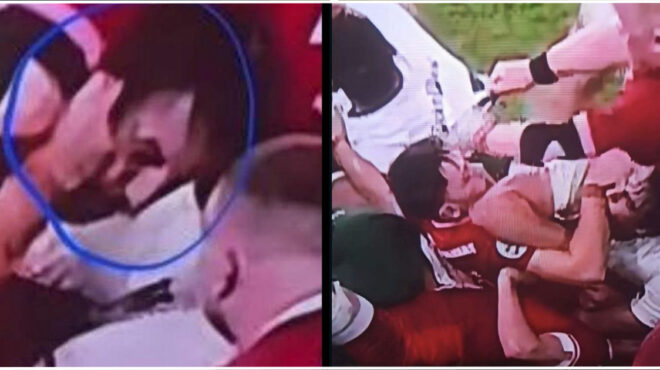
Footage that emerged after the match offered a different vantage point. The new clip appears to show Mann’s hand sliding across Etzebeth’s face during the initial tangle, with one frame suggesting brief contact close to the Springbok’s right eye.
The angle is inconclusive and does not show a clear act of gouging from the Welsh flanker, but it has fuelled discussion over whether Etzebeth reacted instinctively after feeling pressure near his own eye.
What is visible, however, is Etzebeth immediately placing his thumb on Mann’s face in the following moment—the action that ultimately led to his dismissal.
This additional footage hasn’t excused Etzebeth’s behaviour, but it has added nuance to the sequence and reopened debate about what provoked the clash.
Reaction from the rugby community
Pundits, supporters, and former players quickly weighed in as the new clip circulated online. Some insisted the red card remains appropriate because contact with the eye area—regardless of intent—is a strict liability offence under World Rugby’s framework. Others argued that the footage may demonstrate an act of retaliation rather than unprovoked foul play, which could influence the disciplinary panel’s assessment.
The disciplinary hearing is expected to examine both the original angles and the newly circulated footage. The sanction range for intentional eye contact can stretch up to several months, though cases deemed to involve only the eye area can result in far shorter bans when mitigation applies.
For now, Etzebeth remains provisionally suspended until the outcome is confirmed.
Why this matters for rugby’s ongoing safety debate
The incident arrives during a period of heightened focus on facial and head-area contact in elite rugby. Governing bodies have emphasised stricter standards around eyes, head collisions, and retaliatory behaviour, aiming to reduce dangerous actions and set clearer deterrents.
This case highlights the fine margins involved. Slow-motion reviews, multiple camera angles, and public debate can shift perceptions quickly, especially in situations where intent is difficult to determine. The Etzebeth–Mann exchange has revived calls for greater transparency around TMO reviews and more consistent application of sanctions for contact with the face.
While the Springboks’ performance was emphatic, the disciplinary fallout has generated more conversation than the scoreboard. For supporters, it has also reignited familiar debates about where the line should be drawn between instinctive reactions, provocation, and actionable foul play.
What comes next
The judicial panel’s decision will be watched closely, not only for Etzebeth’s availability for upcoming fixtures but also for its broader message around how rugby treats incidents involving eyes and facial contact.
If the new angle is deemed relevant, the panel may consider whether Etzebeth’s action was a response rather than a standalone offence. Conversely, they may still impose a significant suspension if the eye-area contact is judged serious enough, regardless of any preceding moment.
Either way, the hearing will bring needed clarity to an incident that has generated more questions than answers in the days since the Test.
For now, Etzebeth’s red card remains one of the most discussed disciplinary stories of the season—a reminder that even in a lopsided match, the smallest moments can dominate the narrative.