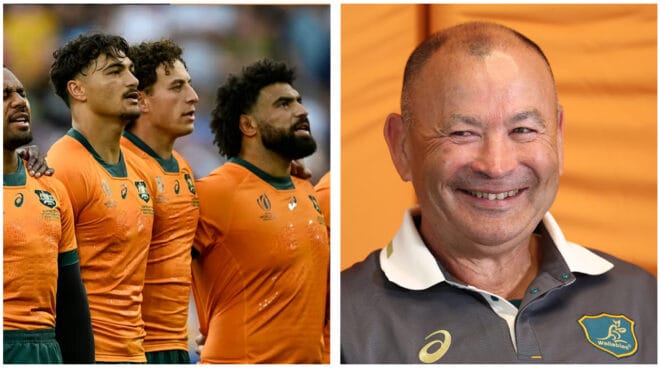
Eddie Jones on Australia Rugby Problems: Why the Wallabies Keep Falling Behind
Australian rugby didn’t fall off a cliff because of one coach, one bad World Cup, or one ugly season.
In a wide-ranging chat on Rugby Unity, Eddie Jones laid out what he sees as the real reasons behind Australia’s slide — and he kept coming back to the same point: if the Wallabies aren’t winning, the whole sport suffers in Australia.
“It’s 100% linked to the success of the Wallabies,” Jones said, describing Australia as a “small rugby country” that has historically punched above its weight when the national team is strong.
But when results drop, interest drops, media coverage drops, and crucially… young athletes start choosing other sports.
Australia rugby problems start with the athlete battle
Jones was blunt about Australia’s sporting market. Rugby union isn’t competing with one rival — it’s competing with rugby league, AFL, basketball, and more.
And unless rugby is winning, he says the decision is easy for teenagers with talent.
“If Wallabies aren’t successful, then kids make the decision, well maybe I’ll play rugby league or AFL or basketball,” he said.
That line matters, because it reframes the whole debate. It’s not only about tactics, or selection, or who should start at 10. It’s about whether rugby union can actually keep top athletes long enough to develop them.
“The talent is there” — but development hasn’t matched it

Jones didn’t claim Australia is suddenly lacking athletes. He said the opposite: the talent is there. The issue is what happens after that.
He pointed to Joseph-Aukuso Suaalii as an example of a young player who looked “head and shoulders above everyone else” when he came into the Wallabies environment — and then immediately highlighted the key detail: his pathway.
“The big difference is that then he went to the Roosters,” Jones said.
His point wasn’t to bash anyone. It was to underline a bigger problem: Australia rugby is developing too many elite athletes outside the union system, while union struggles to build that same level of professional improvement.
The uncomfortable part: rugby stopped investing in development
This is where Jones’ comments get sharp.
He suggested the game’s financial pressure led to a long-term decision that now looks costly: development stopped being the priority.
“Because of the precarious financial position of Australian rugby, we stopped spending money on development… development of young players, development of coaches,” he said.
And he added a line that explains why this is so hard to reverse: “Development costs money.”
So you end up with a cycle: less success → less attention → less money → less development → even less success.
Why he thinks NRL keeps producing better coaches
Jones also made a comparison with rugby league that will sting some people, but it’s worth hearing.
He said the NRL’s competition level forces coaching standards up because there are so many teams and so much pressure.
“They’re consistently producing young coaches because of the competition… you’ve got 17 teams,” he said, adding that to stay an NRL coach “you’ve got to be very good.”
In rugby union, Australia doesn’t have the same depth of professional teams and weekly high-pressure environment. Jones’ argument is that without that “competitive stress”, coaching development becomes slower and thinner.
Eddie Jones on Joe Schmidt: great coach, but it shows the wider issue
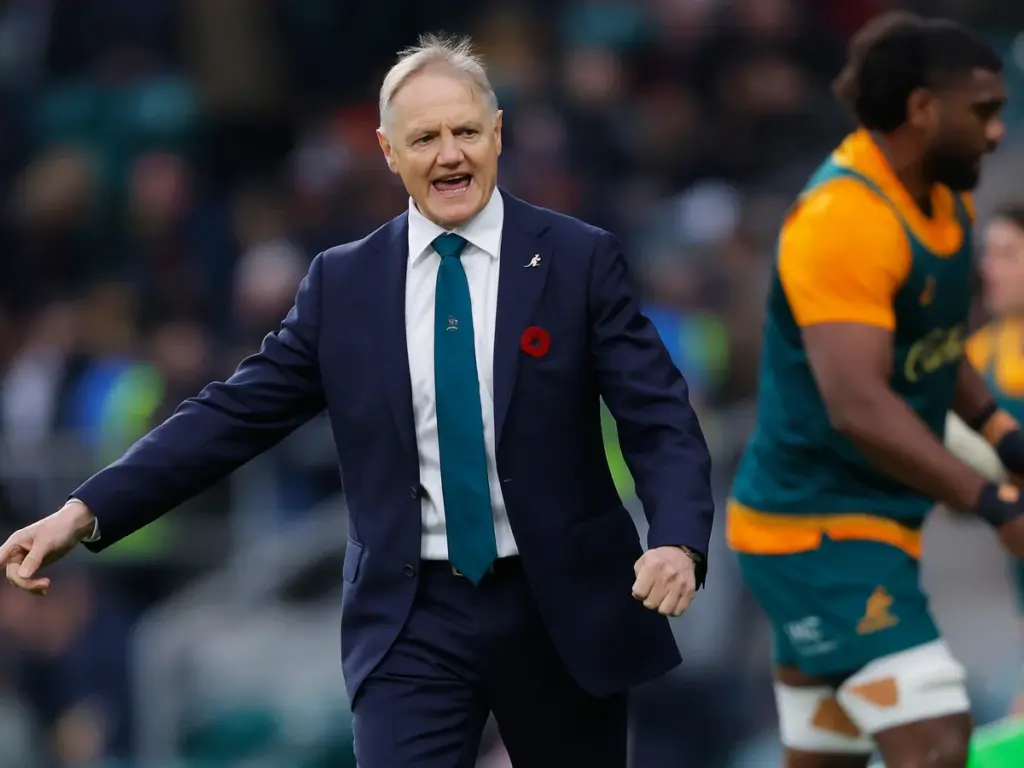
One of the questions raised was why Australia appointed Joe Schmidt — and Jones didn’t criticise Schmidt at all.
Firstly, he called him “an excellent coach”.
But he also said the appointment underlines a deeper reality: when Australia rugby is struggling to produce its own coaching pipeline, it ends up relying on whoever becomes available at the right moment.
That’s not necessarily wrong — it’s just not a full solution.
“It’s going to take a 10-year project”
Jones didn’t sell hope as a quick fix. He actually did the opposite: he said it will take time, money, and leadership willing to think beyond next week’s headlines.
“It’s going to take administrators who look further than today… they’ve got to invest in almost a 10-year project,” he said.
And then he dropped the line that will make Wallabies fans want to believe again:
“In 10 years, Australia can be back in the top three in the world… but it’s going to take money, it’s going to take time.”
The big takeaway from Eddie Jones on Australia rugby problems
Eddie Jones’ message is pretty simple, even if the fix isn’t.
Australia’s rugby problems aren’t mainly about one player, one coach, or one selection call. They’re about the system underneath the Wallabies — the ability to recruit the best athletes, develop them properly, and build strong coaching pathways over years, not months.
And until that foundation is rebuilt, the Wallabies will keep trying to win Tests while carrying a bigger issue on their back.