Rassie Erasmus doesn’t just win rugby matches — he shapes eras. He doesn’t just coach a team — he builds systems that other nations rush to copy. He doesn’t just create tactics — he changes conversations.
And yet, when World Rugby hands out its biggest coaching honour, his name is almost always missing.
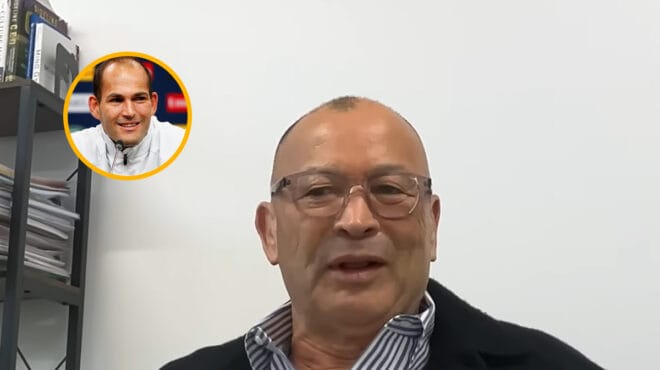
A recent panel discussion on Final Whistle: featuring Nick Mallett, Victor Matfield, and other former internationals captured exactly why fans across South Africa — and beyond — feel the award has stopped reflecting reality.
“How long has Rassie been dominating… and he still hasn’t won?”
Victor Matfield framed the frustration perfectly:
“How long has Rassie been dominating world rugby and he hasn’t won this trophy? It’s crazy.”
He wasn’t exaggerating.
Erasmus has overseen World Cups, Rugby Championships, historic victories and transformation within the Springbok system — yet he rarely gets the recognition that matches the results.
And it’s not just about trophies. It’s about influence.
Teams study what Rassie does. Coaches copy what he invents. Media approaches shift because of him.
Still… no consistent award recognition.
Nick Mallett: “You should wait until the end of the year.”
Nick Mallett’s criticism was blunt and logical — the award process itself makes no sense.
“You should wait until the end of the year before you award a coach of the year.”
World Rugby hands out the award before the entire rugby calendar is even complete.
This year was no different, with the winners selected immediately after the Women’s World Cup.
For Mallett, that timing skews everything.
He also argued that the entire structure is flawed:
“You can’t compare sevens, women’s rugby and the men’s game. They should have three separate awards.”
How can a sevens coach, a women’s XV coach, and a men’s Test coach all be judged on one single trophy?
The short answer: they can’t.
A point that hit hard: “If Ireland or France had won it…”
Mallett then delivered the comment every Bok fan quietly knew was coming:
“If Ireland or France had won it, their coach would’ve won coach of the year.”
And he didn’t stop there.
He reminded viewers that in 2023, South Africa won the Rugby Championship and the Rugby World Cup — but Andy Farrell still took the award.
That, for many, is the clearest sign that something deeper is going on.
Is the Lions video still haunting Rassie?

Eventually, the debate reached the most controversial point.
Matfield suggested the tension traces back to Erasmus’ explosive video during the British & Irish Lions series:
“There’s a personal issue here with Rassie because of that video.”
Another panelist doubled down:
“They don’t want to give an award to someone who put them in the spotlight.”
Whether that’s true or not, it’s impossible to deny that Rassie’s relationship with World Rugby has been… complicated.
He challenged the system.
He exposed flaws.
He pushed for transparency.
And some people in power haven’t forgotten.
“Rassie has changed the game — and that should matter.”
One of the strongest lines of the whole analysis came when the panel shifted away from tactics and talked about Rassie’s impact as a leader:
“On top of winning, he creates hope for a country bigger than the 80 minutes on the field.”
In a sport where coaches often speak only about set-pieces and strategies, Erasmus carries something different — a national presence, a belief system, an identity.
Awards should recognise that.
But right now, they don’t.
Why separate awards matter more than ever
The panel agreed that one major issue is structural:
All formats are lumped together.
- Sevens
- Women’s XV
- Men’s XV
One trophy.
Three completely different jobs.
Mallett explained the impact:
“You’d have more talk around the women’s game, more talk around sevens, and more talk around the men’s game.”
By splitting categories, World Rugby could celebrate more coaches, more stories, and more development across rugby.
Instead, they risk undercutting all three.
A lighter moment: Rassie, Eddie Jones and Farrell making a video
The discussion even found a moment of humour:
“We need Rassie, Eddie Jones and Farrell to make a video about all these red and yellow cards.”
Imagine that lineup breaking down refereeing decisions.
World Rugby wouldn’t know what hit them.
So why doesn’t the award follow?
That is the question fans keep asking — and for now, there is no satisfying answer.
What we do know:
- Rassie Erasmus keeps winning.
- He keeps influencing global rugby.
- He keeps inspiring South Africa.
- And he keeps proving he’s one of the most impactful coaches of his generation.
But until World Rugby explains their criteria — or updates their awards system — the debate will continue.
Because right now, the world sees what Rassie does.
Only the award doesn’t.