

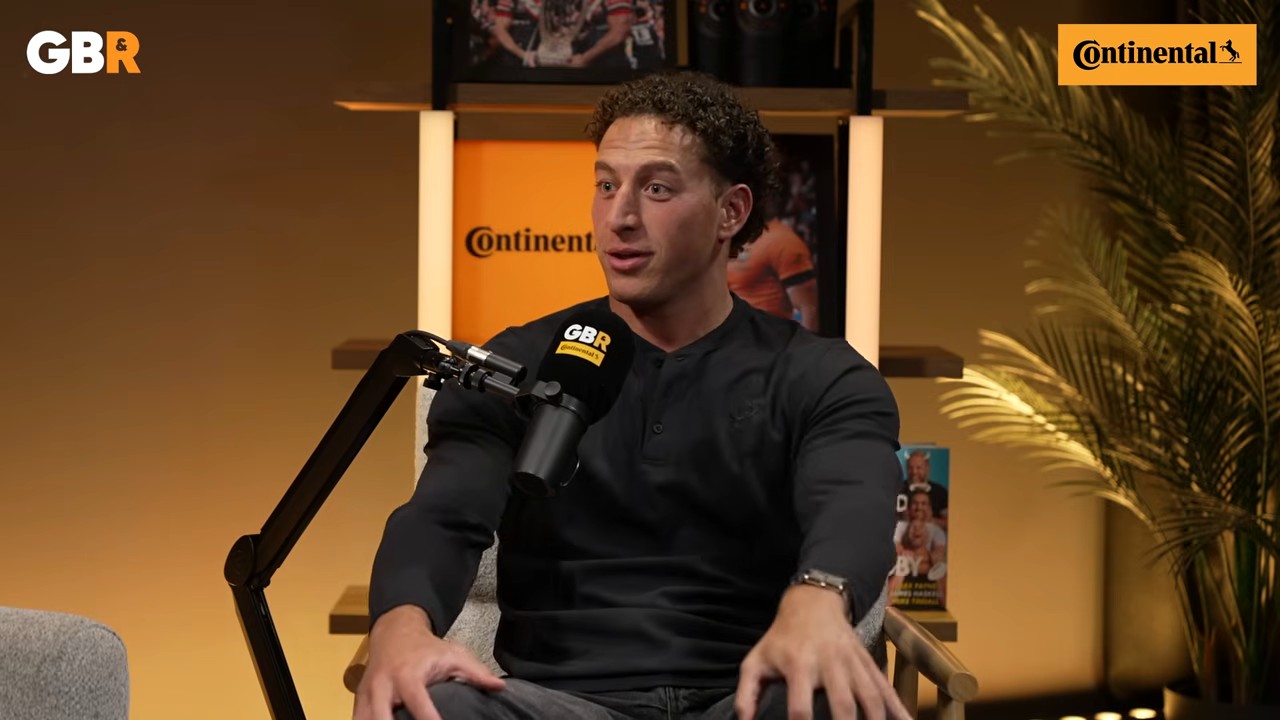
“I wish a lot of you union boys could come and try it out in the league side.” Mark Nawaqanitawase.
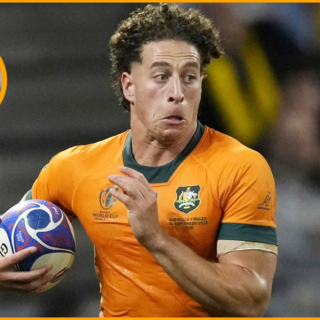
Mark Nawaqanitawase has a challenge for union players. Try league’s fitness first, he said, then tell him which code is harder.
He spent two seasons at the Sydney Roosters and won the grand final. Now he is going back to union in Japan with an engine he built there.
Could union players handle a league preseason? Yes or no in the comments.
Mark Nawaqanitawase on rugby league fitness
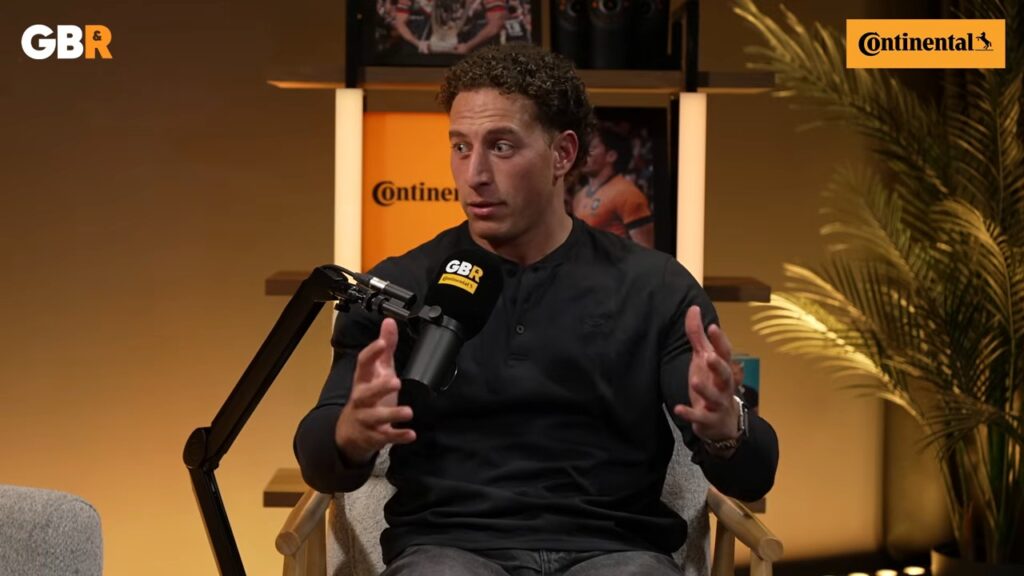
The former Wallabies wing laid out the Roosters’ conditioning on The Good, The Bad & The Rugby, with Alex Payne, James Haskell and Mike Tindall.
“I wish a lot of you union boys could come and try it out in the league side is is just how physically demanding the sport is and how much more fitter I feel”

The 250-metre test
He described one Roosters test in detail. The field is 100 metres long.
“You have 4 minutes to run as far you have to get to over 250 m. So you start on one line, boom, just out back out out back.”
Then come repeat sprints. He described 90 metres at 80 per cent, a jog, then short 15-metre bursts with jogs in between, over and over.
Tempo, the session he hated most
The worst session was not a running test at all. They called it tempo: 13 on 13, full games with no breaks.
“which is the the feeling that I’m talking about where it’s you’re just continuously moving non-stop.”
That is the point of it. A league game does not stop for a lineout or a long scrum reset, so training does not either.

“Who can hold on the longest”
He described the match the same way. By his count there are about 50 or 51 minutes of ball in play, with kick chases and yardage carries on every set.
“really 60 minutes of the game is literally just who can hold on the longest. Maybe the first 10 minutes of the first half is the only time the players will be about 100 or 95% full batteries”
So for most of a game, he said, everyone is running close to empty. The side whose players still make good decisions when tired wins.
Breathing drills and “whale breaths”
The Roosters brought in outside coaches for breathing sessions, to help players refocus after a big effort. Before every game the squad stood in a circle and did the drills together. He had never done breathing work before.
He showed the hosts one trick, a long blow out, to slow down and refocus after a big run.
“we had this thing called whale breaths which is like I’ll just like like you blow out it’s like supposedly blows out the lactic as like a little bit”
The high ball comes back with him
He has one skill he wants to take back to union with the engine.
“the high ball probably trying to bring bring it more into the game than than what it may be used currently.”
That is where his edge should show at the Saitama Wild Knights. Union stops more often than league, at scrums, lineouts and reviews. So a wing with a league engine is fresher when the ball is live.
Watch his kick chase in the last 20 minutes of a Wild Knights game. If he is still first to the ball at 70 minutes, that is the Roosters’ conditioning.
Union sides have argued about who earns a wing spot before. Matt Giteau made his earn-the-jersey case about Jordan Petaia in September.
The full segment is on The Good, The Bad & The Rugby’s YouTube channel, from 15:09.
Your turn: could union players do it?
He says union players would feel league’s fitness straight away. Union players will answer that league forwards never have to scrum or maul for 80 minutes.
Who is right? League or union in the comments.
Frequently asked
What is the Roosters’ 250-metre fitness test?
Nawaqanitawase described running back and forth across a 100-metre field for four minutes, with a target of more than 250 metres.
What are whale breaths?
A breathing drill the Roosters use: a long blow out to slow down and refocus after a big effort.
Where does Mark Nawaqanitawase play next?
For the Saitama Wild Knights in Japan, after two NRL seasons with the Sydney Roosters.


Comments
No one has weighed in yet.
Be the first - what did you make of it?