


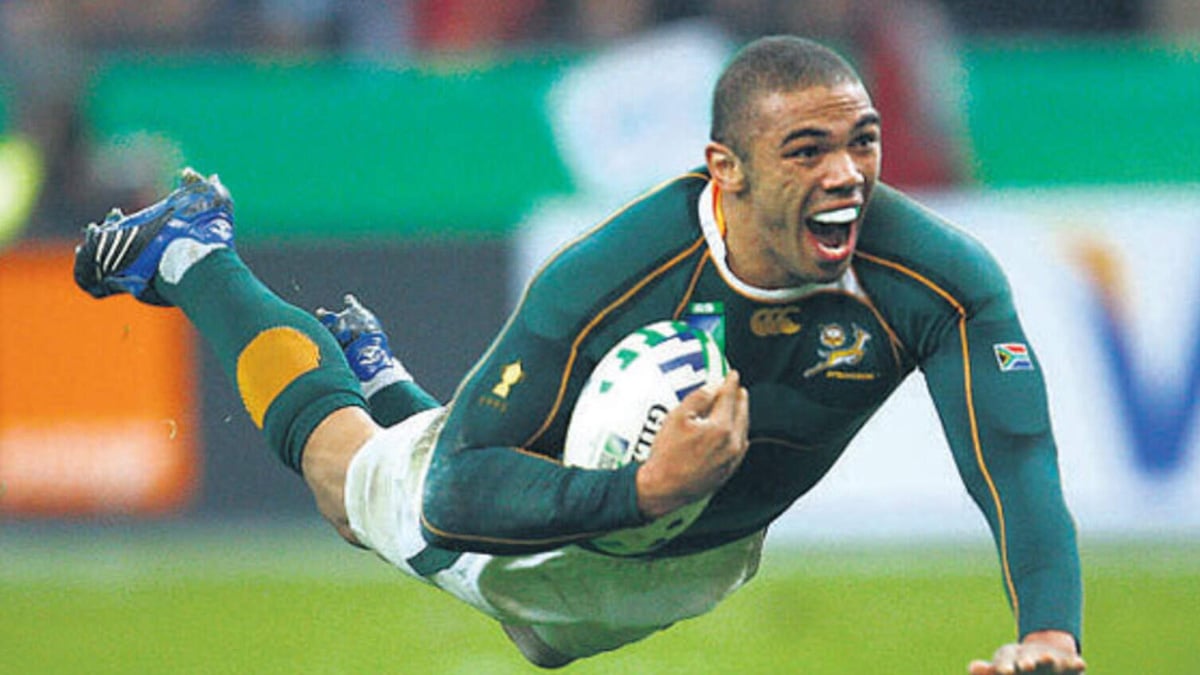
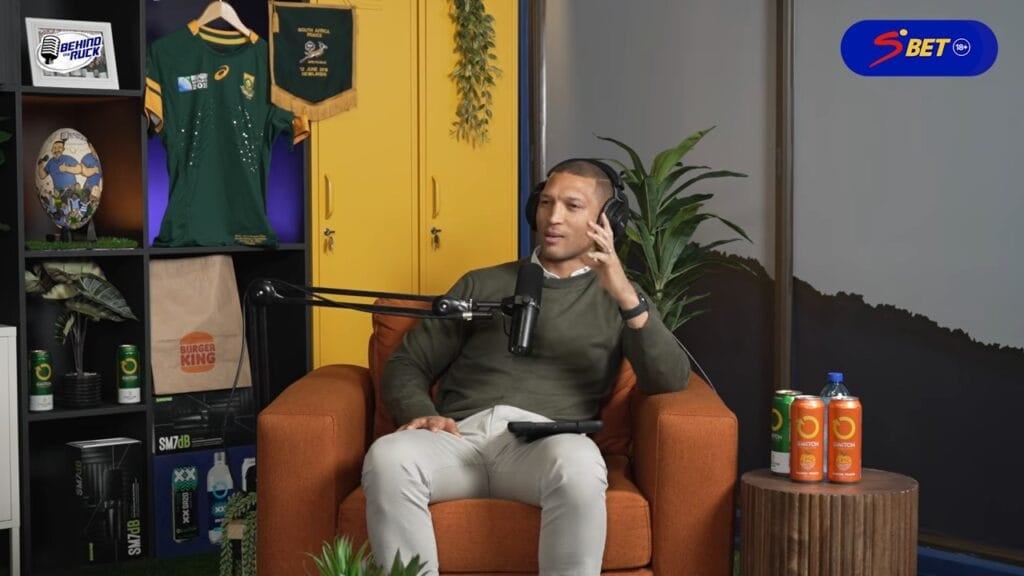
Dwayne Sweeney threw the pass that started it and was still on the pitch when the reply came. On the ShedLife NZ podcast he retold the night in Pretoria when the Bulls wing was outrun and told about it, and then answered.
Bryan Habana was still getting up off the Loftus turf when Lelia Masaga walked past him.
“I thought you were fast.”
That was the whole exchange. A 20-year-old Chiefs wing in his second season, talking down to the man who would finish that year as the best player in the world, having just beaten him in a straight race to the line. Dwayne Sweeney, who threw the pass, was a few metres away and remembers what arrived about a second later. Dread.
He was right to feel it. Habana’s answer arrived with the game all but over, and it came with words. But the one detail Sweeney leaves out of the story is more telling than anything he puts in, and it is the part worth waiting for.
The move came from a club side that lost by fifty
Sweeney played 69 games for the Chiefs and 103 for Waikato. He is head coach of Chiefs Manawa now. He told the story to Jason Davis on the ShedLife NZ podcast, published on Sunday 23 August, deep into a conversation that runs close to five hours.
The match was Round 4 of the Super 14, Saturday 24 February 2007, Bulls against Chiefs at Loftus Versfeld. The Chiefs were a decade into Super Rugby without a title, and they arrived with a back three nobody had picked on purpose. Mils Muliaina was away on the All Blacks’ reconditioning programme. Sosene Anesi, Sweeney says, had played the previous week against the Hurricanes with a neck he did not know was fractured until the scans came back. So it was Roy Kinikinilau and Masaga on the wings, with Sweeney at fullback, and they knew exactly how they were regarded.
“We kind of made our own handshake,” Sweeney said. “No one’s worried about us.”
Loftus is the ground the All Blacks went back to this August, and the one Sweeney still calls his favourite.
The try that started the trouble came from a scrum in midfield, off a move that had no business being there.
“We did this midfield scrum move that we used to do for Morrinsville, Brendan and I, and we talked Fuzzy into letting us do it at Loftus against the Bulls. We’re like, ‘Yeah, it’ll work, it’ll work.’ So he let us do it and we did it, and I broke through off it and then drew and passed to Lelia, and it was just an out-and-out foot race with him and Bryan Habana. And Lelia burned him off and scored.”
Fuzzy is Ian Foster, then the Chiefs head coach. Brendan is Brendan Leonard, the halfback who would be an All Black by the end of that year. Morrinsville Sports is the club the two of them went home to after school, a side that in Sweeney’s own telling was losing to the big Hamilton clubs by 50 and 60 points in his first seasons there. A move built for the Waikato club competition, sold to Foster in a team meeting, run against the side that would win the whole thing three months later.
“We scored off our move that we do from Morrinsville Sports,” Sweeney said, still slightly amazed by it nineteen years on.
Masaga to Bryan Habana: “I thought you were fast”
Masaga scored twice that night, which Sweeney does not mention. He mentions the walk back.
“I remember Lelia scored this try and I run over to celebrate it, and we’re walking back and Bryan Habana is getting up off the ground. I’m like, ‘Oh my god, Bryan Habana,’ you know, still fanboying. And Masaga walks past and goes, ‘I thought you were fast.’ And I was like, ‘Oh no.'”
Two reactions to the same man, from two players on the same side, a couple of metres apart. Sweeney was 22 and in his first month of Super Rugby. Masaga was 20, a year further in, and already carrying what Sweeney calls “a huge amount of swagger and confidence about him”.
Habana was 23. He had a World Cup coming in September. He would score eight tries in it and be named IRB Player of the Year. The wrong man to say it to, in the wrong year.
Sweeney gives the ending straight.
“Guess who scored the winning try, and guess who he outran? Bryan Habana scored the winning try in the corner in, like, the 83rd minute. They held the ball for like three minutes after the final play and he burnt Lelia off and scored in the corner.”
Habana did not leave it at the try. Sweeney, covering across from fullback, was close enough to hear the answer.
“He goes, ‘Yeah, I am fast.’ I just happened to be there… coming across from fullback.”
The pattern held all year. Three months later, in the final in Durban, the Sharks led 19-13 deep into injury time when Habana cut through a tired defence and scored beside the posts. Derick Hougaard converted and the Bulls won 20-19. Same wing, same minute of the game, same result. The Chiefs had seen the rehearsal.
Both races were decided before the pass was thrown
Nobody times a wing from a standing start. The race that matters begins where the ball arrives, and it is shaped by the angle each man is running when it does.
Masaga’s try came from a midfield scrum, a line broken by Sweeney at first receiver, and a pass to a wing already at full stride on a straight line to the corner. Habana, on the opposite wing, had to come across the field, which means running the long side of a triangle and turning to do it. Masaga ran the short side. Over forty metres the man running straight wins that race against anyone alive, and it was over the moment Sweeney drew his defender.
The last try reversed the geometry. Three minutes of Bulls possession after the hooter, in Sweeney’s account, against a Chiefs defence that had been folding round rucks at altitude for eighty minutes. When the ball finally went wide, Habana took it flat and at pace, running at the corner, and Masaga was the one who had to come off his line and turn to chase. Now he was on the long side of the triangle.
Nobody got slower between the first race and the second. The angles swapped.
Sweeney is well placed to say so. He played every backline position from first five to fullback in his 69 Chiefs games and won a Waikato secondary schools 200-metre title. He talks about his own pace with unusual honesty.
“I’ve never been a player that has been, what I would say, like, I’ve had enough speed but never had enough speed for my speed to be a point of difference. So what my strength was, was my ability to break tackles.”
The tell for next time: when a wing gets “burned” on television, look at where he started the play, not how he finished it. If he was covering across from the far touchline, he did not lose a foot race. He lost a geometry problem, and the commentator will call it pace anyway.
Bryan Habana Scored winning try
Now the part he leaves out.
His telling ends with Morné Steyn kicking the conversion from the touchline to finish it, and the record backs the shape of the night. Bulls 30, Chiefs 27. Bulls tries to Bakkies Botha, Gurthro Steenkamp and Habana, with Steyn and Derick Hougaard sharing the kicking. Chiefs tries to Masaga, twice, and one more, with Stephen Donald converting all three and adding two penalties. Referee Brett Bowden.
The one more was Sweeney.
He scored a try at Loftus Versfeld, against the side that would win the competition, in his first month of Super Rugby, and across nearly five hours of podcast he does not mention it once. Nor Masaga’s second. What survived intact is Habana: who he went past, where he scored, what he said afterwards. Which is how Loftus works on people. Sweeney never won there, and he still calls it his favourite ground.
“I never won at Loftus. I was there obviously in the final in 2009 when they gave us a hiding, but it was my favourite place to play. Like, it was such an incredible atmosphere, and the Bulls through that period too were really good… Apart from that final, all of our games always went down to the wire.”
The hiding was 61-17, still the widest margin in a Super Rugby final. Of that Bulls side, he said: “I still to this day, I don’t think there’s a team on the planet that would have beaten them.”
Masaga finished the season level on top of the try chart. Habana finished it on top of the world.
Masaga ended the Super 14 sharing the top of the try-scoring list with eight. He went on to 91 games for the Chiefs and the 2012 and 2013 titles. His All Blacks career was one Test, against Italy in June 2009. Habana won the Super 14 in May and the World Cup in October. The world player of the year award followed weeks later, and his Test career ended on 124 caps and 67 tries, still the Springbok record.
The Chiefs did not win a game until round seven, then won seven of their last eight and finished sixth on 40 points, two behind the Blues in fourth. Sweeney remembers needing the Bulls to fall short of an 80-point win over the Reds the next morning to get in. The record has the Bulls needing 72 for a home semi-final. They won 92-3, an 89-point margin that was the competition record, while Sweeney and Leonard watched the first half in a Christchurch hotel room, gave up and went out.
Sweeney never did get the All Blacks call. In his telling he came closest in 2010, when the selectors travelled to Napier to watch him and Luke McAlister in the Māori All Blacks’ win over England. He was man of the match. They took McAlister. The two men he says kept him out were Ma’a Nonu and Conrad Smith, who has been just as candid about the Springbok centres he could not beat. His verdict on himself could stand as the verdict on that night in Pretoria. Good enough to be in the race. Not quite the man at the end of it.
Frequently asked
What was the score in Bulls v Chiefs at Loftus in 2007?
Bulls 30, Chiefs 27, in Round 4 of the Super 14 on Saturday 24 February 2007. Bakkies Botha, Gurthro Steenkamp and Bryan Habana scored the Bulls’ tries, with Morné Steyn and Derick Hougaard sharing the goal-kicking. Lelia Masaga scored twice and Dwayne Sweeney once for the Chiefs, with Stephen Donald converting all three and adding two penalties. Brett Bowden refereed.
Who is Dwayne Sweeney?
A Hamilton-born back who made his Waikato debut at 17 in 2002 and finished with 103 games for the province, captaining it from 2017 to 2019. He played 69 games for the Chiefs across 2007 to 2011 and 2014 and won nine caps for the Māori All Blacks. After four seasons in Japan with Kyuden Voltex and Munakata Sanix Blues he moved into coaching, and has been head coach of Chiefs Manawa since 2025.
Did Lelia Masaga play for the All Blacks?
Once, against Italy in June 2009. He played 91 games for the Chiefs and won the 2012 and 2013 Super Rugby titles. In the 2007 Super 14, the season of the Loftus match, he shared the top of the try-scoring list with eight.
Your turn
Two ways to read that night in Pretoria.
Either Masaga genuinely had Habana for pace over forty metres and was entitled to say so, to the one man alive who would make him pay for it before full-time. Or there was never a race at all, just a young wing mistaking a covering angle for a gift, and the reply in the corner was the only honest measurement taken all night.
Sweeney tells it as the first. The scorebook leans towards the second. Pick one below, and if you were at Loftus that night, say what you remember of the last three minutes, because the man who was on the pitch has forgotten that he scored.

Comments
No one has weighed in yet.
Be the first - what did you make of it?