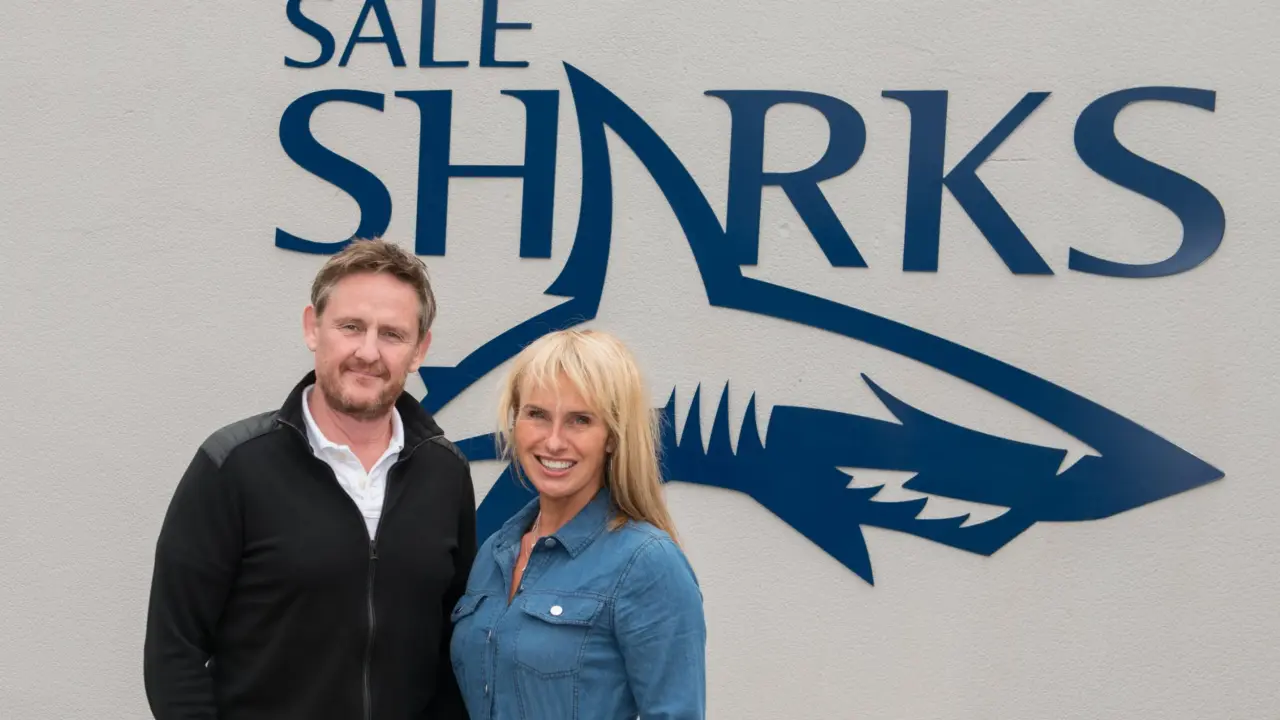
Why Sale Sharks Lose £8 Million a Year: Michelle Orange Reveals the Brutal Economics of Premiership Rugby
Premiership rugby club finances are usually buried in accounts filed months after the season ends. Every year the numbers get posted, every year the headlines say “clubs lose millions,” and every year nobody explains why. This time, someone did.
Sale Sharks co-owner Michelle Orange sat down with the For the Love of Rugby podcast in August 2026 and walked through exactly where a Premiership club’s money comes from, where it disappears, and why Sale — a club with half the England pack on its books — banks less in ticket revenue in a season than Bath likely take in a couple of months.
The short version: Sale Sharks lose around £8 million a year. The long version is far more interesting, because it explains the structural problem at the heart of English club rugby — and why the next decade at Sale will be defined by one word: stadium.
Where a Premiership Club’s Money Actually Comes From
Orange broke Premiership rugby club finances down into four streams. For all the talk of private equity and NFL consultants, the model is surprisingly simple — and surprisingly thin.
1. Central distribution from PREM Rugby. Each club receives a share of the league’s broadcast deal, which also includes a slice of the money the Premiership receives from EPCR for European competition. Orange was blunt that the EPCR element is “not a huge amount.”
2. RFU money via the Professional Game Partnership. This is the big one — around £10 million per club per year, according to Orange. Within that sits roughly £3.5 million tied to England’s Elite Player Squad: clubs are compensated for the access and control the RFU takes over their international players. Add academy licence funding and credits for producing England-qualified talent, and the RFU is effectively the largest single funder of every Premiership club.
3. Matchday revenue. Tickets, hospitality, food and drink, parking, merchandise. This is where clubs are supposed to build their own commercial engine — and where Sale’s model breaks down completely, as we’ll see.
4. Sponsorship. Shirt deals, kit deals, training ground partners. For Sale, competing for sponsor attention in a city dominated by two of the biggest football clubs on earth, Orange puts this at “a couple of million pounds.”
That’s the entire model. Everything a club can’t generate from those four streams, an owner has to cover personally. Which brings us to the number in the headline.
“We Never Call It a Loss. We Call It an Investment.”
When the Premiership’s annual losses were published, Sale’s figure was around £8 million. Orange doesn’t dispute the number — she disputes the framing.
“We never call it a loss. We genuinely call it an investment… We probably spend more money than we need to.”
She gave a concrete example of how that money goes. When Sale play away in Europe and there’s no direct flight from Manchester, the club charters a plane — a decision that adds £60,000–£70,000 to costs overnight. “And then we find another reason to do it, and another reason.”
Orange and her husband Simon Orange, who own the club alongside Jed Mason, fund the shortfall from their other businesses. Her framing of the role is worth quoting in full, because you will not hear it from many owners in professional sport:
“We’re not owners of a club. We’re stewards of a club… Because we don’t have kids, Simon and I are hopefully in the position that when we do pass on, we can leave a substantial nest egg to the club to make sure it survives for another couple of centuries.”
Sale have been around since 1861. The current owners, who bought the club in 2016, are planning for 2161. That is not how a hedge fund thinks — and it’s exactly the tension English rugby now faces as outside investment arrives.
The Stadium Problem: Why Sale Earn £2.5M Where Bath Earn £9M
Here is the single most revealing comparison in the entire interview, and the heart of why Premiership rugby club finances vary so wildly from club to club.
Sale Sharks do not own their stadium. They are tenants at the CorpAcq Stadium in Salford, which is owned by the local council. The consequences, per Orange:
- Ticket revenue is the club’s ONLY matchday income — roughly £2.5 million a year
- Sale pay a 6% commission to the stadium on every ticket they sell
- The club earns nothing from food and drink — “we’re not getting a penny for a single pint that gets pulled at our stadium on a match day”
- The club earns nothing from parking — the car parks belong to the council
- Even retail is outsourced: Sale’s kit supplier runs the club shop, paying Sale only a small end-of-season commission above a sales threshold, while clubs like Bath and Northampton keep the profit on every replica shirt
Now compare that with a traditional rugby city. Orange estimates Bath take £9–10 million a year in ticket revenue alone — roughly four times Sale’s figure — before adding the beer, the pies, the parking and the shirts that Sale never see a penny of.
| Revenue stream | Sale Sharks | A club that owns its ground (e.g. Bath) |
|---|---|---|
| Ticket sales | ~£2.5m (minus 6% commission) | ~£9–10m (Orange’s estimate) |
| Food & beverage | £0 | Full margin retained |
| Parking | £0 | Retained |
| Merchandise | Small commission only | Profit on every shirt |
| Hospitality | Partial | Full |
Orange admits the ownership group walked into this with eyes half-open: “If Simon had examined the contract that we have with our landlord at the stadium, we would have just walked away.”
The Ten-Year Promise
This is where the interview turned from confession to declaration. Sale marked ten years of the Orange/Mason ownership in 2026, and Orange committed to what the next ten will bring:
“Within the next ten years, I can guarantee you we have built our own stadium.”
She can’t discuss details yet — “we’re working on it” — but flagged “a few big announcements later in the year about what we’re going to do as a club in terms of fortifying ourselves for the future.” For a club whose entire financial disadvantage flows from one landlord contract, a stadium Sale actually own would transform every line of the table above.
Read Also:”How England’s EPS contracts pay clubs £3.5m a year — and what the RFU takes in return
Why Manchester Is a Harder Sell Than Northampton
There’s a second structural problem layered on top of the stadium: geography. A club in Northampton or Bath is the only professional show in town. Sale share a market with Manchester United, Manchester City, and a dozen other elite sporting options.
That suppresses two revenue streams at once. Crowds are harder to attract when fans have endless alternatives, and sponsors would rather put their money where the eyeballs are. “A lot of people want to invest into football because they’re going to get more visibility,” Orange said. It’s why Sale’s shirt sponsorship sits at a couple of million while clubs in one-team towns punch far above their city’s size.
The flip side: Orange calls Manchester “nicely compact” with an airport that makes recruitment easier — it’s part of why Sale have historically recruited South Africans so well. The city helps them sign players. It just doesn’t help them sell tickets.
Can Project Rugby Fix It?
Orange confirmed what’s been reported around the Premiership’s future: the league has been working on a project to “amplify the game, improve the match day experience, improve ticketing, attract better commercial sponsors” — with NFL expertise consulted along the way. Rugby, she says, is viewed as “the next big sport to be properly commercialised.”
But her enthusiasm comes with a warning that should resonate with every rugby fan:
“My concern is if we try to make the sport too ultra-premium, we might lose that accessibility… I love it that at the end of the match the away team will come and talk to our fans who are waiting for selfies.”
She’s lived the collective-action problem too. A league-wide kit deal — one brand supplying all clubs, NFL-style, with clubs sharing the upside — was on the table a couple of years ago. Orange backed it. It died because two or three clubs voted it down and the league required unanimity. “We’re only competing against each other on the pitch,” she says — but the Premiership’s own rules made cooperation impossible. Expect Project Rugby to revisit exactly that kind of structure.
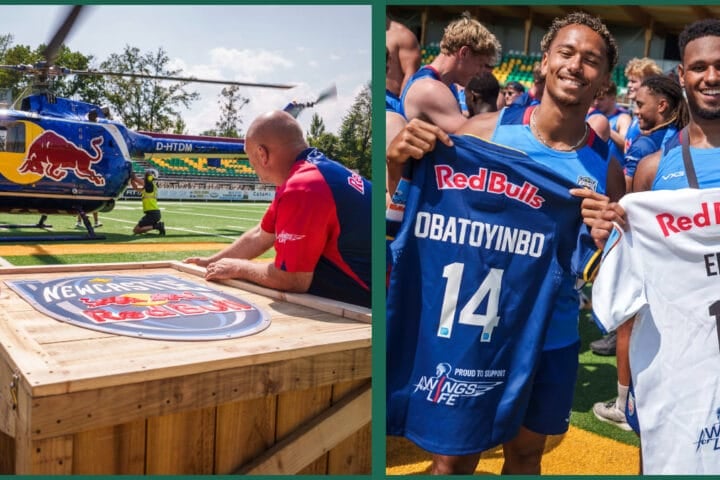
Meanwhile the investment wave is already arriving: Red Bull at Newcastle, American investment at Exeter, a minority stake sold at Northampton. Orange welcomes all of it — with the caveat that she wants a league of ten clubs “all doing well,” not a league where cooperation loses to self-interest.
PWR salary cap: the £265,000 reality of women’s Premiership rugby”
The WeTalkRugby Verdict
Strip away the warmth of the interview and the picture is stark. A Premiership club with England internationals throughout its squad, a decade of stable ownership, and four playoff runs in five seasons still cannot come close to breaking even — because the two levers that matter most, stadium ownership and market monopoly, are the two things money can’t quickly buy.
Sale’s £8 million annual shortfall isn’t a story of waste (chartered planes aside — Orange owns that one). It’s a story of a club generating £2.5 million where its rivals generate £10 million, then competing against them under the same salary cap. That Sale spent the second or third most against the cap in 2024/25 anyway tells you how much the owners are subsidising the difference.
The ten-year stadium guarantee is therefore the biggest story in this interview, and arguably the biggest story at the club since promotion. If Sale get it right, the entire revenue table flips. If they don’t, English rugby’s northern outpost stays dependent on the generosity of two owners who — by their own admission — treat the balance sheet as a love letter.
Watch the full Michelle Orange interview on the For the Love of Rugby podcast below.
FAQ
How much money do Sale Sharks lose per year?
Around £8 million annually, a figure co-owner Michelle Orange confirmed while stressing the ownership group calls it “an investment” rather than a loss. The shortfall is funded personally by owners Simon Orange, Michelle Orange and Jed Mason.
How do Premiership rugby clubs make money?
Four main streams: a central distribution from PREM Rugby (broadcast and European money), roughly £10 million per year from the RFU via the Professional Game Partnership, matchday revenue (tickets, hospitality, food and drink), and commercial sponsorship. Clubs that own their stadiums keep far more of the matchday money.
Why don’t Sale Sharks own their stadium?
Sale are tenants at the council-owned CorpAcq Stadium in Salford. Under their lease, the club keeps only ticket revenue — minus a 6% commission to the stadium — and earns nothing from food, drink or parking. Michelle Orange has guaranteed Sale will build their own stadium within the next ten years.
How much do Premiership clubs get from the RFU?
Approximately £10 million per club per year through the Professional Game Partnership, including around £3.5 million linked to England’s Elite Player Squad and additional academy licence funding and credits.
Who owns Sale Sharks?
Sale Sharks have been owned since 2016 by businessmen Simon Orange and Jed Mason, with Michelle Orange as co-owner. Michelle is one of the most hands-on owners in the league, working from the club’s Carrington training base around three days a week.