
Justin Marshall watched the replay of the Malcolm Marx strip and asked the obvious question out loud. Kieran Read, 127 Tests, answered it on The Good, The Bad & The Rugby. REVIEW: Thursday 27 August.
Thirty-six minutes gone at Ellis Park. South Africa have driven a lineout to the New Zealand line, Malcolm Marx has the ball off the back of it, and he is already falling forward with his arm out to ground it.
He never gets there. The ball comes loose about a foot above the grass, and the man who takes it off him is the All Blacks inside centre.
Marshall, 81 caps at halfback and part of the 1996 squad that won the first series here, watched it back on air and said what everyone at home said.
“What’s that guy even doing there?”
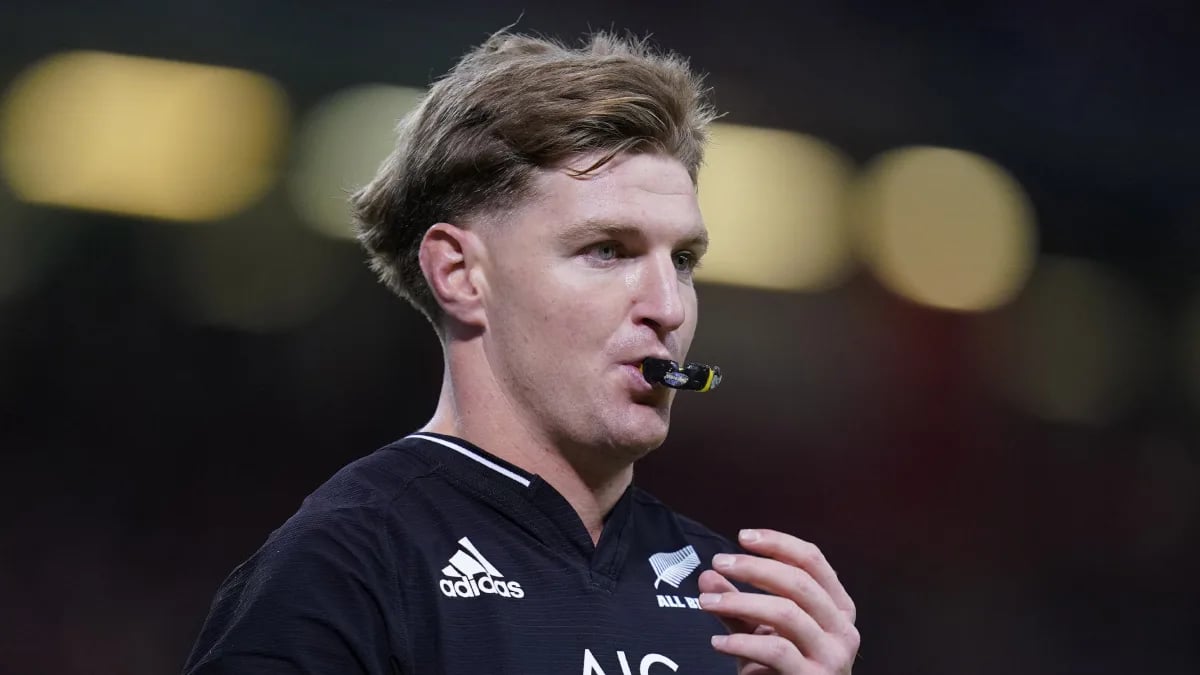
That is the whole article. Not that Jordie Barrett made the play. Everyone saw it, and it is already logged as one of five moments that won a Test the All Blacks were losing. The question is why he was standing where the play was available to him at all, when almost nobody else in his shirt would have been.
Join 125,000 rugby fans getting WeTalkRugby’s daily brief. Every match, every hemisphere.
Jordie Barrett: Fifteen tackles. Five turnovers. From a number 12.
Start with the numbers, because they are stranger than the highlight.
Post-match statistics reported across the New Zealand and South African press had Jordie Barrett on a game-high 15 tackles and five turnovers won. Not a flanker. Not the openside. The second five-eighth, in a match his side lost the territory battle and spent most of defending.
Planet Rugby gave him 9 out of 10 and called him “immense without the ball, meeting the Boks’ physical challenge head-on and earning a number of turnovers”. The New Zealand Herald went further and called it the performance that proved he is the best midfielder in the world.
The Marx moment is the one that will be replayed. It was not the only one of its kind. Barrett also put Pieter-Steph du Toit on the floor and then stole the ball at the ruck that formed on top of him, which is a sequence you would expect from an openside with a fetcher’s body shape, not from a centre.
And this is not a one-off he found at altitude. During his sabbatical at Leinster he made 14 tackles and three turnovers in one match against Glasgow Warriors, out-tackling Josh van der Flier and matching Caelan Doris for turnovers won. Same skill, different hemisphere.
What Rassie admitted afterwards
The most useful description of what the All Blacks were doing came from the man they did it to.
“They had a very clever tactic, again – 100% legal – they were stripping in the tackle.”
That is Rassie Erasmus, in his own press conference, after a 17-point defeat. South Africa had prepared for chop tackles and downward pressure. They got neither. They got a defence that went for the ball rather than the man, and Erasmus said plainly that his side did not adapt once the pattern was obvious.
He also said it worked specifically where it hurt most, which was inside the Springbok 22, and Erasmus refused to call the defeat a catastrophe while conceding that point without argument.
It is the missing half of something else said this week. John Smit said the All Blacks had an answer for everything South Africa brought to Ellis Park. This was the answer. Barrett was the sharpest instrument in it.
Read also: Matthew Carley’s calls that turned Ellis Park, including the tackle that looked high on television and wasn’t.
“Not many second fives will come in and try and make that play”
Here is Read’s answer to Marshall’s question, and it is a positional one before it is a character one.
“He’s defending in there because he’s close to that first back off that lineout. And not many second fives will come in and try and make that play. They’ll stay out. ‘Oh, I don’t want to be involved, you know. I don’t want to get pushed off’ or whatever. But no, whatever he can do for the team.”
Read compresses about three coaching conversations into four sentences there.
When the opposition sets a lineout, the defending backline sets outside it. The inside centre is the first back in that line, closest to the tail of the lineout and to whatever comes off the back of a drive. He is standing next to the problem.
Almost every 12 in Test rugby stays out. There are good reasons for it. Step in towards a rolling maul and you are one man against a bound unit of eight, you can be shoved backwards in front of 60,000 people, and if the drive goes anyway nobody credits you for trying. Stay out and you defend your channel, which is the job you were picked for, and nobody ever asks why you were not in the maul.
Read’s point is that Barrett takes the risk with the downside attached to it. The upside, when it lands, is a try that does not happen.
“He’s just a guy who will put his body on the line for his team.”
Read is a 127-Test number 8 who spent a decade at the back of exactly those mauls. When he says most twelves would not go in, he is describing the men who did not go in behind him.
The show’s host, Andy Rowe, then made the point better than any analyst could, and at Marshall’s expense.
“I never saw Walter Little or Frank Bunce come in and help Marshy out when he was holding the Springboks at bay in ’96.”
Read’s answer was a shrug. “They’re probably smart enough.”
There is a real observation inside the joke. Little and Bunce were the All Blacks midfield on that tour and they defended their channel, because that was the job. A 12 stepping into a maul to fight a hooker for the ball is a modern invention, and Jordie Barrett has made it routine.
Read has seen him do it before
The detail that gives the quote its weight is what Read said next, almost as an aside, reaching for a memory he could not quite date.
“He’s held up someone else before, last year or previous years, right? Where he’s come in there…”
He goes on to describe the same picture: hands on a forward who had broken off a maul. He is not certain which match. That is the point. A play a 127-Test captain half-remembers from a previous season is one the man has made often enough for it to blur, which is a different thing from a moment of inspiration at Ellis Park.
Read also framed it inside the team performance rather than as a solo act, worth noting given how the clip has travelled.
“We were under the pump, and we defended so well to keep them at bay when they did have their entries into our 22.”
That is the correct read. Barrett won five turnovers, but the All Blacks made 132 tackles to South Africa’s 86, and the strip only works if the fourteen men around it hold their line while somebody gambles.
And one throwaway line from Read says more about the shape of Barrett’s night than the highlight does.
“What Jordie will give is that physical effort. He didn’t unleash his boot too many times.”
One of the best left boots in the New Zealand backline, barely used. At altitude, against a side that wins the aerial contest, the All Blacks’ 12 spent eighty minutes doing the other job.
The second in which a strip is legal
This is the part the broadcast never explains, and it is worth knowing because it changes what you see on Saturday.
A strip is not a breakdown offence, because at the moment it happens there is no breakdown. Under World Rugby’s laws, a tackler may play the ball provided they have released, come from their own side, and a ruck has not formed. A ruck forms the instant one player from each team is in contact, on their feet, over a ball that is on the ground.
So the window is narrow and precisely defined. The ball has to still be in one player’s hands and off the grass. Once it touches down with bodies over it, hands out, and reaching in is a penalty.
Watch for that gap rather than for the arms. On the Marx play the ball was still in the hooker’s grip and still a foot off the grass, and nobody was over it, because he had not made it to ground. That is why it was legal, and it is why Erasmus used the phrase he used instead of complaining about it.
The tell: if you can still see daylight between the ball and the grass, the strip is on. The moment the ball lands and a defender is on his feet above it, the contest has changed shape and anyone still grabbing is giving away three points.
Damian de Allende is the reason Jordie Barrett has a harder night coming
Barrett gets a harder examination on Saturday, for two reasons.
The first is the man opposite him. Damian de Allende is one of the best centres in the world and nobody says it, and he is not a carrier who leaves the ball loose in contact. He arrives with it locked to his chest and a second man usually arriving with him.
The second is that the tactic is now public. Erasmus has named it, every South African analyst has watched the clip, and the Bok carriers will have spent the week being told to hit the deck rather than fight for the extra half-metre. A tactic that beat a side once, having been announced, rarely beats them the same way twice.
There is also a quieter problem for New Zealand. Handré Pollard is at 10 for South Africa in place of Sacha Feinberg-Mngomezulu, and Pollard kicks more. Fewer carries into contact means fewer strip opportunities, and a defence built on stealing the ball needs somebody to be holding it.
Which is why the number that matters on Saturday is not the turnovers. It is the tackles. Fifteen from a 12 at altitude was a workload. Fifteen from a 12 at sea level, against a side that has been told exactly what is coming, would be something closer to proof.
Add a winning margin for points
Frequently asked
How many tackles did Jordie Barrett make against the Springboks?
Fifteen, a game high, along with five turnovers won, playing at inside centre in the All Blacks’ 33-16 win at Ellis Park on Saturday 22 August.
What did Jordie Barrett do to Malcolm Marx?
In the 36th minute, with Marx diving to ground the ball off a lineout drive, Barrett came in from the defensive line and knocked the ball out of his grip before he could touch it down. South Africa did not score from the position.
Is stripping the ball in the tackle legal?
Yes, within a narrow window. A player may play the ball provided a ruck has not formed, and a ruck forms once one player from each side is on their feet in contact over a ball that is on the ground. If the ball is still in the carrier’s hands and off the ground, the strip is legal.
What did Kieran Read say about Jordie Barrett?
That Barrett defends inside the lineout because he is the first back in the line, and that “not many second fives will come in and try and make that play. They’ll stay out.”
Who does Jordie Barrett face in the second Test?
Damian de Allende, at DHL Stadium in Cape Town on Saturday 29 August, kick-off 5.10pm local. Every fixture and kick-off time in Rugby’s Greatest Rivalry is here.
Read next: Kieran Read has already picked the All Blacks front row for Cape Town, and it isn’t the one that started at Ellis Park.
Your turn
Two ways to read fifteen tackles and five turnovers from an inside centre, and they lead to different teams.
One says Jordie Barrett is the best defensive midfielder in world rugby and the shirt is his for as long as he wants it. The other says a 12 topping the tackle count means the men outside him were being got at all night, and that a back row doing its job would have made half of those interventions unnecessary.
Read thinks it is the first. Pick yours in the comments, and name the 12 in world rugby you would put in front of him.
Kieran Read and Justin Marshall were speaking on The Good, The Bad & The Rugby: Australia & New Zealand, published on Sunday 23 August. Law detail from World Rugby.