

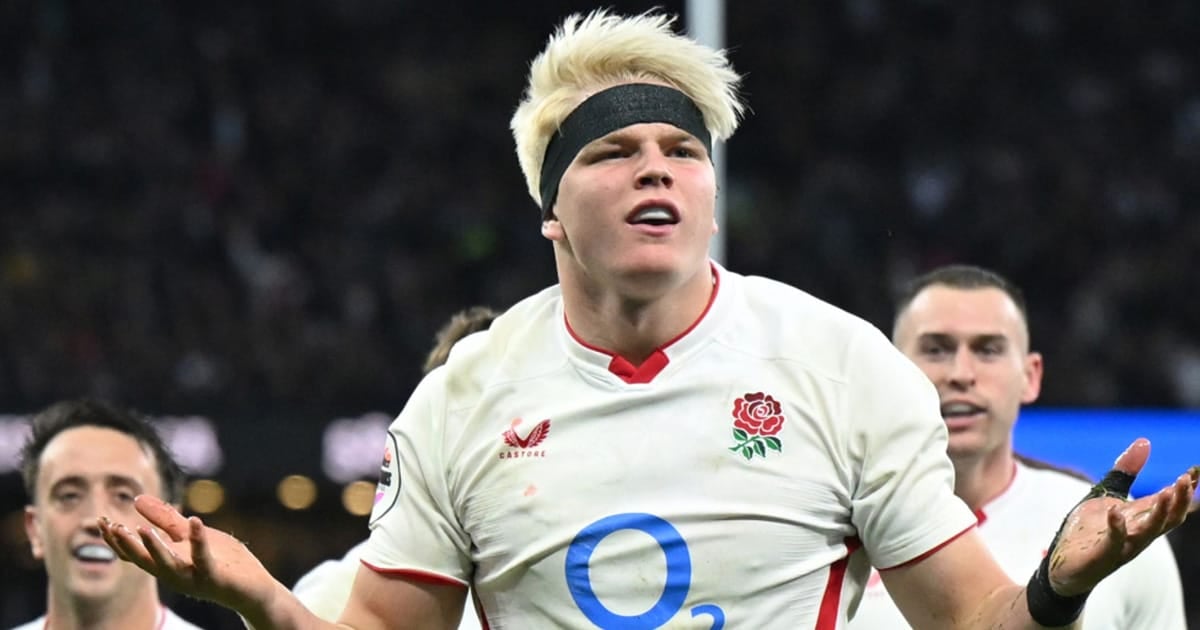
“Henry Pollock puts bums on the seats.” Eddie Hearn said that in the summer, and wanted £1m a year for it.
He got about £400,000.
The Henry Pollock contract still makes a 21-year-old flanker one of the best-paid forwards in England, at roughly two and a half times his old wage.
It is also £133,000 short of what the average marquee player earns. Those are the handful of stars Premiership clubs are allowed to hide outside the salary cap altogether.
So which is it: the cheapest superstar deal in England, or £250,000 a year that Northampton have quietly taken off the rest of their squad? Comments are open.
The Times reported that Pollock has agreed a new Northampton Saints deal worth about £400,000 a year.
Ruck, citing its own sources on Thursday 3 September, called it a two-year extension worth more than £750,000 in total. It takes him from the summer of 2027 to 2029.
Six days on, the club has confirmed none of it. Northampton have published a kit launch and a match report, and nothing at all about their best-known player signing on to 2029.
A week earlier the alternative had been a three-year Newcastle Red Bulls offer built to reach £1m a year, backloaded so that he arrived as their marquee player in 2029. He said no.
Eddie Hearn asked for a million and should be delighted with £400,000
Pollock’s commercial affairs went to Matchroom in April. Its chairman got straight to work.
“He’s certainly a seven-figure player… Henry Pollock drives season ticket sales. Henry Pollock puts bums on the seats. Henry Pollock drives viewership. Henry Pollock sells shirts, right? So you can actually put an economic value over having Henry Pollock on the team… He cannot stay at this club on the money that he’s on.”
Eddie Hearn, across one interview with Telegraph Sport, relayed by Sky Sports on Wednesday 2 September. Read it back knowing how it ended and it looks like a defeat. Look at the numbers instead.
Pollock has been playing Champions Cup and Test rugby on a reported £150,000, against a league average senior salary of £165,181 on the same Premiership Rugby audit. The man who started a title-winning final was earning less than the mean of the competition he won.
About £400,000 is roughly two and a half times that, and it clears the average Prem fly-half, the best-paid position in the league at £259,602, by more than £130,000. Hearn moved his client from below average to near the top of the market in one summer without shifting him a mile up the M1.
Phil Dowson called it a happy medium. He was describing arithmetic.
“Eddie Hearn has a job to do, and that is to promote his client and ask for more money for his client. He’s doing both of those very effectively… The appetite is for him to stay. Now, we’ve got to find a happy medium.”
Northampton’s director of rugby, seven England caps and 186 games for this club as a back-row, said that to BBC Sport on Wednesday 2 September. The phrase everybody quoted was “happy medium”. The word that matters is “we”.
Hearn is not the man across the table from Dowson. His own bench and his own academy are, because every pound of this rise comes out of a fixed pot.
The Henry Pollock contract does not cost Northampton £400,000
It costs them the difference. Around £250,000 a year, on the reported numbers, is the new money.
BBC Sport put the Prem salary cap at £6.4m, with a further £1.4m available in academy and incentive credits. That has to stretch across a senior squad averaging 42 players.
£250,000 is a senior player and a half.

On Saturday 5 September a young Saints side led 28-19 at half-time away at Saracens. They lost 96-42, conceding 77 points after the break to a team that scored 14 tries. Two looseheads went off injured.
“We don’t want to come here and get a hiding and get embarrassed so we’ve got to make sure we do our damnedest to make sure it doesn’t happen again.”
A cup tie, week one, deliberately young team. It proves nothing on its own. But the money conversation and the depth conversation are the same conversation, and Saints have just moved a quarter of a million a year towards one flanker.
£533,000 is the number that decides whether any of this hurts
The cap has a door in it. A club can ask for one player’s salary to be lifted out of it altogether. Premiership Rugby’s own salary cap report counted nine players through that door in 2024-25, at an average of £533,000 each.
Clubs never name theirs. So nobody outside Franklin’s Gardens will know whether Pollock’s name goes on that list.
If it does, his salary sits outside the cap, the squad loses nothing, and Northampton have the cheapest marquee player in England, £133,000 below the league average.
If it does not, that £250,000 comes straight out of a £6.4m pot that has to cover 42 senior players.
Except the cap was never the thing stopping Saints. The same report named five Premiership clubs who spent under it in 2024-25 even after credits, and Northampton were one of them. They had room and did not use it.
The ceiling at Franklin’s Gardens was never in the rulebook. It is in the accounts, and a marquee designation puts nothing into those.
For scale, the women’s Premiership runs on a £265,000 cap for an entire squad, roughly half what one excluded man costs in the men’s game.
The case for calling £400,000 cheap
He is 21. He started the 26-17 win over Exeter in June that made Northampton champions. He has 13 England caps and six tries in them, and was the youngest man on the last Lions tour.
Ellis Genge called him a superstar after England beat Argentina, and Genge does not hand those out.
If the cap climbs by 2029 and Pollock is still on £375,000, Saints will look shrewd.
The length is the tell, though. Two years does not buy a player’s prime. In 2029 he turns 24 with a World Cup cycle behind him and the next negotiation starts in French. Northampton have not signed Henry Pollock’s best years. They have rented the run-up to them.
Saints did not win a bidding war. They bought 24 months.
The line here on Thursday was that the rugby case for taking Newcastle’s £1m did not exist, and Pollock has now agreed with it.
But £400,000 lands nowhere near the middle of £150,000 and a million.
It is just the smallest number that ends the argument. And it was agreed by a club already spending under its own cap, with a squad thin enough to ship 77 points in a half. All of it comes round again in 2029, when he is worth more and they have less room.

Frequently asked
How much is Henry Pollock’s new Northampton contract worth?
The Times reported about £400,000 a year. Ruck, citing its own sources on Thursday 3 September, described a two-year extension worth more than £750,000 in total, running to 2029. Northampton Saints have confirmed nothing, and as of Tuesday 9 September there is no contract announcement on the club’s news feed.
How much was Henry Pollock earning before?
A reported £150,000 a year at club level, below the £165,181 average senior salary in Premiership Rugby’s 2024-25 report. He also holds an enhanced RFU contract worth a reported £150,000, one of 25 handed out, paid separately by England.

Did Henry Pollock turn down Newcastle Red Bulls?
On the reporting, yes. Newcastle tabled a three-year deal built to meet Eddie Hearn’s £1m-a-year valuation, backloaded so it peaked when Pollock became their marquee player in 2029, with a Red Bull ambassador role attached. He stayed at the club he came through.
Your turn
Two ways to read £400,000.
Either Northampton have locked a Lions tourist in £133,000 below the average Prem marquee player, which would be the shrewdest business any English club has done this year.
Or they have put an extra £250,000 a year into one back-rower, out of a budget already thin enough that a young side shipped 77 points in a half at Saracens. And got two years for it.
One of those is a signing. The other is a bill that arrives in 2029. Which one is it?




Comments
No one has weighed in yet.
Be the first - what did you make of it?