



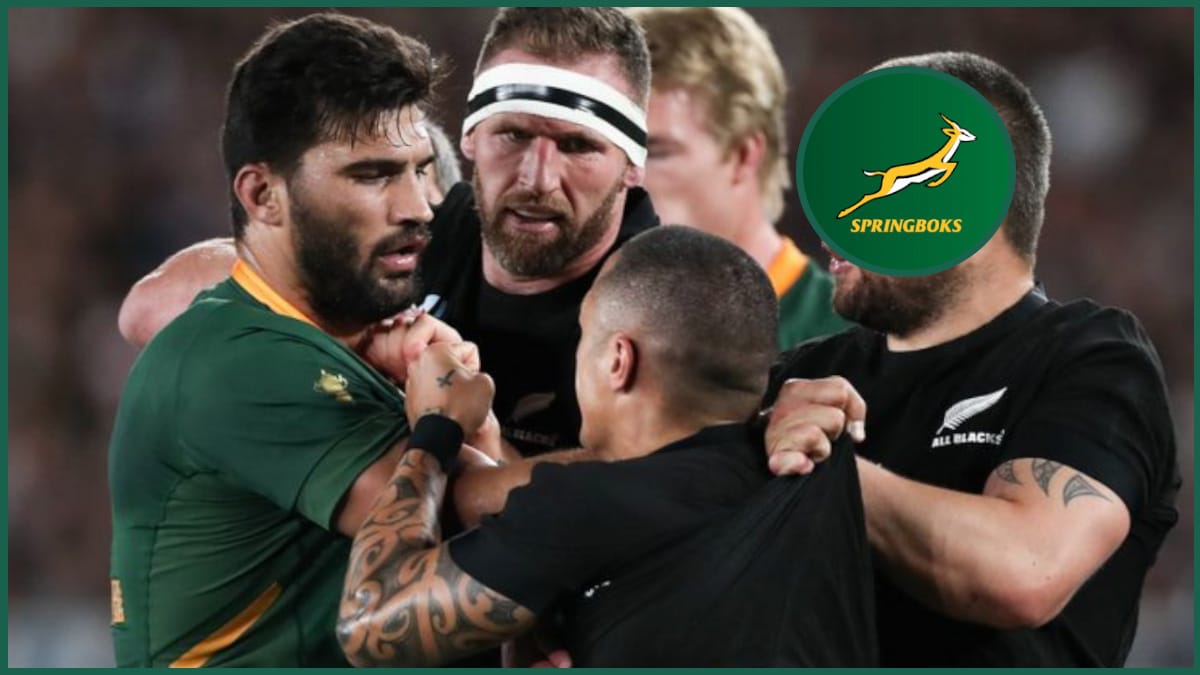
Justin Marshall asked whether South Africa has overtaken New Zealand at producing players. Kieran Read did not dodge it.
Kieran Read has admitted South Africa is now better than New Zealand at producing rugby players, calling it “legitimately a concern” for the game at home. The former All Blacks captain was answering a direct challenge from Justin Marshall on The Good, The Bad & The Rugby ANZ podcast, days before the first Test of Rugby’s Greatest Rivalry at Ellis Park.
Marshall, in South Africa covering the tour, put it to him bluntly. New Zealand had always been the front runner in depth, in passion, and in turning boys into Test players long before they reached the jersey. The Springboks, he said, are now ahead in that area. He pointed to their under-20 side, and to how many of those players are already turning out for provincial teams.
Read did not argue.
I think legitimately it is a concern.
“This juggernaut”: what Read makes of the Springboks
Read’s regard for the side New Zealand is about to meet is not in doubt. He called them a juggernaut, and refused to accept Marshall’s argument that South Africa go into the series undercooked after scraping past Argentina with little time together.
“These guys are 100 testers,” Kieran Read said. “These guys have been around for years and their combinations are strong.” They know each other “back to front”, he added, and do not need the game time: this is a team that understands itself so well that changes barely register, “because they’re that good across the board in the way they play”.
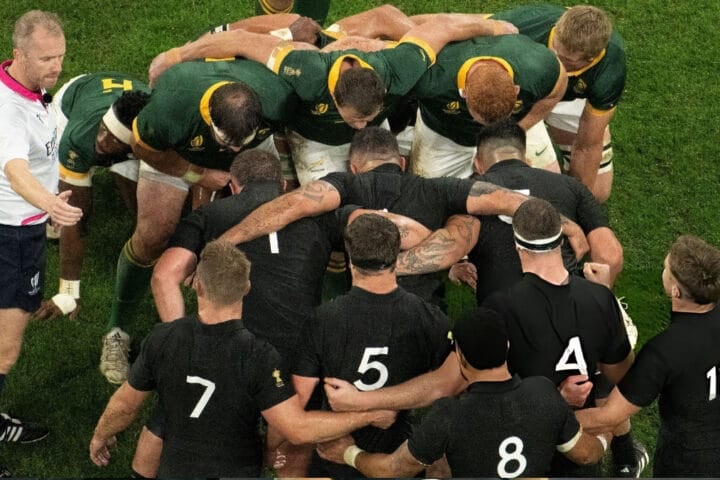
He was blunter still about the one area where the Springboks hold something the All Blacks cannot match. Read pointed to how many of them threaten at the breakdown, singling out hooker Malcolm Marx, the reigning World Rugby Player of the Year, and noting that even their outside backs get over the ball, one of them “great over the ball … for a little man”. His verdict on his own team was short: “that’s maybe where we don’t have that within our side.”
Marshall, for his part, accepted that South African confidence going into Ellis Park has been earned. Back-to-back World Cups, and the better of the recent exchanges between the two, is a record he said entitles them to it.
“We try and make it an elite product too early”
Read has no complaint about the professional game. He rated what New Zealand puts out in the NPC and Super Rugby and said the players serve it well. His problem is everything that happens before that.

The game, he said, “shouldn’t really be about professional rugby”, and New Zealand keeps trying to “make it an elite product too early”. What he wants instead is children kept playing through their whole school years, so there is a bigger pool to choose from at the other end.
He would rather rugby was sold on what it already is: “the values that it has”, and the fact that at home it draws from every walk of life.
The competition for those children is the part that worries him. Other sports are chasing them and winning some of them. Read believes the right people are in charge and that the passion has not gone anywhere. He still sees it walking into clubs. What is missing is decisions, and New Zealand, he warned, “can’t wait too much longer”.
Kieran Read’s other point: the rivalry is doing rugby a favour
His counter is that the affection for the game at home is intact even where the structure is not. He watched a Ranfurly Shield match in Christchurch go to the final play in front of 20,000.
Read also thinks this series is part of why people are watching the levels below Test rugby again. An old-fashioned tour has reminded everyone what the sport looks like when it is played “without the interference of a TMO” — “just pure rugby”, in his words, with supporters who turn up for it.
Marshall: South Africa has not been like this since 1995
Marshall’s read on South African rugby is that it is on a high “like it’s never been before”, and that you have to go back to the 1995 World Cup to find anything comparable. Talent is coming out of the schools into the provinces and on into the Springboks.
He described sections of stadiums handed over to schools across this tour, “chocker with hundreds and hundreds” of children running their own chants “all in sync”: a pipeline visible in the stands as much as on the field.
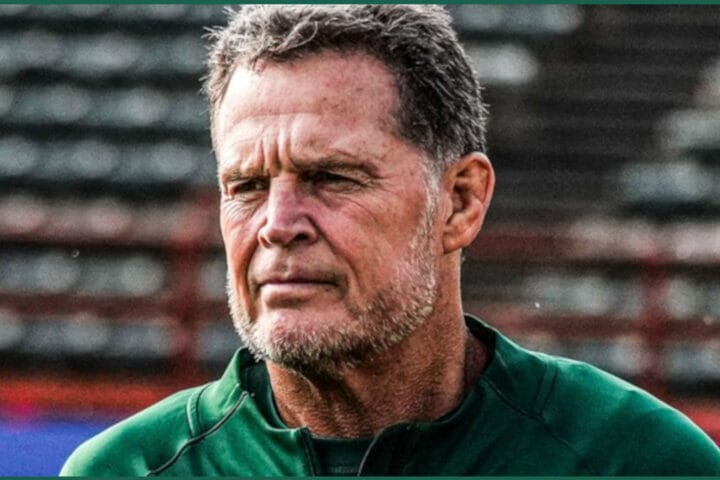
Holding on to them is the other half of it. Springboks head coach Rassie Erasmus deals with players as individuals rather than as a squad, and Sharks loosehead prop Trevor Nyakane recently described him shielding him through a personal crisis that had nothing to do with rugby, which goes a long way to explaining the loyalty he gets back.
South Africa’s own worry: retainers at 13
Marshall has spent the tour in the company of former Springboks, and the warning he brought back is that recruitment there now starts at 13 or 14. Retainers are being offered to children who, in Marshall’s words, “are not young men by any means at that age”. The fear inside the game is a generation arriving at 25 already burnt out. It is the machinery Bryan Habana called the “sausage factory” of professional sport, seen from the entrance this time.
“What you’re entitled to is what you have earned not what you’ve been given,” Marshall said, calling it the balance South Africa has to get right if the surge is going to hold.
Read is not saying New Zealand has stopped loving rugby. He is saying South Africa got better at turning that love into Test players. Dave Rennie‘s side get the short version of the answer at Ellis Park, where three tour wins now have to count for something.
More on Springboks v All Blacks
- Richie McCaw admits one regret from his All Blacks career
- The All Blacks legend who found the Springboks the easiest side to prepare for
- Steve Hansen spotted a Springboks weakness — then backed off
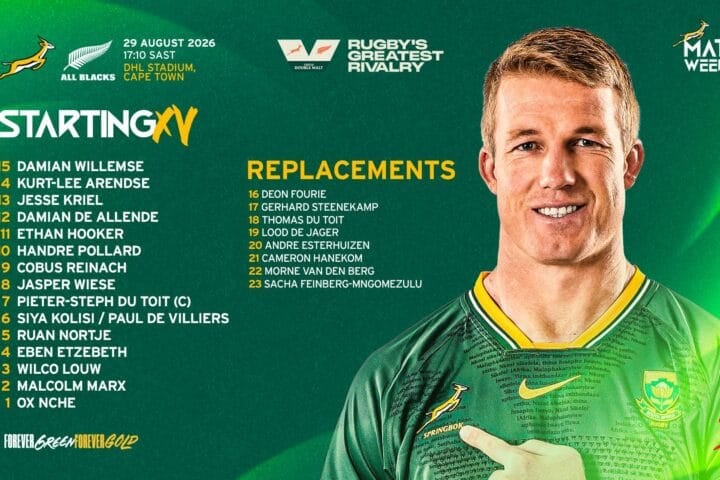
- Steven Kitshoff’s predicted Springboks XV to face the All Blacks
- Anton Segner was man of the match. He still won’t start





Comments
No one has weighed in yet.
Be the first - what did you make of it?