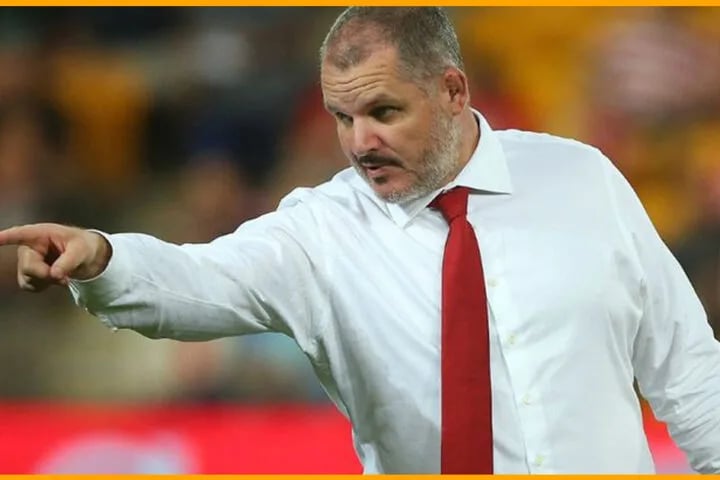

Kolisi back as captain: Springboks skipper starts in Cape Town
Siya Kolisi will start at blindside flanker and captain South Africa against New Zealand in the second Test of Rugby’s Greatest Rivalry at DHL Stadium in Cape Town on Saturday 29 August, after head coach Rassie Erasmus confirmed he has come through training on his hamstring. Kolisi’s clearance removes the bracket Erasmus placed alongside Paul de Villiers when he named the side on Monday, hands the armband back from Pieter-Steph du Toit, and lifts the Springboks starting XV to a combined 1,012 Test caps — the most experienced team South Africa have ever put on the field.
Does Kolisi’s return actually fix what went wrong at Ellis Park, or is this a 35-year-old being asked to carry too much? Have your say in the comments below.
De Villiers, the 4-cap Stormers loose forward who wore the No 6 jersey in the series opener, drops out of the matchday 23 altogether.
Erasmus took an unusual route to get here
When the team was announced on Monday, Erasmus listed both men at No 6 rather than commit — a device he has rarely used, and one that cut against his own long-standing rule that a player must train on Monday to play on Saturday.
“Cheslin and Grant suffered niggles last weekend, which ruled them out of contention for selection, while we have bracketed Siya alongside Paul to allow us time to monitor how Siya comes through training this week,” Erasmus said in the team announcement,
At the same media session he was blunt about the state of play: “He still had a niggle on Sunday. We want to obviously get him into the team, but he has to get through today’s training.”
Kolisi has played 24 minutes of Test rugby this season
Kolisi, who has 104 Test caps and 14 tries for South Africa, picked up the hamstring problem on his return against Argentina in Buenos Aires on 8 August and was withdrawn. He was then left out of the first Test against the All Blacks entirely, with Erasmus calling it a precautionary approach at the time.
That first Test went badly. New Zealand won 33-16 at Ellis Park, outscoring the Springboks by five tries to one, with Will Jordan crossing twice. Erasmus took most of the blame publicly, arguing his side created enough chances and butchered them rather than being outplayed for 80 minutes.
Du Toit reaches 100 caps but hands back the armband
Pieter-Steph du Toit had been named captain for the week purely because of the doubt over Kolisi, and with that resolved he reverts to leading from No 7. Saturday still marks his 100th Test, making him the 11th player in Springboks history to reach a century of caps. Loosehead prop Ox Nché will win his 50th on the same night.
Elsewhere, Handré Pollard returns at fly-half in place of Sacha Feinberg-Mngomezulu, who drops to the bench after a difficult night in Johannesburg. Cobus Reinach comes in at scrum-half for the injured Grant Williams, and Ethan Hooker replaces Cheslin Kolbe on the left wing, pushing Kurt-Lee Arendse across to the right. Damian Willemse stays at full-back.
The replacements have been rebuilt almost entirely. Only Gerhard Steenekamp and André Esterhuizen survive from the Ellis Park bench, with 39-year-old Deon Fourie recalled for his first Test since the 2023 Rugby World Cup final.
South Africa team to face New Zealand
Second Test, Rugby’s Greatest Rivalry, DHL Stadium, Cape Town, Saturday 29 August. Kick-off 5.10pm local (4.10pm BST).
15 Damian Willemse, 14 Kurt-Lee Arendse, 13 Jesse Kriel, 12 Damian de Allende, 11 Ethan Hooker, 10 Handré Pollard, 9 Cobus Reinach, 8 Jasper Wiese, 7 Pieter-Steph du Toit, 6 Siya Kolisi (capt), 5 Ruan Nortje, 4 Eben Etzebeth, 3 Wilco Louw, 2 Malcolm Marx, 1 Ox Nché.
Replacements: 16 Deon Fourie, 17 Gerhard Steenekamp, 18 Thomas du Toit, 19 Lood de Jager, 20 André Esterhuizen, 21 Cameron Hanekom, 22 Morné van den Berg, 23 Sacha Feinberg-Mngomezulu.
What it means for the series
New Zealand lead the four-Test series 1-0, with the remaining matches at FNB Stadium in Johannesburg on 5 September and M&T Bank Stadium in Baltimore on 12 September. A second defeat in Cape Town would leave South Africa needing to win both to square it.