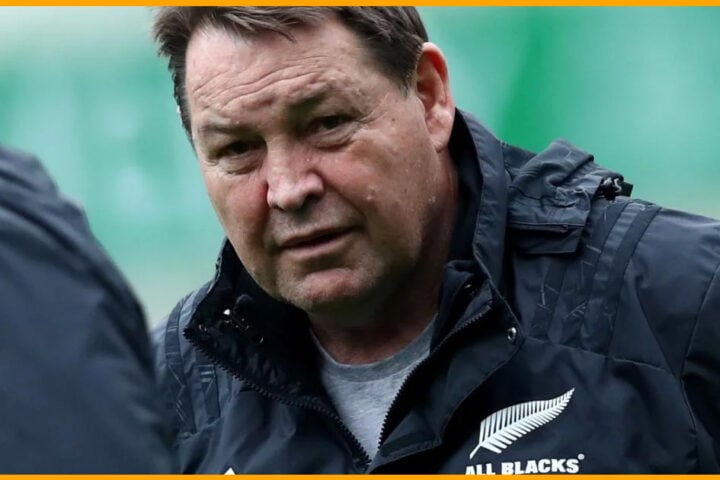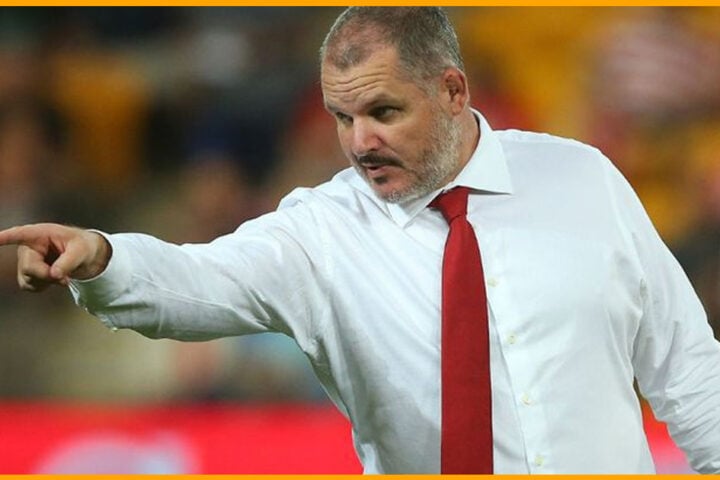

“Our inside player was going around the corner to create that extra man on defence.” Kieran Read, on The Good, The Bad & Rugby ANZ.
Kieran Read has a reason the All Blacks stopped winning the ball in South Africa, and it is not the players. “Our inside player was going around the corner to create that extra man on defence rather than an emphasis, ‘Okay, look, let’s have a crack in that ruck,'” he said.
Read played 127 Tests and captained the All Blacks from 2016 to 2019. He said it on The Good, The Bad & Rugby ANZ on Monday 5 October. Host Andy Rowe, Justin Marshall and the former Wallabies hooker Jeremy Paul were the other voices.
New Zealand have lost three Tests in a row to the Springboks and meet the Wallabies at Eden Park on Saturday 10 October. The All Blacks defence will decide the shape of that night.
So which is it built for: stopping tries, or getting the ball back?
What going around the corner means
After a tackle, the defender who made it has one decision. He can get up and run to the open side, adding a body to the line for the next phase. Or he can set over the ball and compete.
Read says the All Blacks are coached to do the first.
“I think maybe it might be our emphasis thing, right? If you look at how we were defending against the Springboks, it was our inside player was going around the corner to create that extra man on defence rather than an emphasis, ‘Okay, look, let’s have a crack in that ruck, right? Pressure on the ball.’ It’s like we don’t want to ever give away penalties potentially, or we want to secure our D line. So that’s probably just the way the emphasis of our defence is going, but you are right. We do need to create opportunities to turn the ball over.”
Read is describing a system. He is not complaining about a player. Dave Rennie made the same point about Leroy Carter’s missed tackle in Soweto: the structure put him there.
The trade is a real one. A defender who competes and loses gives away a penalty or goes off his feet. A defender who folds never gives away anything. He also never wins anything.
The All Blacks defence will not contest the ruck
Why would a side coach itself out of the contest? Discipline. The penalty count was 12-11 in Soweto and South Africa still won by five, so the fear is not imaginary.
But the Springboks are built for a defence that never competes. Steven Kitshoff said up to 85 per cent of the Springboks game plan never changes. Carry, clean, carry again. A defence that only makes numbers gives that plan as many phases as it wants.
Read followed the logic to the try line.
“Especially once you get into your own half and your own 22, if you just defend, it’s going to cough up a try. It’s just the way the game goes. You just can’t defend for that long and they’ll just get us close and close. So you got to find a way to get that turnover.”
A line that makes numbers holds for six phases, eight, ten. Then one man is late, and the ball goes through the gap.
Slow ruck to slow ruck
The second half of Read’s case is about what happened when New Zealand had the ball.
“Because we weren’t getting turnover ball, we’re trying to play off set piece and then we’re playing and we actually got worse the more phases we played. We got a little bit tired and then we got one guy just flopped down and we missed the cleaner. So that’s when they got their turnovers. Because we weren’t able to play quick, it was slow ruck to slow ruck and the defence was the team that was dominating.”
Put the two halves together. A defence that never competes starts every attack from a set piece, against a Springboks line that is already set. Without a turnover, there is no broken field.
Without broken field, the attack has one setting. Mike Blair, the All Blacks attack coach, said he would rather waste a chance than lose the ball. Three Tests in, that reads as the only option he had left.
Baltimore ended 43-28. The All Blacks scored 28 points and still lost by 15. Over 80 minutes, that is what an attack from set piece against a settled defence looks like.
Read also: Jordie Barrett won five turnovers at Ellis Park, the one Test of the four where the hunt worked.
Why the Wallabies change the sum
Read does not expect Saturday to look like Baltimore.
“The Wallabies won’t bring the intensity around the tackle or the line speed that the Springboks will bring, so winning the gain line will be potentially a bit easier, but it’s going to be a shootout in terms of the way they play versus the way we play. Two pass from turnover, looking to get to edges, creating one-on-ones. We beat them because we win gain line, we win the intensity, and we win physicality. That’s how the All Blacks beat the Wallabies across history. If it’s just a shootout and we’re not winning any physical battle, we can potentially lose that, because the Wallabies are a good side at winning one-on-ones.”
This is where the defence question becomes a Bledisloe question. Australia scored five tries against South Africa in Perth, three of them before half-time, and most of them came wide. A side that only makes numbers against them is choosing a shootout.
A side that competes at the ruck slows Australia’s ball, and slow ball is the one thing their edge runners cannot use.
Who would actually do the hunting
Read’s answer is short. Ardie Savea is out with a shoulder injury, and the men who naturally play over the ball are few.
“It’s a hard one to say because you could say everyone can get over the ball, but it’s the ones who can handle the contact that hit, and that’s naturally they want to go there. And we probably don’t have too many of them across that starting 15. I’d say Peter Lakai is naturally that way. Obviously Ardie is a natural hunter of the ball, not going to be there.”
Lakai has 14 caps. The six loose forwards named for the Bledisloe are Simon Parker, Shannon Frizell, Anton Segner, Ethan Blackadder, Lakai and Wallace Sititi. None of them is a specialist openside in the way the Wallabies have Fraser McReight.
The tell at Eden Park
Watch the first five Wallabies rucks past halfway. Not the ball, the tackler.
If he gets up and runs around the ruck to the open side, the emphasis Read described is still in place.
If he plants a foot and gets his hands on the ball or the first cleaner, watch what Australia do next. Two men sent to clear him means the All Blacks defence has changed its mind in the three weeks off.
Count it. Five rucks is enough. By the sixth you will know whether Saturday is a shootout or a contest.
Read next: Australia’s edges in Perth, where a 9 went to Max Jorgensen and the one-on-ones Read is worried about are scored player by player.
Your turn: penalties or turnovers?
Two ways to see it. Either a defence that never gives away a penalty is the right way to play the Springboks. Or the All Blacks have coached themselves out of the thing that made them dangerous. Read says the second. Which is it? Settle it below.
Frequently asked
Why have the All Blacks stopped winning turnovers?
Kieran Read says the defensive emphasis sends the inside defender around the corner to make numbers rather than competing at the ruck. The aim is to protect the penalty count and the line. The cost is no turnover ball, so every attack starts from set piece.
Where did Kieran Read say this?
On The Good, The Bad & Rugby ANZ, recorded on Monday 5 October with host Andy Rowe, Justin Marshall and Jeremy Paul.
When do the All Blacks play the Wallabies?
The first Bledisloe Cup Test is at Eden Park on Saturday 10 October, 19:10 NZDT. The second is in Sydney on Saturday 17 October.
Who are the All Blacks loose forwards for the Bledisloe Cup?
Simon Parker, Shannon Frizell, Anton Segner, Ethan Blackadder, Peter Lakai and Wallace Sititi. Ardie Savea (shoulder) and Luke Jacobson (elbow) are injured.