


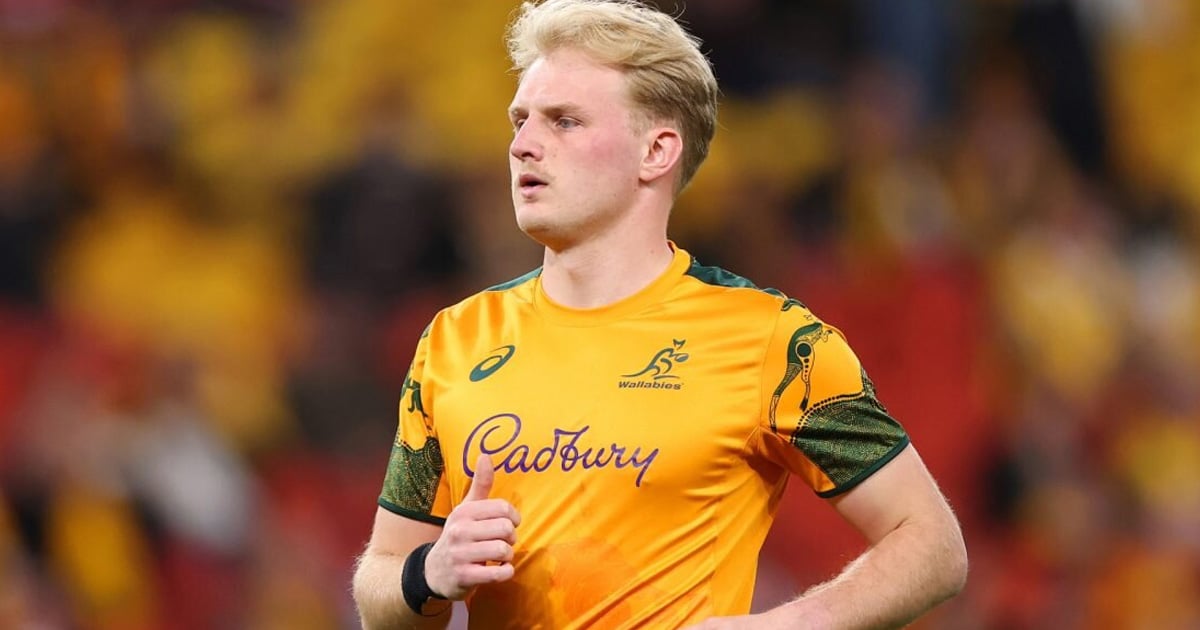
Vern Cotter will not risk a full match on a fly-half who has played 18 minutes all year. Les Kiss has to name a 10 to face the world champions a fortnight later.
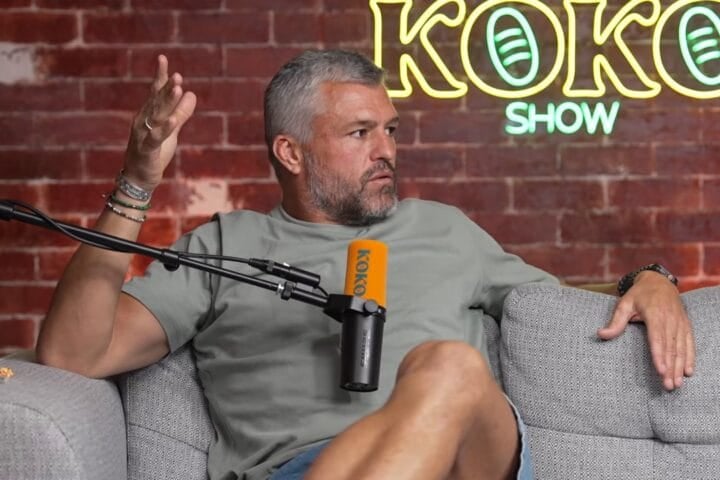
Vern Cotter on Tom Lynagh, this week: “I’m really enjoying Tom in a playmaker role. He’s got a great head on his shoulders. He sees the game well. He’s calm and decisive.”
Then Cotter capped him at 40 minutes.
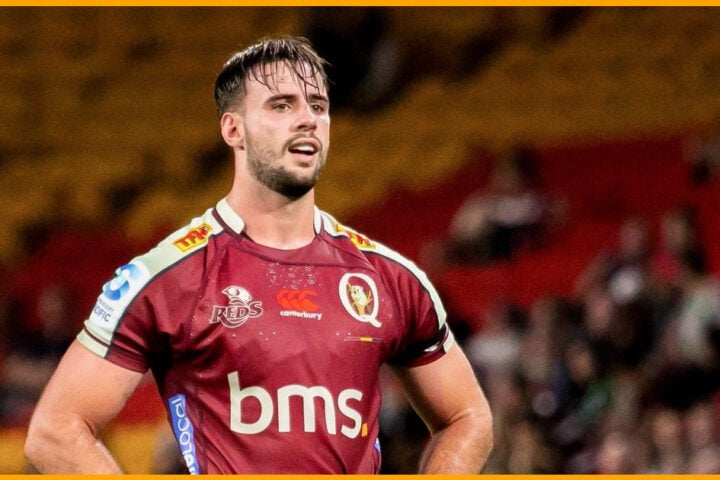
Tom Lynagh starts at fly-half for the Queensland Reds against the Western Force at Ballymore on Saturday, his first start since the British and Irish Lions series. He has played 18 minutes of rugby in 2026, off the bench in March, wedged between two tears of the same calf.
Fifteen days after Saturday, Australia plays South Africa in Perth and somebody has to wear the 10 jersey.
So which is he right now: the best fly-half in Australia, or a 10 his own club coach will not risk for a full game against the Force? Settle it in the comments below.
The queue behind Carter Gordon is shorter than it looks
Carter Gordon removed himself from this conversation on 69 minutes in Mendoza.
He left the 28-28 draw with contact to the lower leg, the scans found a fractured fibula, and Rugby Australia ruled him out of Perth on 7 September. Two months of rehabilitation.
The man Les Kiss brought back to make Australia more direct misses the Springboks, probably the Bledisloe, and Twickenham in November is the first date anyone will say out loud.
So Kiss goes shopping in a thin market. Ben Donaldson has 24 Test caps and most of them came at full-back. Mendoza was his first start at fly-half in about two years. Declan Meredith is third on the list and the least ready.
So the veterans are already being named. Bernard Foley is 37 and has signed for the Waratahs. James O’Connor, 69 Tests, has put his name to a one-year deal at the Western Force with a home World Cup in mind.
Neither has been near a Wallabies squad this season. They are being raised anyway, because the alternative is asking Tom Lynagh, 23 years old with 18 minutes of rugby behind him, to run a Test against South Africa.
Gordon, Donaldson, Lynagh, O’Connor, and three more. Seven men have started a Test at fly-half for Australia since Bernard Foley last did. Perth inherits that churn. Nobody has fixed it.
What a lay-off takes from a fly-half, and what it leaves alone
Two things go when a fly-half misses most of a season, and neither of them is the pass.
The pass survives. So does the goal kick. Grooved skills sit in the hands and come back inside a fortnight of full training, which is why a returning 10 always looks fine in the warm-up.
The first thing to go is depth.
A fly-half coming back from a leg injury stands deeper than he did before it. Not much. A metre, maybe two, and he has no idea he is doing it.
The body is buying time, and it works: the extra metre is an extra beat to catch and choose. It also drags the backline back, because the 12 and the 13 set their line off his. The half-second he bought comes out of the space his outside centre was going to run into.
Flat attack is a contract with a defender. Hold the ball one beat past comfortable, let the openside flanker commit, pass into the hole he leaves behind him.
The second thing to go is the willingness to sign that contract. A player who has torn the same calf twice in one season does not sign it in September. He passes early. Early passing looks tidy on television and it kills a backline, because the defence is never made to choose.
Neither shows up on a training pitch, where nobody is allowed to hit him. Both show up inside 20 minutes of a match against people who are.
So watch Lynagh’s feet on Saturday at the moment the scrum-half’s hands go down onto the ball, not when the pass arrives. A 10 who trusts his leg is already moving forward onto it. A 10 who does not is stationary, or drifting, and he takes the ball standing up.
Everything outside a fly-half who catches standing still is dead before the ball reaches it.
Cotter knows it. Which is why the praise came with a limit attached.
“With the niggles he has had, we will probably be a bit careful with him so it probably won’t be 80 minutes but certainly a good 40 minutes to start with.”
The Force cannot ask him the question the Springboks will
Harry McLaughlin-Phillips wears 10 for the Force. He left the Reds, he has trained with the Wallabies, and he spends Saturday afternoon opposite the man whose jersey he wants.
Nic Dolly captains them. Zac Lomax is at outside centre. Kurtley Beale is on the bench at 37, which tells you something about the depth.
A proper team sheet. A proper contest. Nothing in it resembles a Springboks defence.
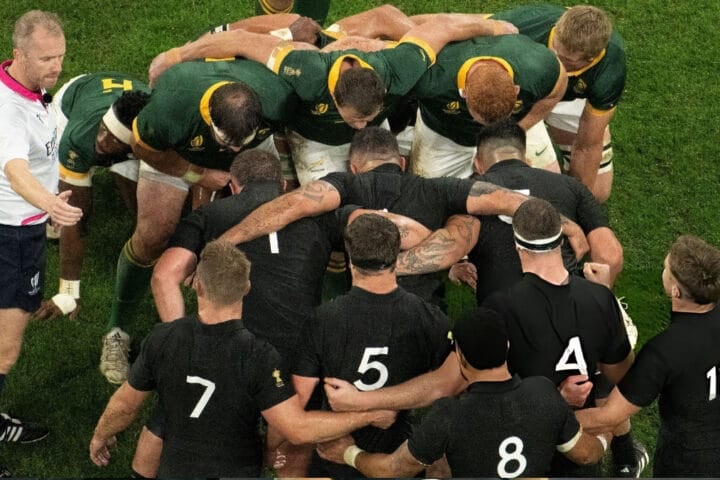
South Africa sit first in the World Rugby rankings on 94.33 points, Australia seventh on 83.55, and the gap between those numbers is a defensive system.
South African line speed off the set-piece is the fastest in the game. It is a rush defence: the whole line comes up together the instant the ball leaves the scrum, and it does not come straight.
The problem it hands a fly-half is the clock. He has to commit before the picture is finished, then wear the hit anyway. Guess wrong and the ball is gone 40 metres upfield before he has turned round.
The Force will not do that to him. Nothing in Super Rugby AUS will. Forty minutes at Ballymore can tell Les Kiss that Lynagh’s calf holds. It cannot tell him whether Lynagh’s decisions hold when the best defence in the sport is arriving early.
The case for starting Tom Lynagh in Perth
Tom Lynagh is the best fly-half in Australia when his body works. He is not a bolter.
He started all three Tests against the British and Irish Lions last year at 22, including the one where a Dan Sheehan tackle took him off with the third concussion of his year. He came back from it and re-signed with the Reds and Rugby Australia in May.
Cotter is not talking about him like a project either. Calm and decisive is precisely what a rush defence goes after, and Cotter has coached Clermont, Scotland and Montpellier. When he says the head is right, that carries weight most opinions do not.
The alternatives are thin, and thin is generous. Donaldson at 10 is an experiment two starts old, and Foley and O’Connor are a 2027 argument dressed as a September one. Australia can pick a fit Lynagh or keep picking around him.
Forty minutes tells Kiss one thing: the calf held
None of this is an argument about whether Tom Lynagh is good enough. He is. It is an argument about what 40 minutes against the Western Force proves.
It proves his calf held for 40 minutes against the Western Force.
Cotter’s plan is the right plan for Cotter. A coach protecting a player he has just got back is doing his job. The mistake would be Kiss reading it as a Test trial.
One more round of Super Rugby AUS sits between Saturday and Perth. At best Tom Lynagh flies west with 40 minutes and one full match in his legs, all of it domestic.
Start Donaldson. Put Lynagh on the bench for 25 minutes against a South African pack that has carried its own weight for an hour, with the game half-decided rather than sitting in his hands.
Then start him at Twickenham in November with six matches behind him, and read the rest of the Wallabies 2026 Test schedule as the runway it is.
The 2027 World Cup opens in Australia in just over a year. Lynagh will be 24. Kiss is picking a fly-half for that tournament, and Perth is one week of it.
Your turn
On the record: Ben Donaldson starts at 10 in Perth, Tom Lynagh comes off the bench, and Lynagh starts against England at Twickenham in November. Screenshot it. If Kiss names Lynagh in the run-on side on the 27th and Australia keeps South Africa under 30, the argument above is there to be pulled apart.
Frequently asked
When does Tom Lynagh play for the Reds?
Saturday 12 September, against the Western Force at Ballymore in Brisbane, kick-off 1.30pm AEST, round one of Super Rugby AUS. Vern Cotter has said he will play around 40 minutes, not the full match.
Why has Tom Lynagh been out?
He tore the same calf muscle twice during 2026 and played 18 minutes between the two tears, off the bench against the Hurricanes in March. Concussion and hamstring problems cost him much of 2025.
Who plays fly-half for the Wallabies against the Springboks?
Les Kiss has not named a side. Carter Gordon is out with a fractured fibula, leaving Ben Donaldson, Declan Meredith and a returning Tom Lynagh as the candidates for Optus Stadium on Sunday 27 September.

Comments
No one has weighed in yet.
Be the first - what did you make of it?