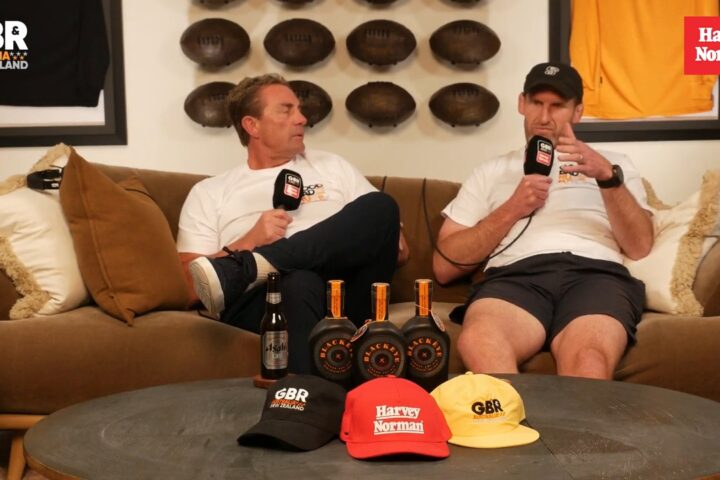
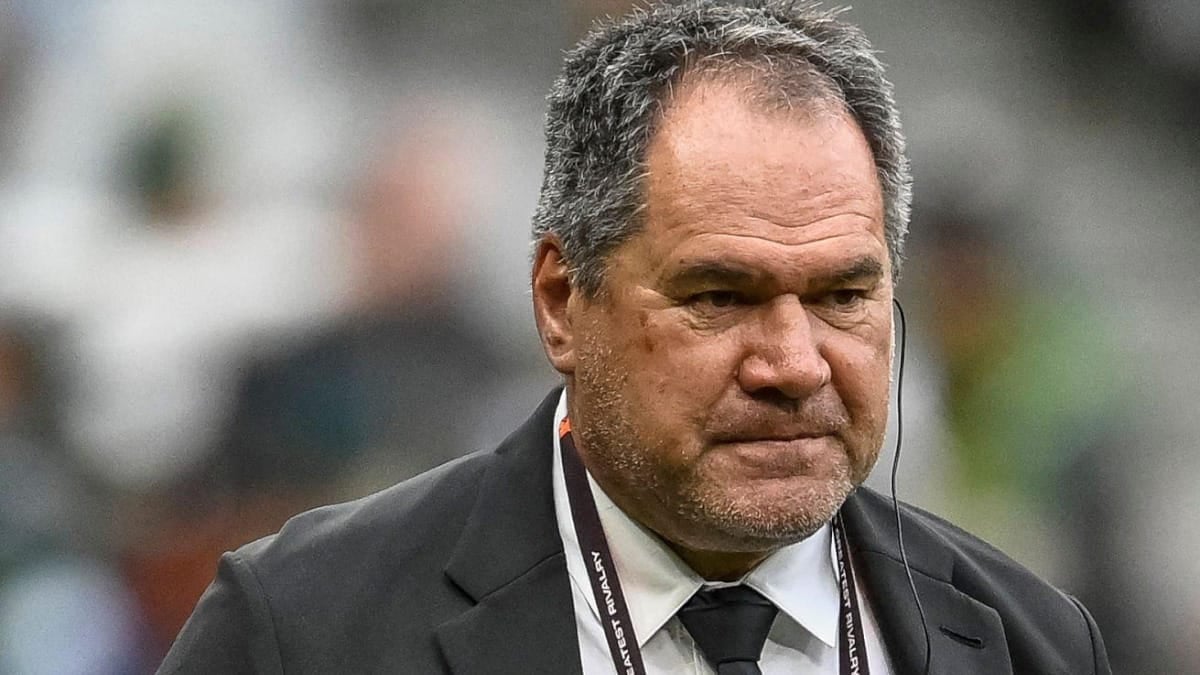
All Blacks head coach Dave Rennie and his captain Ardie Savea fronted the media shortly after the 33-26 defeat at DHL Stadium. Between the scrum questions, the two of them described a completely different match. REVIEW: Saturday 29 August.
New Zealand scored four tries to South Africa’s three. They went into the Springbok 22 nine times against four, had 95 per cent of the ball in the final ten minutes, and never once led the match.
They were level for two minutes of the eighty, when Ruben Love converted Cam Roigard’s try to make it 7-7. Cheslin Kolbe kicked a penalty two minutes later. New Zealand came back to 17-14 just after the half-hour through Damian McKenzie’s try, then Siya Kolisi went over and it was ten points at the break.
The scrum row took the headlines, and the scrum row Rennie restarted in the same press conference deserved them. But the two men on the podium explained the defeat twice over, in sentences nobody clipped, and neither explanation was about the set piece.
Join 125,000 rugby fans getting WeTalkRugby’s daily brief. Every match, every hemisphere.
Three minutes from the end of the same press conference, Rennie also described the one thing worth watching for at FNB Stadium next Saturday. Nobody in the room chased it.
The joke that was not funny
A journalist asked about another sluggish start. Rennie went for the gag.
“We… might get him to win a toss so we can kick off.”
The room laughed. Jesse Kriel had scored inside the first minute and Kolbe converted in the second, so by the time New Zealand had the ball in a settled position they were seven points down and chasing a side that does not give leads back.
Then Rennie explained how it happened, which was the bit worth writing down.
“They got field position. They got a lineout early… they mauled off that and then got in behind us. And then a lot of big men playing on top…”
That is his account of it rather than a verified sequence, but it describes something South Africa have been doing to touring sides for years: win the ground early, maul off the set piece, kick in behind, then put weight over the ball and wait for the penalty. Concede in the first minute in South Africa and you have handed the game to a side who can take three points off any infringement inside range for the next seventy-nine.
Ardie Savea pointed at the penalty count
The captain was asked about the physicality. His answer was about penalties.
“We just got to… fix up little areas in our game and not let the [Springboks] get into our 22, or… rack points up in threes to put pressure on us.”
Points in threes.
Kolbe kicked four penalties and three conversions for 18 of South Africa’s 33, and the penalties are the ones that hurt. He takes them from wherever the infringement happens, which at DHL Stadium means most of the New Zealand half. South Africa got into the 22 four times all night and took three tries from those visits. Everything else came off the tee.
New Zealand went in nine times and came away with 26.
Ardie Savea, who played the full eighty and scored the try Love converted to make it a one-score Test with three minutes left, said that inside the opening two and a half minutes, before the scrum came up at all. Earlier in the same answer he had been less forgiving of the question than of his own side.
“…the way we respond and loving those tight moments — I thought the boys… hung in there… almost stole the game away.”
Rennie was harder on his own side than on the referee
The coach’s version came later.
“We did a lot of good things tonight, but when you play the world champions, you just got to be clinical more often. And… we left two or three out there, which in the end is the difference.”
He lost by seven and reckoned he had two or three more tries available. Seconds earlier in the same answer he had said where they went.
“…they’re now very good at jumping out of line and spooking, and… some of the decision-making, we just weren’t… quite accurate enough.”
The blitz is what he means. A defender leaves the line early and attacks the receiver instead of drifting across with him, and the whole thing is built to make a first receiver change his mind at the moment he should be committing to the pass. Roigard, Damian McKenzie and Leroy Carter all got through it. Kyle Preston, on for the last nine minutes, broke it once to put Ardie Savea over. But New Zealand had 95 per cent of the ball for the final ten minutes and got seven points from it, and the match ended with a knock-on rather than a score.
Rennie also described how Angus Gardner, the Australian referee, handled the breakdown.
“Angus is the type of referee who manages the breakdown a lot. He spends a lot of time telling guys to get out and so on… and so that was able to slow a bit of our ball down too.”
The ruck data reads the other way. New Zealand cleared 61 per cent of their rucks inside three seconds against South Africa’s 55, only 3 per cent took longer than six seconds against South Africa’s 20, and they won 111 rucks to 77 across the night. The ball arrived at the base quickly enough.
Read also: you do not break the Springboks, you make them kick, which is the plan New Zealand ran until the penalty count made it irrelevant.
What the All Blacks do when the ball goes up
Asked whether the Springbok aerial game is covered, Rennie described the blocking-and-catch shape his wings and midfielders run.
“…us, probably like a lot of other sides, have our wingers or midfielders going back so that they can sort of block the guy out but also catch it, so you don’t get penalised for it. And we managed to get penalised once today.”
“It’s just an area that they are… best in the world, and we know there’s a lot more coming next week…”
The old method was to send a man up to compete for the ball. The modern one sends him backwards, past his own catcher, so he can screen the chasing Springbok while staying legally behind the ball. Get in front of the catcher and it is a penalty. The screen only works if he arrives on the chaser’s inside shoulder, a fraction late, and by Rennie’s count they got that wrong once all night.
So at the next box kick in Johannesburg, watch the All Blacks 11 or 13 rather than the ball. He will turn and run away from it.
Forty players, and nobody flying in
Not the squad, unless somebody else goes down.
“We won’t be bringing in any replacements now that it’s just a couple of Tests left. We’ve got 40 players here. We’ve got plenty of loose forwards, and… if we lose another one we may consider that.”
Rennie did say he has “guys coming back”, without naming them, which is the only forward-looking news in thirteen minutes. The third Test is at FNB Stadium on Saturday 5 September.
He did not sound like a beaten coach.
“For all the pressure we’re under tonight, we… lost by seven, and… what we know is we can create opportunities, we can score.”
He is right, and that is the most annoying part of this defeat if you support New Zealand. The performance was good enough, and how South Africa levelled the series 33-26 in Cape Town records a side that was beaten by a maul in the first minute, by Rennie’s own account, and by a goal-kicker afterwards. Kolbe took four shots at goal and landed four.
Read next: the New Zealand player marks from the same 80 minutes, including the two scores that separate this side from a 2-0 series lead.
Frequently asked
What did Ardie Savea say after the second Test?
The All Blacks captain pointed at field position and penalties rather than the set piece, asking his side not to let South Africa “rack points up in threes”. He scored the last New Zealand try of the night, on 76 minutes.
Why did the All Blacks lose in Cape Town?
They conceded inside the first minute and never led. Cheslin Kolbe then kicked four penalties and three conversions for 18 of South Africa’s 33 points, and Dave Rennie said his side “left two or three out there” in attack.
How many tries did each side score?
New Zealand scored four, through Cam Roigard, Damian McKenzie, Leroy Carter and Ardie Savea, against three for South Africa from Jesse Kriel, Damian de Allende and Siya Kolisi. Cheslin Kolbe’s goal-kicking is the reason the side with fewer tries won.
Dave Rennie and Ardie Savea were speaking at the All Blacks post-match press conference in Cape Town on Saturday 29 August. Match, ruck and 22-entry data from the allblacks.com live blog and the RugbyPass match feed.
Your turn
So which is it. Kolbe’s four penalties, or the tries New Zealand did not finish.
Rennie says there were two or three of them. Name one that was actually on, say who missed it, and say which of the two you would fix first before FNB.