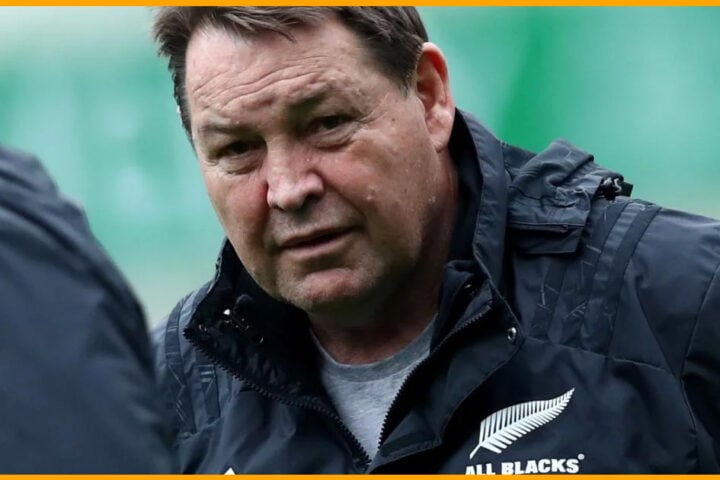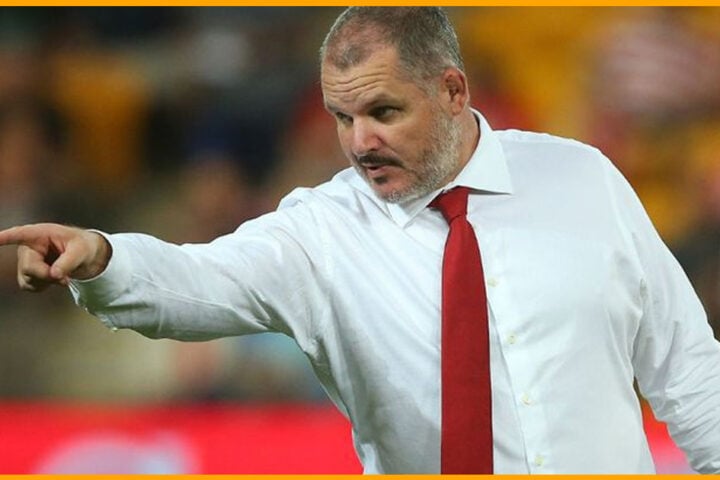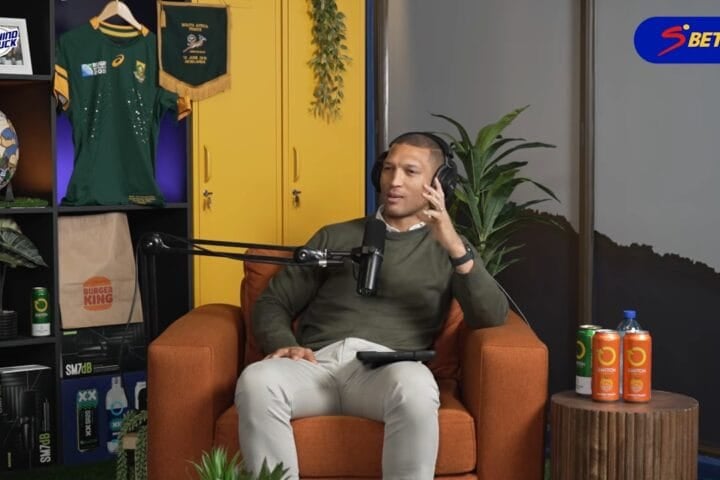
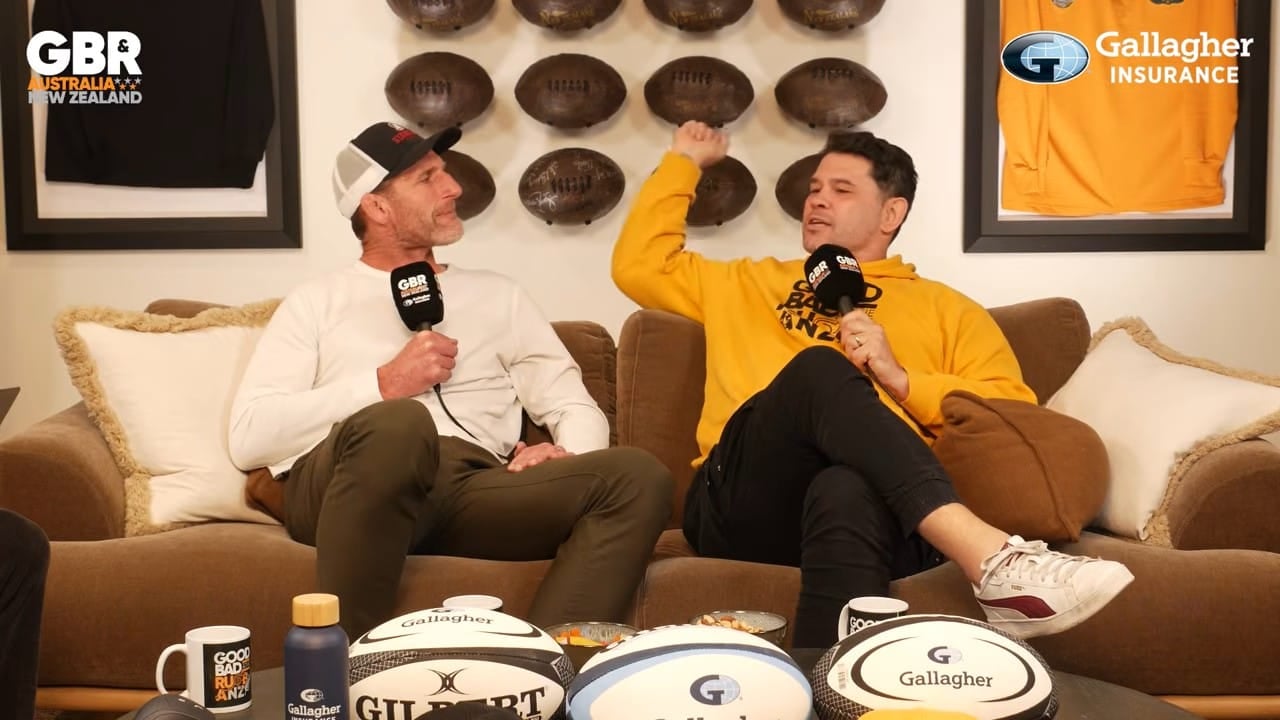
Jeremy Paul called it a hand grenade on The Good, The Bad & Rugby ANZ on Sunday: Ardie Savea is not an eight. Kieran Read, 127 Tests in that jersey, did not defend it. He said the All Blacks are still searching for where to use their captain.
Jeremy Paul called it a hand grenade before he threw it.
“Here’s a hand grenade, mate. Ardie’s performance over this… in terms of a player, because I still don’t think he’s an eight.”
The man across the desk had played No 8 for New Zealand 127 times, and his answer was not a defence.
Savea, 32, is the All Blacks captain, past 100 Tests since Eden Park a year ago, and World Rugby’s player of the year in 2023.
He scored twice in the first half in Soweto on Saturday 5 September, led the carries at half-time with eight despite playing 31 minutes, and left holding his arm. The dislocated shoulder was confirmed a day later. He did not travel to Baltimore, where Rugby’s Greatest Rivalry was lost 3-1.
What Read said instead, on The Good, The Bad & Rugby ANZ on Sunday 13 September, is below, and so is Paul’s fix, which he learned beside a 1999 World Cup winner’s No 8. Is the All Blacks captain an eight? The last man to own the jersey would not say yes. Would you?
Ardie Savea, and the answer that was not a defence
“I think he was one of our most influential players across the series, and that’s maybe not necessarily around how he played, but his leadership is fantastic and great for the team and great for players around him. That’s no question. But in terms of his play… I think we’re probably just still searching for where we best use him.”
Read splits it in two. Leadership, no question. Play, still searching. From the last man to captain New Zealand from No 8, it lands on the coaching rather than the player. Savea and Siya Kolisi now carry the same aura, and aura is what Read is describing in the first half of the sentence. Where the ball goes when Savea has it is the thing nobody has settled.
We did not see him get his hands on the ball
Paul pushed. “So, he’s a ball runner, right?” Read did not disagree.
“He’s a ball runner… Didn’t see that big play. We did not see him get his hands on the [ball]… I love his runs. Like I think his powerful running and his ability, tough against some big Springboks.”
The evidence for the runs is short, and it is all from Soweto. A pick-and-go off Asafo Aumua’s lineout on 10. First to a loose ball on 27 for his 35th Test try, more than any forward in history on Ruck’s count. Thirty-one minutes. Before that, Ellis Park was the night he carried the trophy off and Cape Town was the night he named how New Zealand lost. Neither was a night the ball found him in space.
Read’s explanation of why is the breakdown.
“Their presence at the breakdown… every one of them in the outsides, Marx, Wiese, Kolisi, mate, they’re all just hunting that ball every time you go near an isolated player… they’ve just got great threats there which potentially we don’t.”
Then the concession that matters.
“We probably got his best footy just before he got injured in that third Test… That 20 minutes, 30 minutes that he got… his best footy… through the whole series with Ardie, I thought he was outstanding, his leadership and everything that he brought to the game and the team. And it’s whether that was more around the positioning and the guys around him or not.”
Positioning and the guys around him. Not the player, the structure.
What Toutai Kefu did with slow ball
Paul’s fix is a mechanism, and he learned it beside Toutai Kefu, 60 Tests at No 8 for Australia and the starter in the 1999 final.
“Post-contact metres is ridiculous… it’s always about that slow ball and quick ball ratio, right, and then re-igniting from slow ball into quick ball… playing with Toutai Kefu was like, my god, he could re[ignite]… post-contact metres, cuz then it just reignited and got the defence just going backwards, right? So then bang, you’re on the front foot. I just felt that we didn’t get that.”
Read: “No, we didn’t.”
Watch for this next time. When a ruck is slow, the defence is set and the attacking eight has two jobs available. He can stand wide in the 13 channel and wait for ball that rarely arrives off a slow ruck. Or he can take it one pass off the ruck, into a set defender, and win the metres after contact.
The second is what Kefu did. A carry that ends two metres past the tackler moves the next ruck forward. The defenders have to retreat to get onside, and ball that was slow is quick again. One carry changes the ratio for the next three phases.
Across four Tests against a breakdown Read describes as relentless, New Zealand never had that carry often enough, and their captain is the man built to make it.
“He’s a very close second behind Fraser McReight, the great Fraser McReight. But… when Ardie’s at his best, man, we’re getting him running.”
Read: “100%. That’s what we need.”
The McReight ranking is a Wallabies hooker talking.
The back row without him
Baltimore showed what New Zealand have when he is not there. Ethan Blackadder made 26 tackles, the most on the field, and scored his first Test try. Peter Lakai moved from six to eight. Wallace Sititi came on at six on 54.
“He was tough and a perfect guy to come in for Jacobson, who I thought was really good through the series. Potentially Ethan could have come in at some other point in the series to take the weight off LJ… his engine, and a tough guy who just will smack things that’s in front of him and keep going.”
And on what was missing, Read was exact. “Ardie and Jacobson, our starters, go and you didn’t necessarily miss them in the area. You missed the leadership and… the things from Ardie, but… we got some great work out of those.”
Read also: the Crusaders coach who works with Scott Barrett says Savea should keep the captaincy anyway, which settles the leadership half of Read’s answer and leaves the other half open.
The site’s position
Savea is an eight when the ball is slow and a loose forward when it is quick, and New Zealand played four Tests in which it was slow more often than not. The fix is the carry Paul described: one off the base, taken by the captain, before anyone looks wide. Nobody needs to change the number on his back.
No return date has been given for the shoulder, and the Bledisloe Cup starts at Eden Park on Saturday 10 October. When he is back, that is where to use him.
Read next: John Kirwan says Blackadder should play seven because Vaa’i is the reason, which is the back row Dave Rennie has to build while Savea is out.
Frequently asked
Is Ardie Savea an eight or a seven?
Jeremy Paul says he is not an eight. Kieran Read says the All Blacks are “still searching for where we best use him”, and that the series never got him running off slow ball.
What did Kieran Read say about Ardie Savea?
That he was one of New Zealand’s most influential players across the series through his leadership, “not necessarily around how he played”, and that his best rugby came in the 31 minutes before his injury in Soweto.
When will Ardie Savea play again?
No date has been given. He dislocated his shoulder on Saturday 5 September, missed Baltimore, and the All Blacks next play Australia at Eden Park on Saturday 10 October.
Your turn: name the position
Read could not. Either Savea is the eight and the structure has to bring him the ball one off the base, or he is a loose forward who belongs in the wide channel and the two tries in Soweto were the exception. The argument is above. Take it apart.