


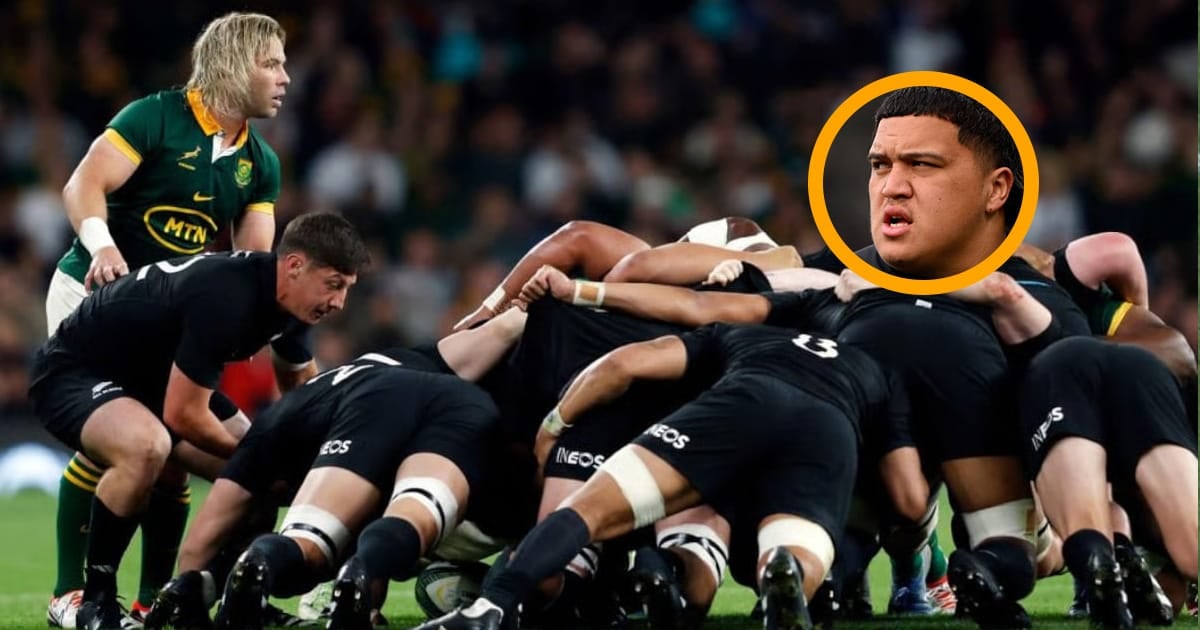
Karl Dickson has already watched your scrums. All of them. He ran touch at Ellis Park, he ran touch in Cape Town, and on Saturday in Baltimore he has the whistle, including every scrum New Zealand got wrong in the Soweto defeat that put South Africa 2-1 up.
That is the Tamaiti Williams scrum warning, and there is no accusation in it. It is a compliment, and it comes from a serving All Blacks prop.
Do you think a referee arrives at a Test with his mind made up? Say so below, because Tamaiti Williams has just described exactly how it happens.
What Tamaiti Williams says a referee brings into the stadium
Williams is the All Blacks loosehead and has not played since 28 February, when a ruck offence against the Chiefs cost him a three-week ban. The back went during that enforced break, and by the middle of March a spinal infection that could have ended more than his season had put him in hospital. He spent Tuesday’s episode of The Good, The Bad & Rugby ANZ as a fan rather than a player, and gave away something front-rowers usually keep inside the changing room.
“Whether they’re playing games or not, the ref goes into the game with something in his head that he’s been looking at all week. Just like players, he’s watched every scrum of the week before. And if you don’t paint good pictures early, or if a call doesn’t go your way early, it can have an effect on maybe the 50/50s.”
That is not the complaint it looks like.
Tamaiti Williams is not saying officials are biased. He is saying they prepare exactly like players prepare, which is obviously true and almost never said out loud. A referee reviews. He arrives with a picture in his head of how your front row behaves under pressure, and the 50/50s are the scrums where the call could go either way.
And after Soweto, plus a defeat in Cape Town before it, the impression he is carrying of the All Blacks scrum is not a flattering one.
So the first scrum in Baltimore is worth more than every scrum that follows it.

The bit nobody in New Zealand wants to hear from a prop
Three weeks of national argument have gone into the scrum. Then Tamaiti Williams was asked where a Test is actually decided, and he did not say the scrum.

“The breakdown, bro. I thought the first 20, 30 minutes we were hot on both sides of the breakdown. So personally that’s where I think a game’s won or lost.”
A specialist front-rower, four days out from a Test framed entirely as a scrum contest, declining to make his own set piece the centre of it.
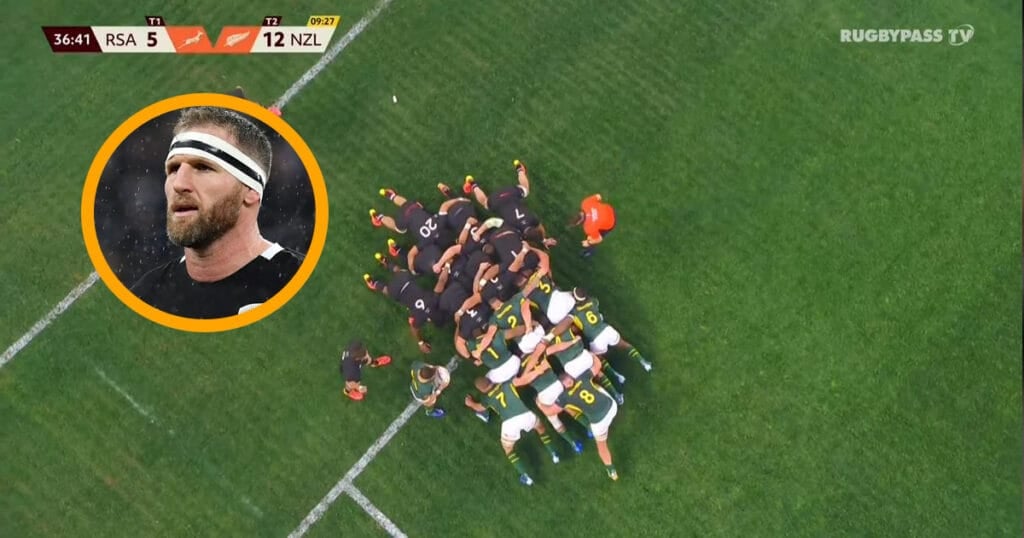
He is not wrong about Soweto either. New Zealand were excellent at the breakdown early and stopped being excellent at it later. The All Blacks were rushing at Ellis Park rather than being out-muscled three weeks ago, which is another problem that only looked like a scrum problem.
The Tamaiti Williams scrum rule: control what you can, which is not much
Williams has been on the receiving end of this, and his answer is unglamorous.
“It’s hard when you start worrying about the ref as a front row because we can’t control what he’s going to call, but the best thing we can do as a front row is show good pictures.”
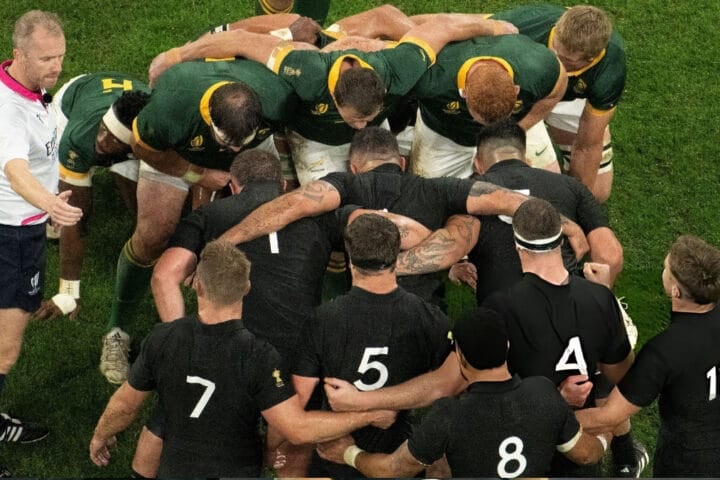
Good pictures. Straight back, square shoulders, a bind that holds, a scrum that goes forward or at least does not fold. Not because they win anything on their own, but because they are the only evidence a referee gets in real time. The other side of that exchange is on record: Ox Nche told the referee he wanted the scrum, which is what confidence in your own pictures sounds like.
The frustration underneath that is real, and he did not hide it.
“It’s frustrating, man. Especially when you think you’ve done everything you can to stay up and go forward.”
It explains why Dave Rennie broke his own rule about not discussing scrums rather than saying nothing. And why, when Nick Mallett went through the same lesson on live television, Angus Ta’avao, 23 Tests as an All Blacks prop, called it a shot through the heart.
George Bower’s rule, and why it is harder than it sounds
The only advice Williams still quotes came from the man who has been wearing the jersey in his absence.
“One thing about [George Bower] — he taught me when I first come to the Crusaders — you park what happened at the last scrum, and the most important thing is the scrum in front of you.”
It sounds like a cliché until you put it next to what Williams said about referees. If the official is carrying a picture from last week, and from the last scrum, then the prop is the only man on the field who is required to forget. He has to reset while everybody officiating him is doing the opposite.
Which is the actual job at a Test scrum. Not strength. Memory management.

Frequently asked
Do referees really watch a team’s previous scrums?
Tamaiti Williams says they do, and describes it as preparation rather than bias. In his words the referee “goes into the game with something in his head that he’s been looking at all week”, the same way players review opposition footage.
What does painting pictures mean in a scrum?
Presenting the shape a referee is looking for: square shoulders, a flat back, a bind that holds, a front row staying up and going forward. Williams calls it the only thing a front row can control, because the call itself is out of their hands.
Where does Tamaiti Williams say a Test is won?
At the breakdown, not the scrum. He said New Zealand were “hot on both sides of the breakdown” for the first 20 to 30 minutes in Soweto, and called it the place a game is won or lost.
Who is refereeing the fourth Test in Baltimore?
Karl Dickson of England, with Matthew Carley and Christophe Ridley as assistant referees and Andrew Jackson as TMO. Dickson ran touch at Ellis Park and again in Cape Town, so he has officiated two of the three Tests in this series before taking the whistle for the decider.
Your turn
Karl Dickson has the whistle on Saturday, and he has already watched this front row from the touchline twice. By Williams’ account New Zealand get one scrum to argue with that footage before the 50/50s start going the other way, which is roughly what the Soweto ratings assumed when the front row carried the blame. So name it: what should the All Blacks front row do differently on that first scrum? Put it in the comments, and be specific.





Comments
No one has weighed in yet.
Be the first - what did you make of it?