


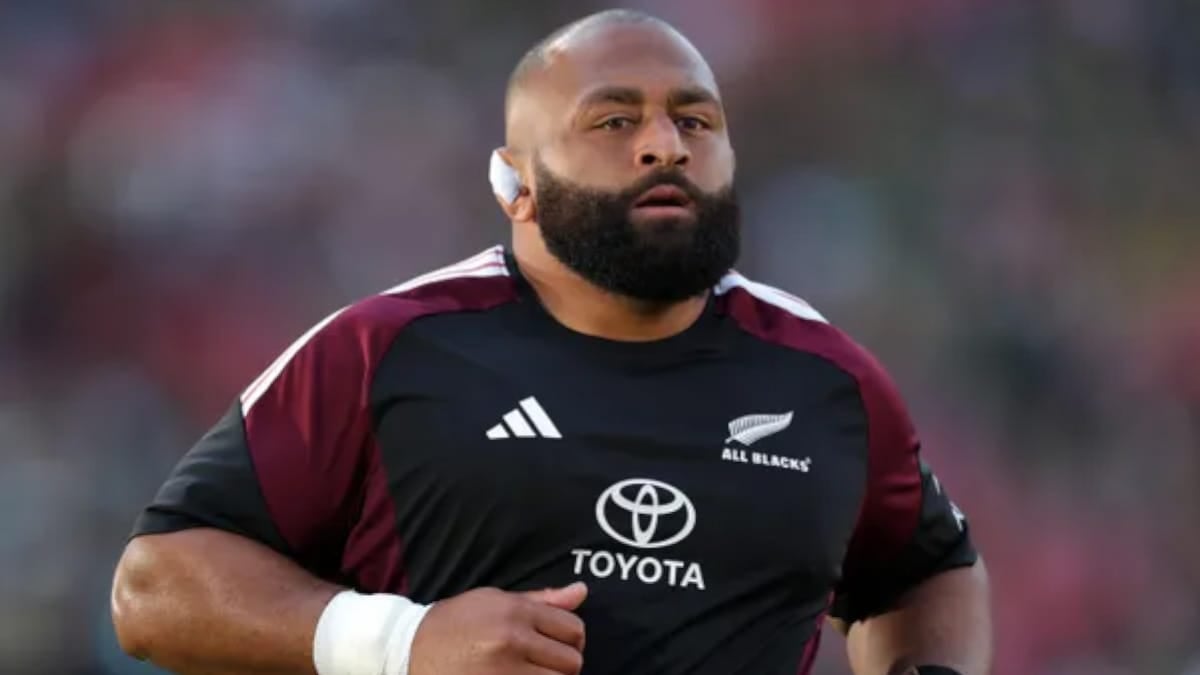
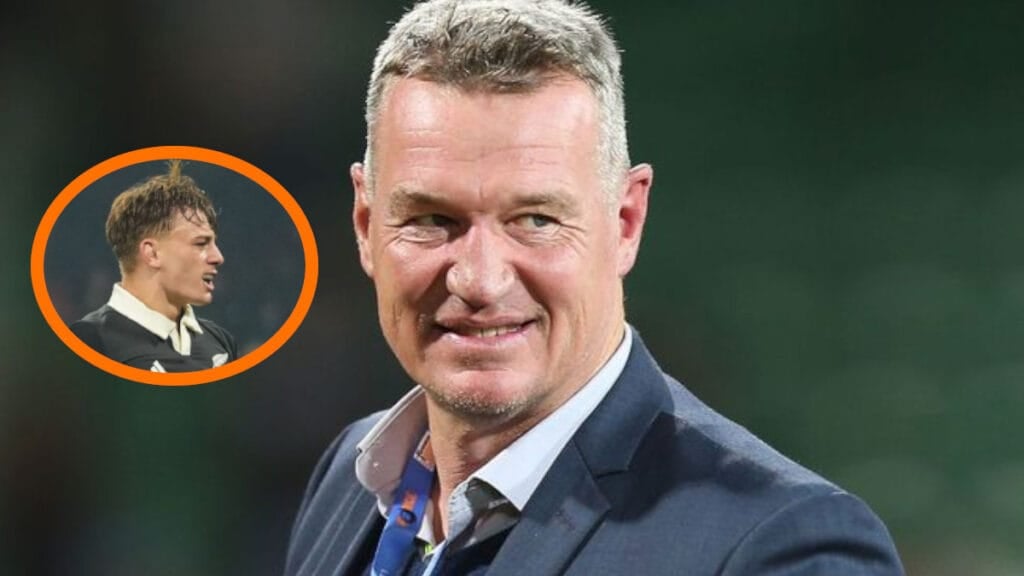
“Oh, I love to scrum. I want to scrum.” George Bower, in Sandton on Thursday 3 September, two days out from the third Test at FNB Stadium. SA Rugby magazine’s Clinton van der Berg was in the room.
A week ago the All Blacks scrum was a complaint Dave Rennie had taken to World Rugby. On Thursday afternoon its starting loosehead asked for more of it.
He also said something about referees that nobody led with, and it is a more honest account of how the All Blacks scrum will be refereed on Saturday than anything New Zealand has said to the governing body. It is further down. So is the one thing worth watching at the first put-in. Whether a prop can win a referee before the first scrum is the argument waiting at the bottom of this page.
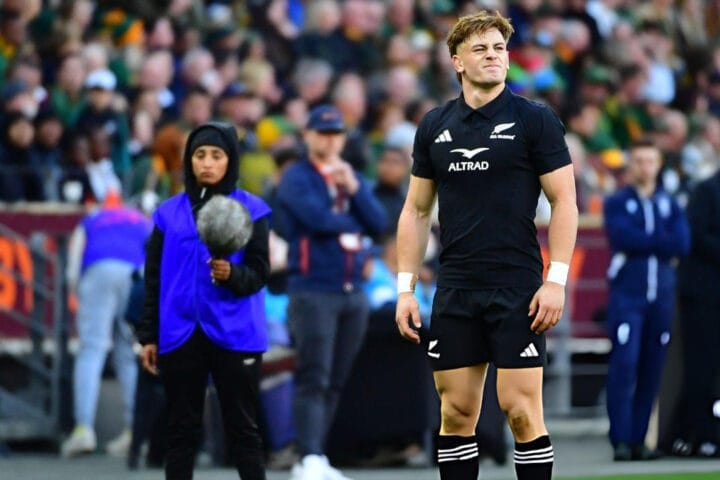
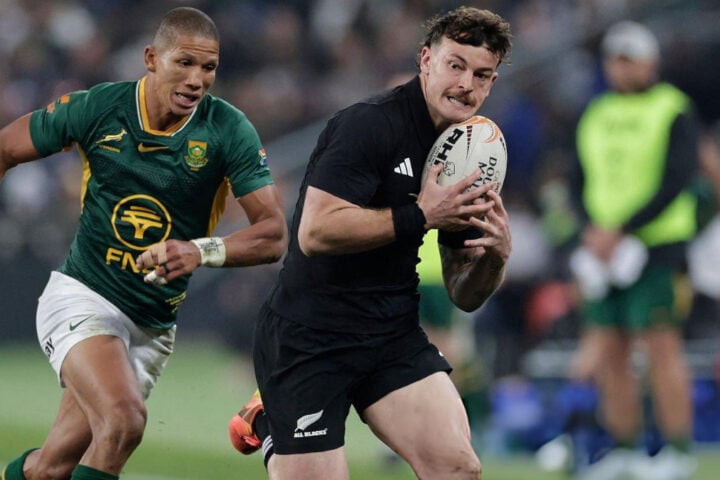
Bower is 34, has 28 caps on Saturday’s team sheet, came off the bench at Ellis Park on Saturday 22 August and started in Cape Town on Saturday 29 August. He anchors the All Blacks scrum again at FNB Stadium at 17:10 on Saturday 5 September, with Nika Amashukeli refereeing and Rugby’s Greatest Rivalry level at 1-1.
George Bower, the All Blacks loosehead, wants to scrum against the Springboks at FNB Stadium on Saturday, says the contest “comes down to that first scrum”, and describes South Africa’s front row as scrumming straight before the angle changes.
The full answer, as SA Rugby magazine reported it:
“I know South Africa pride themselves on the scrum, they see it as their avenue to get penalties and get their game going, moving up the field. But for us too, you can see from Test one our mindset around the scrum is right up there as well. We want to challenge them, and I know my back five want to scrum too.”
Since the 56th minute at Ellis Park, the All Blacks scrum has been a contest, not a source
The first sentence is just Ellis Park described accurately. “From Test one” is the bit that needs checking.
At Ellis Park New Zealand had 15 scrums on their own put-in against four on South Africa’s, and conceded three scrum penalties on their own feed inside the first fifty minutes. “Their avenue to get penalties” is what the All Blacks scrum looked like from the bench.
For fifty minutes of Test one that scrum was where South Africa went for points. Then came a five-metre scrum under New Zealand’s own posts in the 56th minute, a fresh front row of Bower, Asafo Aumua and Fletcher Newell, and a penalty that went the other way, against the Springboks for wheeling.
On Sky Sport NZ’s The Breakdown in the week after Ellis Park, Mils Muliaina, 100 Tests at fullback for the All Blacks, called it the moment the match turned, and Angus Ta’avao, an All Blacks prop from 2018 to 2022, said the shift had earned Bower a look at the No.1 jersey for Cape Town.
He got it. And in Cape Town New Zealand won every scrum on their own ball and lost by seven. James Parsons, the former All Blacks hooker and Blues captain, counted on the same programme on Sunday 30 August that South Africa were penalised once for walking around and won one scrum penalty on their own feed.
So the All Blacks scrum has been a contest rather than a supply line since that five-metre scrum. A prop who has read those numbers would want more of it.
“They scrum direct, and the angles can change all of a sudden”
Bower’s most useful sentence on Thursday was his description of what South Africa do.
“South Africa’s front rowers love to scrum direct, and the angles can change all of a sudden.”
Rennie, after Cape Town, said the Springboks were able to walk around and go straight through the All Blacks tightheads. Rassie Erasmus answered: “We’re not walking around. We’re scrumming through.” Daan Human, who coaches that scrum, answered with six years and a farm. Bower describes the same picture without the accusation, and his version is the useful one for anyone trying to read the All Blacks scrum on Saturday, because it gives you the order things happen in.
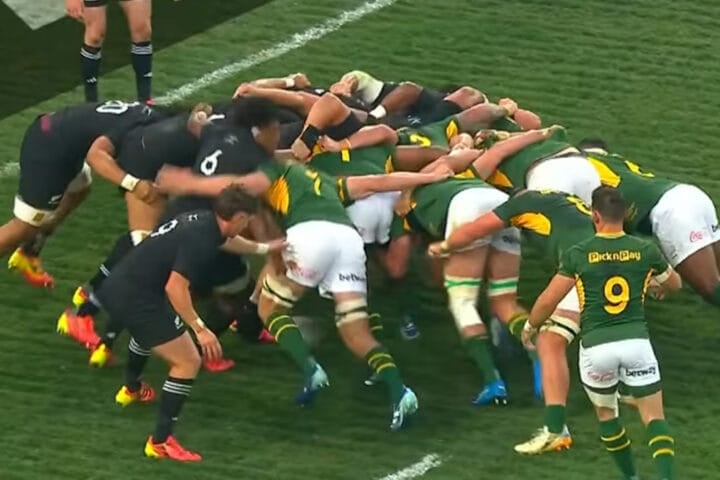
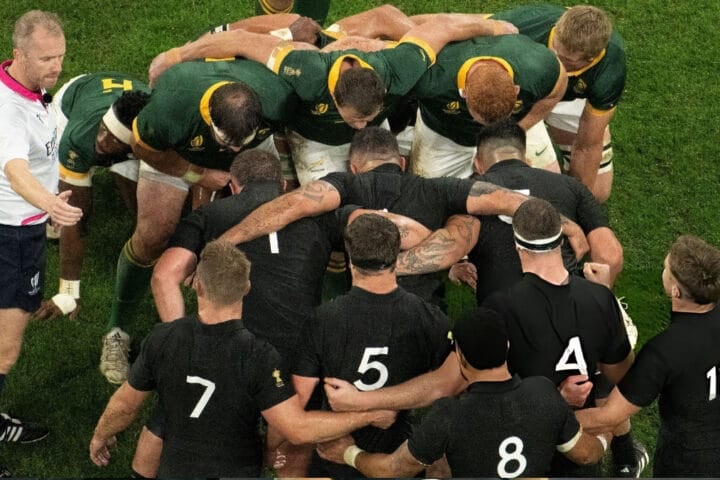
Straight on the engagement. Nothing to see for a referee crouched at the tunnel, the gap between the two front rows where the ball goes in. Then, once the hit has settled and the ball is about to move, the load arrives at an angle, most often through the tighthead. On Saturday that tighthead is Tyrel Lomax, and the man loading him is Ox Nché, 1.76m on his listed height and one of the shortest looseheads in Test rugby, whose second drive is the reason the Springboks scrum remains South Africa’s key Test advantage.
When the tighthead’s right foot goes back, the scrum starts to turn, and the far side, the loosehead’s side, gets pulled forward around the corner. Bower’s side. The instinct of every loosehead in that moment is to chase forward, because forward feels like winning. It finishes the wheel for South Africa. The referee sees a scrum through ninety degrees and either resets it or, if he has already decided which pack is dominant, blows.
Which is the exact moment “connection and tightness, our brace and our set” stops being coach-speak.
Connection, tightness, brace, set: the All Blacks scrum in four words
“For us as a pack, we just have to focus on our connection and tightness, our brace and our set, and hopefully that nullifies what the South Africans bring this weekend.”
Four words, in the order a scrum happens.
Connection is the binds, every grip between the eight from the locks’ hold on the props’ hips to the No.8 wedged between the second row. A loose bind means the back five’s weight reaches the front row a fraction late, and against a second shunt, the deliberate second shove once the hit has settled, a fraction late is the whole argument.
Tightness is the absence of daylight between the front row’s hips and the locks’ shoulders. A tight eight moves as one body when the angle changes. A loose one moves as three props and five passengers.
Brace is the shape before the hit, hips below the shoulders and the weight already forward on the balls of the feet, so the sudden angle meets a body that is already loaded. Ta’avao’s own check for it, on The Breakdown, was a question a prop asks himself in the crouch: “Am I going over the cliff?”
Set is the stillness on the referee’s call. Eight men and nothing moving when Amashukeli says the word. A pack still shuffling at “set” has lost the second shunt before the ball is in.
So the tell, for anyone watching from a sofa. At the first All Blacks scrum on their own put-in, look at the locks and the No.8 on “set”, not at the front row. Still or moving. Then, once the ball is in, watch Lomax’s right foot. Planted through the second shove and Nché’s angle has met eight men and gone nowhere. Back a half-step and the angle has arrived, the loosehead side is about to go round, and the result you see three seconds later was already decided.
George Bower’s line about the referee that nobody clipped
Bower was asked whether Test matches are won up front. His answer went further than the question.
“It starts way before that, on winning the collision and winning the set-piece, which is huge. The team that does that shows dominance and probably gets the rub of the green from the ref, so winning the collision is the main thing for both sides.”
An All Blacks prop, two days before a Test, saying the dominant side “probably gets the rub of the green from the ref”. No coach says that. It also happens to be how scrums are refereed.
A referee builds a picture, and the first scrum is where he draws it. An All Blacks scrum that goes forward square at its first put-in owns the benefit of the doubt at the next collapse. Go backwards at the first one and the pack owns the suspicion instead, and every reset after that is refereed through it. Parsons said as much on The Breakdown: a front row told to adjust is “not adjusting, because those are your tactics” unless a penalty comes with it. Then he used Bower’s exact phrase: New Zealand “got the rub of the green” from Matthew Carley at Ellis Park and did not get it in Cape Town.
Which is why “it comes down to that first scrum” is the truest sentence anyone in either camp has produced this fortnight. Rennie is trying to reach Amashukeli with clips and a governing body. Bower reckons the first All Blacks scrum will do the job on its own.
The All Blacks’ language has moved with him. Rennie went to World Rugby. Jason Ryan, the forwards coach, said in Cape Town on Sunday 30 August: “Remove the referee, remove the opposition, and ask how are we going to be better?” Four days later his loosehead wants to scrum. Same camp, one week, and the verb has gone from complain to reset to want.
Nché, Marx and Louw are back, and so is the front row that won the 56th minute
Erasmus has gone back to the front row he named first: Nché, Malcolm Marx and Wilco Louw, with Deon Fourie, Gerhard Steenekamp and Thomas du Toit to finish. Bower packs against Louw, 144kg on his listed weight, and Marx. Lomax gets Nché, on the side Rennie says the All Blacks scrum has been turned all series.
Across from them Aumua starts after Codie Taylor was left out of the 23 altogether, so New Zealand’s front row in Soweto is the one that won the 56th-minute penalty at Ellis Park, with Lomax in for Newell. Ethan de Groot has been cleared after his Ellis Park head knock and is still outside the 23.
Cape Town already showed that wanting the scrum is not enough
Cape Town showed what the scrum can and cannot do for New Zealand: every own-ball scrum won, seven points lost. What it can do in Soweto is set the referee’s picture, and the picture decides every marginal call from the second All Blacks scrum to the eightieth minute.
So the first put-in at FNB Stadium is the whole argument in one set-piece. Square and still at “set”, ball out clean, and the walking-around row dies at about 17:15 on Saturday with nobody in black needing World Rugby again. Lomax’s right foot back at the first Springboks feed, and Bower gets the contest he asked for, with Amashukeli’s mind made up by the second one.
Frequently asked
What did George Bower say about the Springboks scrum?
Speaking in Sandton on Thursday 3 September, George Bower said the All Blacks scrum wants to challenge South Africa’s, that he loves to scrum and wants to scrum, that the Springboks see the scrum as “their avenue to get penalties”, and that the side winning the collisions “probably gets the rub of the green from the ref”.
Who is in the front rows for the third Test at FNB Stadium?
South Africa start Ox Nché, Malcolm Marx and Wilco Louw, with Deon Fourie, Gerhard Steenekamp and Thomas du Toit on the bench. New Zealand start George Bower, Asafo Aumua and Tyrel Lomax, with Samisoni Taukei’aho, Xavier Numia and Fletcher Newell in reserve. Kick-off is 17:10 on Saturday 5 September, with Nika Amashukeli refereeing.
How has the All Blacks scrum gone in the series so far?
At Ellis Park New Zealand conceded three scrum penalties on their own feed inside fifty minutes, then won a penalty at a five-metre scrum in the 56th minute with a fresh front row of Bower, Aumua and Newell. In Cape Town the All Blacks scrum won every scrum on its own ball and New Zealand lost 33-26.
Your turn
Two routes to the same referee. Rennie’s: send the clips in and have Amashukeli watching for the angle before a ball is kicked. Bower’s: hold the first All Blacks scrum square and let the picture do the rest. One of them turned Ellis Park in the 56th minute. Which one does Saturday belong to? Settle it below.


Comments
No one has weighed in yet.
Be the first - what did you make of it?