The back three lost the air for four Tests. On DSPN’s Monday review Nigel Yalden asked whether the fix is skill, or centimetres.
“He is diminutive. He is fearless. They don’t breed wimps down in Southland.”
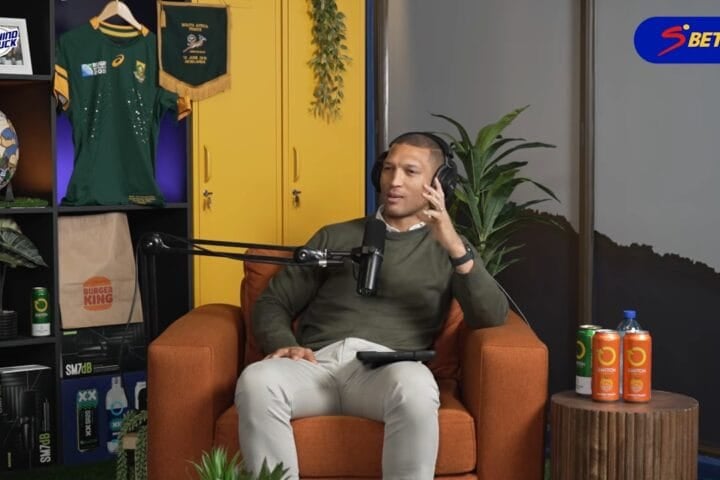
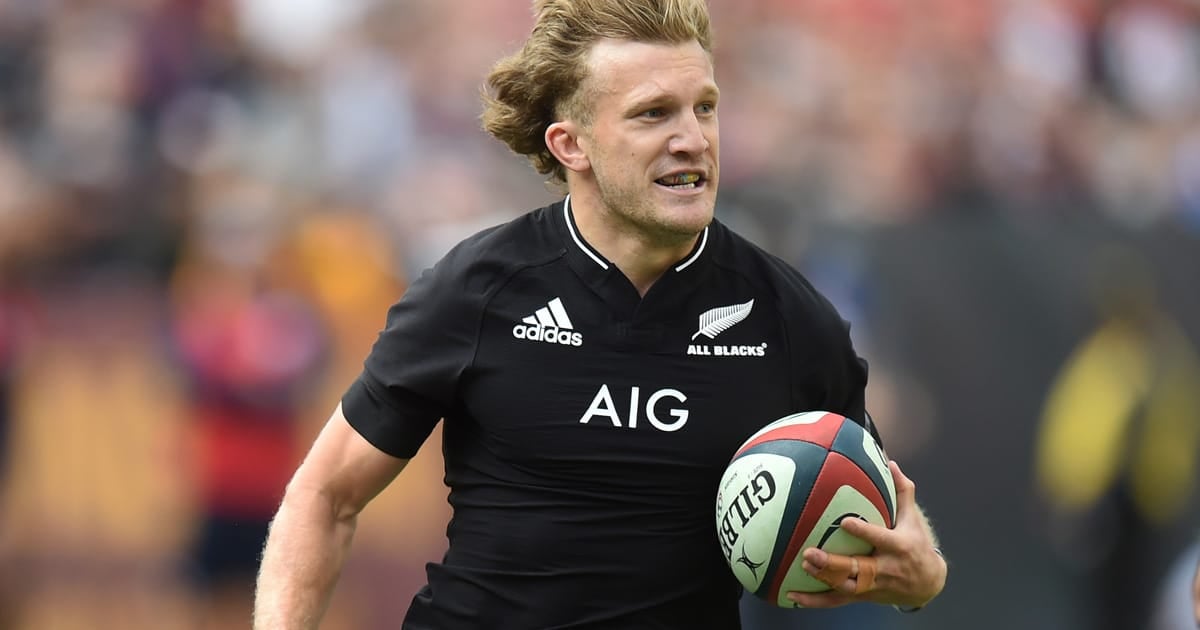
Nigel Yalden, rugby editor at Newstalk ZB and Radio Sport, said it about Damian McKenzie on DSPN’s Monday review, and then asked the question the compliment was setting up. McKenzie, Will Jordan and Leroy Carter all lost the high ball across four Tests. Is the All Blacks back three losing it because of what it does, or because of how tall it is?
The All Blacks back three: fearless, and 1.74 metres
Yalden’s full passage puts the courage and the question in the same breath.
“Do you really need to maybe go back and look at what your back three configuration is going to be? Do you need to somehow find, is it a little bit more height, or are you looking for just a bit more assurity under the high ball? Because when you look at Damian McKenzie, he is diminutive. He is fearless. They don’t breed wimps down in Southland. He will absolutely put his body on the line and climb, and he can elevate. Will Jordan, again, likewise Leroy Carter. These are all people that can get up, but they are slightly diminutive in height. Are we saying, is it a physical attributes thing as much as a skills thing?”
The listed heights: McKenzie 1.74 metres, and Invercargill, where he was born, is in Southland. Carter 1.80. Jordan 1.88, which is not diminutive by any measure, and Yalden lumps him in anyway.
Now the men who beat them. Cheslin Kolbe is listed at 1.71 metres. Kurt-Lee Arendse at 1.77.
The two Springboks wings who did most of the damage in the air are shorter than two of the three All Blacks who lost it. Which is the first problem with the height theory, and Yalden half-knows it, because his own question ends on “skills thing”.
Soweto at 12-5: the kicking complaint, checked
Yalden’s second complaint is about what the back three were asked to do once the All Blacks had a lead.
“I want to go back to the opening 25 minutes of the third Test, when the All Blacks did not kick. They were looking to move the ball. The back line looked really crisp, really sharp, and they got good reward, and they got themselves up by a scoreline of, was that 12 to 5? And then all of a sudden New Zealand started going for the box kick, coming 15 metres in, all regimented, the same now as a lot of teams do, including South Africa.”
The scoreline is right. Ardie Savea scored on 10 and again on 27, Arendse in between, and it was 12-5 after Savea’s second.
The “did not kick” is loose. The site’s ratings from Soweto have Ruben Love’s kick forcing a goal-line dropout on 13 and Cam Roigard box-kicking well into a stiff wind, so New Zealand kicked in the first quarter.
What Yalden is describing is the balance tipping toward the boot once New Zealand led, and the key moments at FNB Stadium show the lead did not survive it.
His sharper line is the one about the camp’s own vocabulary. “They talk about wanting to kick on their own terms. I’m not 100% sure they were kicking on their own terms at times.”
Tony Johnson’s reply on the same show was the counter-argument in one sentence: “You have to have a kicking game … It’s a question of how well you do it. And I think that’s probably the issue, that the Springboks do it so well that their contestable kick rate is off the scale.”
The kicking is a given. What happens under it is the argument.
Why the All Blacks catch running backwards
Johnson then explained something most viewers have watched all series without a name for it.
“The thing about the kicking game is that change in the laws which basically clear the path for the chasing followers … They’ve got a clear path now. And so they’ve obviously decided that coming forward for the ball on defence just isn’t working, because there’s every chance even if you get to it, you’ll knock it forward back into the hands of the oncoming players, the chasing players. And I think they’ve decided that this business of running back towards your own line and taking the ball almost over your own shoulders, at least if you don’t take it cleanly, you won’t be knocking it back to the opposition. That really depends on getting players around the ball.”
The law he means is World Rugby’s guidance on escort runners, reported by The Telegraph in October 2024 ahead of the November Tests.
A retreating defender who “obstructs the chaser by slowing down in front of the catcher” is now penalised, because it “prevents a contest for the ball and leads to a dangerous situation for both the catcher and the chaser”.
Jordie Barrett said the same thing from the other side of the mic at the FNB Stadium press conference: the laws “don’t, I guess, help a receiving team … You can’t stand around the area or protect your catcher. So it turns into a bit of a lottery.”
Kieran Read, 127 Tests and an All Blacks captain, does not think it is a lottery. He named the mechanism on The Good, The Bad & Rugby ANZ after Cape Town: “because you’ve nominated yourself as a catcher, you need to get in their line. And I think we’re just allowing [Kolbe]… and Hooker and that to get in a clear run to the ball.”
And the fix: “We need to set up exactly where their chase is coming from and run the exact same line that they’re running.”
The tell for Eden Park on 10 October is the first step. When the box kick goes up, watch the All Blacks catcher’s first step. Backwards and across, the “outside in” catch Read described, and the chaser has a free run. Onto the chaser’s line, and there is a contest. Height decides nothing until the line is right.
Read also: Carter only wanted to talk about his reach the week half of New Zealand wanted Kolbe banned, and reach is the wrong measurement for the same reason.
The tall men Johnson named
Johnson still offered Yalden his answer.
“In the NPC at the moment there are some really good tall outside backs. You think … [Chay] Fihaki at the Crusaders, you think about [Israel] Leota at North Harbour. These are really big men and got really good aerial skill sets. So maybe they might think of that.”
Chay Fihaki is 1.92 metres, a Crusaders and Canterbury fullback who covers centre and wing. Israel Leota is 21, a North Harbour wing listed at 1.90 metres, who came across from rugby league and the Brisbane Broncos.
Neither is the answer to Soweto. Fihaki is a live option for a squad that lost Caleb Clarke to shoulder surgery in August. Leota made his North Harbour debut this season. Johnson is not picking a team. He is saying the height exists in the system if the coaches want it.
Height, or the line: where this site lands
Yalden’s own question answers itself in its second half. The two wings who did most of the damage in the air were 1.71 and 1.77 metres tall.
Rennie said the structure put Leroy Carter where Jesse Kriel ran through him in Soweto. That is a structure problem. Read’s is a line problem. Neither is solved by picking a taller man to run the wrong line.
Where height does help is the wing under the box kick from 15 metres in, the one Yalden says every side now kicks “all regimented”. A 1.92-metre wing who runs Read’s line wins that ball more often than a 1.80-metre wing who runs it. It is a cheap hedge. It belongs behind the fix, not instead of it.
The six things Steve Hansen and Ewen McKenzie said New Zealand were missing in Soweto did not include height either.
The series is done and the ledger will not change. Eden Park will. If the first step is still backwards on 10 October, the Baltimore ratings will have a sequel, whoever is standing on the wing.
Read next: you do not break the Springboks, you make them kick, and then the argument above is about what happens when they do.
Your turn: height, or the line?
Two answers to Yalden’s question. Either the All Blacks back three is losing the air because it is short, and Fihaki or someone like him fixes it by October.
Or it is losing the air because it catches from the outside in while the chaser runs a straight line. A taller man doing the same thing loses the same ball from a greater height. Settle it below.
Frequently asked
What did Nigel Yalden say about the All Blacks back three?
On DSPN’s Monday review he called Damian McKenzie fearless and asked whether the back three needs more height or more assurance under the high ball, naming McKenzie, Will Jordan and Leroy Carter as players who can climb but are “slightly diminutive in height”.
How tall are the All Blacks back three?
Listed heights: Damian McKenzie 1.74 metres, Leroy Carter 1.80 metres, Will Jordan 1.88 metres. Cheslin Kolbe is listed at 1.71 metres and Kurt-Lee Arendse at 1.77.
Who are the tall outside backs Tony Johnson mentioned?
Chay Fihaki, 1.92 metres, of the Crusaders and Canterbury, and Israel Leota, a North Harbour wing listed at 1.90 metres who joined from the Brisbane Broncos.