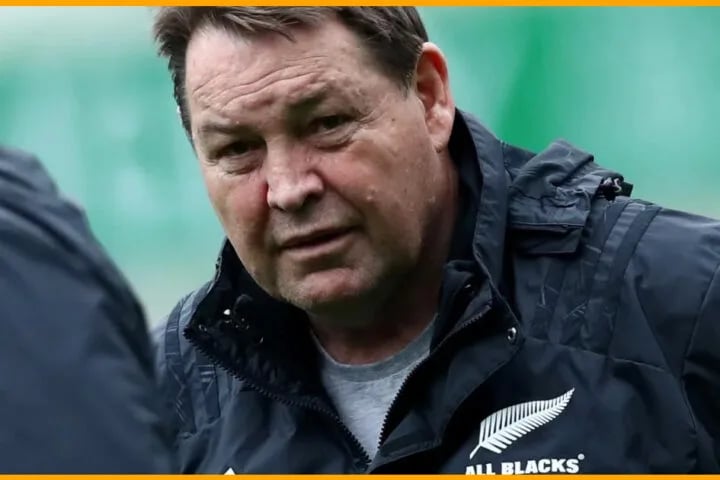
“We look stupid. We really do. We look ridiculous.” Steve Hansen on Rugby Unity, three days after a Test in Baltimore stood still for nine minutes.
For eight minutes and 53 seconds of the first half in Baltimore, Karl Dickson had no link to his TMO and 68,173 people watched a referee wait for a telephone. Steve Hansen watched it too. By Monday he had gone a long way past the spare set of comms Dave Rennie asked for.
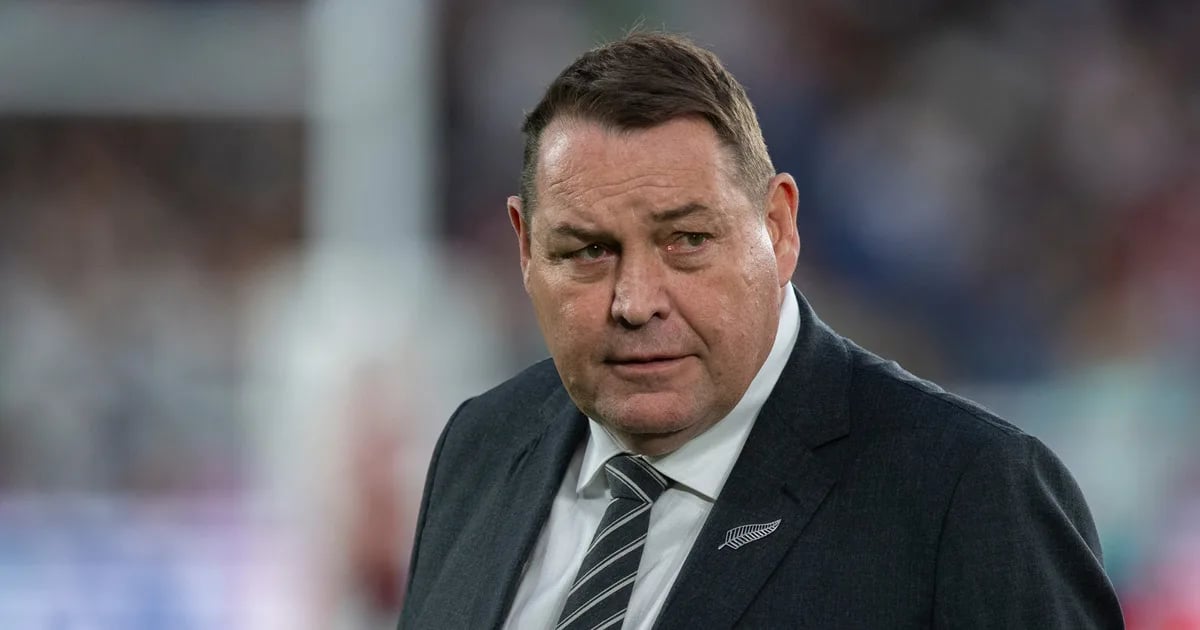
“We look stupid,” Hansen said on Rugby Unity on Monday 14 September. “We really do. We look ridiculous.” Then the man who won the 2015 World Cup as All Blacks head coach said the thing nobody who runs the game will say. Get rid of it. Not fix it. Get rid of it.
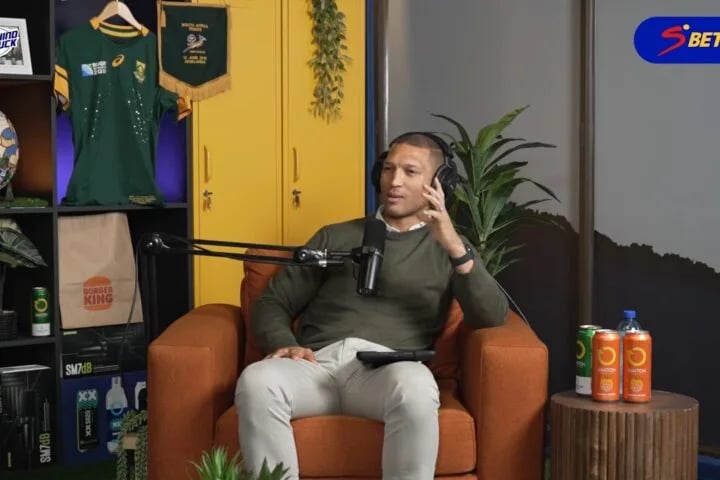
Ewen McKenzie, 51 Tests at tighthead for the Wallabies and later their head coach, sat across the call from him and said it will never happen. One of them has read the room. Which one?
The Steve Hansen TMO case starts with a telephone
Dickson lost his TMO, Andrew Jackson, in the first half of the fourth Test on Saturday 12 September. The NZ Herald reported that both captains agreed to a workaround: the referee would ring the TMO on a phone when he needed him. It took most of the stoppage to settle that, and the first half took 55 minutes.
Hansen’s first point is the one nobody can argue with.
“I think it’s a great opportunity to be positive and say, ‘Right, why don’t we have protocols?’ Like, did we think we’d never have a breakdown in communication?”
Whatever the protocol was, it took nearly nine minutes to execute in front of the biggest crowd rugby union has drawn in the United States. His second point is what the protocol should have been.
“Why does it take so long to come to… an understand[ing]? It should just be automatic, right? We got no comm so we just play on and guess what, I’ll ref, and if I make a mistake, well, that’ll be it… If… you see some foul play, stick your flag out. I mean, how ludicrous are we that, well, I’ll ring down and then someone will run off over to the sideline and tell the touch judge… that’s going to take five minutes.”
Play on. The referee referees. The touch judges, who are Test referees themselves, flag what he misses. Nobody rings anybody.
That version of the night is about two minutes long instead of nine, and it is hard to find the flaw in it. The flaw in what came next is easier.
Wayne Bennett said it first, about the bunker
Manly Warringah announced Hansen as their football performance director on Friday 11 September. That night the most decorated coach in his new code lost an elimination final and went after the NRL’s version of the TMO.
“The quicker they get rid of the bunker, the happier I’ll be,” Wayne Bennett said after South Sydney’s 20-10 defeat by Newcastle, in a press conference that also asked who was refereeing the game. “What I can’t live with is this thing called the bunker that’s supposed to be 100 per cent perfect, but it’s not perfect.”
Hansen took it and pointed it at his old sport.
“I took something out of Wayne Bennett. He… had a bit of a crack at the… bunker the other day and he said we put the TMO, and they call it the bunker, in place because it was meant to be foolproof and it’s not. It is not foolproof. So therefore it’s not working. So therefore, do we need it? And… we… bought it in because the referee wasn’t foolproof… Now it… isn’t foolproof. Nothing ever will be. So let’s just go back to what we had.”
David Pembroke, the host, checked he had heard it right. “So you’d get rid of it entirely.”
“Yeah. Don’t need it. I… hate it cuz I just think it just stops the game. Like we’ve got a judicial officer who goes through the game and finds… any foul play that was missed.”
The honest half is “nothing ever will be”. The weak half is what follows it. The referee on his own was never foolproof either, which is the only reason the TMO exists.
Hansen’s answer is the judicial officer, who reviews the foul play afterwards. A citing on Wednesday does not give a try back on Saturday.
He knows that. His best piece of evidence proves it.
The tackle he says was early, and the try that stood anyway
Josh Moorby was the man the TMO looked at on 72, tackled by Cameron Hanekom as a loose ball went to ground, before Kurt-Lee Arendse ran from inside his own half the other way.
New Zealand claimed Moorby had been taken early. Dickson, with his TMO back on the line by then, ruled the tackle simultaneous and the try stood. It was 36-21, and the series was gone.
“Like you can’t tell me that that wasn’t an early tackle cuz it was… you can’t have it both ways. So if we want something that’s foolproof, it’s got to be foolproof. Well, what we’ve got isn’t foolproof. It’ll never be foolproof. There’s not… enough technology.”
The referee looked at that tackle with his TMO and the best cameras in the sport and called it simultaneous. Hansen looked at it and called it early. Take the TMO away and the referee still has to make that judgement, only faster and with one angle. Removing the second opinion does not remove the opinion.
Read also: the calls on the rivalry tour that Nigel Owens went through, none of which needed nine minutes.
Which leaves the thing the abolition case is really about, and McKenzie named it earlier in the same episode when he was explaining why New Zealand’s plan died in the last quarter.
“The stop start, TMO, getting in 10-minute breaks while fiddling around with technology, things like that. All of that did was that took away from the potential attrition aspect of the game. And particularly late in the game, it became stop start.”
The clock, then. The abolition case in Baltimore has nothing to do with a wrong decision.
Ewen McKenzie says it is never going, and names the fix
“But I don’t think… it’s not going to go. So, you got to try to work out what the solution is. And the solution is… to minimise its involvement in the match as much as you possibly can.”
Hansen wanted to know why not.
“Why… isn’t it going to go? Because someone’s not brave enough to say they made a mistake bringing it in.”
McKenzie half-agreed and repeated that it would not happen. Hansen’s last word was the one dry line of the hour: “If you were doing that in business, you’d get shot, wouldn’t you?”
So, the room. McKenzie has read it. No union is withdrawing the TMO from Test rugby in a World Cup cycle, whatever a World Cup-winning coach says on a Monday podcast.
What can happen is McKenzie’s version, and it needs three things written down: a hard clock on every review, the on-field decision standing unless the TMO can show the referee something he plainly did not see, and a comms-failure protocol that is one sentence long. Play on.
Every contested call on the tour was a judgement, and none of them needed a phone. Across a series South Africa won 3-1, the TMO’s worst moment was a dead line, and nobody knowing what to do about it.
Hansen wants the machine gone. What he has actually made the case for is a rule that nobody in Baltimore had on a card in their pocket. If World Rugby writes that rule this month, it will be because a man who has just left for rugby league said the sport looked ridiculous, and was right.
Read next:
– Siya Kolisi’s account of the stoppage was the only one from either camp that mentioned the crowd, not the technology.
– Matthew Carley at Ellis Park: the first-Test calls that turned the series before a TMO was ever mentioned.
Your turn: does rugby need the TMO?
Two ways to see it. Either Hansen is right, and a sport that ran for a hundred years on the referee’s word can do it again, with a judicial officer to catch what he misses. Or McKenzie is right, the TMO is never going, and the only argument worth having is how little it should be allowed to do. One of those is a principle. The other is a plan. Which is it? Settle it below.
Frequently asked
What did Steve Hansen say about the TMO?
On Rugby Unity on Monday 14 September, three days after the Baltimore Test, Hansen said rugby “look[s] stupid” when the TMO stops the game, that it was brought in to be foolproof and is not, and that the game should “go back to what we had”. Asked if he would get rid of it entirely, he said: “Yeah. Don’t need it.” He said it will not happen because “someone’s not brave enough to say they made a mistake bringing it in.”
What happened with the TMO in Baltimore?
Referee Karl Dickson lost his communication link to TMO Andrew Jackson during the first half of the fourth Test between South Africa and New Zealand on Saturday 12 September. Play stopped for 8 minutes 53 seconds while a workaround was agreed, and the first half took 55 minutes. South Africa won 43-28 to take the series 3-1.
What did Wayne Bennett say about the NRL bunker?
After South Sydney lost 20-10 to Newcastle in an NRL elimination final on Friday 11 September, Bennett said “the quicker they get rid of the bunker, the happier I’ll be” and that the bunker “is supposed to be 100 per cent perfect, but it’s not perfect”. Hansen quoted the argument on Rugby Unity three days later.