



Two coaches who have lost to South Africa more often than most went through what the Springboks do well on Rugby Unity on Monday. The list ran to six, and they agreed on every one.
Eight tries in three Tests, five fewer than the All Blacks, and a series lead.
Steve Hansen, All Blacks head coach for eight years and a World Cup winner in 2015, and Ewen McKenzie, 51 Tests at tighthead prop for the Wallabies and their head coach in 2013 and 2014, watched the third Test of Rugby’s Greatest Rivalry and spent an hour on Rugby Unity on Monday on how a side gets outscored and goes 2-1 up. McKenzie’s summary: “Some of the best, most skilful attacking rugby by New Zealand… But that was matched by South Africa’s scramble defence, their ability to just stay alive in defence.”

The Springboks strengths they named come to six. Four are things a coach can drill. The last two are not, and Hansen says the sixth is the one that impresses him most. It is at the bottom.
1. Springboks strengths start at the scrum: when they are in trouble, it gets them out
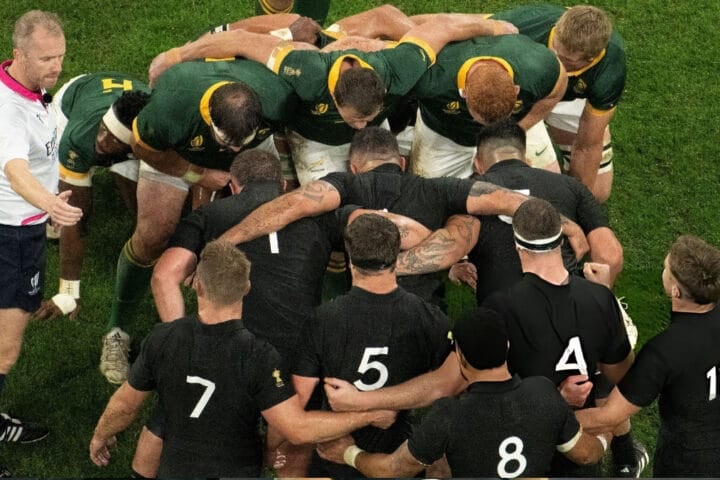
Hansen’s first words on the Test were the ones every All Blacks coach has had to say at some point. “Wonderful game of footy. The Springboks did what the Springboks do. Their scrum and their maul were unstoppable.”
Half an hour later he explained why that matters more than a scrum penalty count suggests.
“South Africa get put under pressure, but they get out, because you can’t control their scrum. They get a penalty, bang, they’ll go to that long lineout, they’re going to drive, and they do that particularly well. The game’s built for all different types and shapes, and the scrum is a large part of it, and we can’t forget that. We still need scrummaging to be important.”
McKenzie packed down at tighthead in a World Cup-winning side and was careful with the word dominance. “I thought there was pretty good parity in the scrum, but when the scrums mattered, the Springboks dominated. They got that try, they got the points. The scrum, the maul was very good for them as well, and their scramble defence. They got up in the faces.”
Soweto is the evidence. New Zealand fed 11 scrums; a penalty try and four penalties came out of them, and Fletcher Newell’s scrum penalty on 65 became the lineout, the 20-metre maul and Malcolm Marx‘s try. Hansen added the part referees will not enjoy hearing. “If you’re dominant, you’ll get the penalty every time.” The mechanism is in why the Springboks scrum remains South Africa’s key Test advantage.

2. A defence that stays alive after it has been beaten
McKenzie’s word was “matched”. New Zealand’s attack was the best thing in the series, and the Springboks’ scramble matched it.
Hansen said where the scramble comes from, and it was not a defence coach. “We talk about their scramble D. It’s not the first time we’ve seen how good it is. Their scramble D comes from wanting to be in a place desperately to help the team.”
A rush defence that gets beaten on the edge leaves a gap that only effort closes, and the man closing it has to want to be there more than the man running at it. Three weeks ago nine All Blacks tries in two Tests said the Springboks defence had a problem. On Saturday it made 150 tackles to New Zealand’s 106, conceded four tries, all of them wide or after the hooter, and won the Test.
3. More skill than anyone gives them credit for
Hansen’s list of the rugby things was long, and one item on it will annoy people in New Zealand.
“They’re big men, they’re powerful. They’re very skilled, a lot more skilled than people give them credit for, I think. They’ve got some real good ball carriers. They’ve got guys right across the park who are strong over the ball. And their goal-kicking has been exceptional in this series.”
The skill was on the tape on Saturday: Sacha Feinberg-Mngomezulu’s long pass to Manie Libbok and Libbok’s to Jesse Kriel for the try that took the lead, Damian de Allende’s pass to put Kurt-Lee Arendse through a gap, Ox Nché taking an offload around his laces. McKenzie’s read was that none of it is new. “All the promise that we talked and hypothesised about for months. In the end they got caught short, rusty, in the first game, and now all they’re doing is greasing the wheels and getting things going. The things that we knew that they could do, they’re doing now.”
Strong over the ball had a name. “They left Malcolm Marx out there for bloody ages, and he got one steal… Turns the game around in the second half,” McKenzie said of the breakdown penalty on 61 that ended New Zealand’s momentum. The ratings had Hooker’s 9 and the case for Marx above him.

4. They take every point on offer
McKenzie said it on Friday’s preview show, before the third Test, and it read differently by Monday. “The Springboks… took every shot at goal and they kicked every shot at goal.”
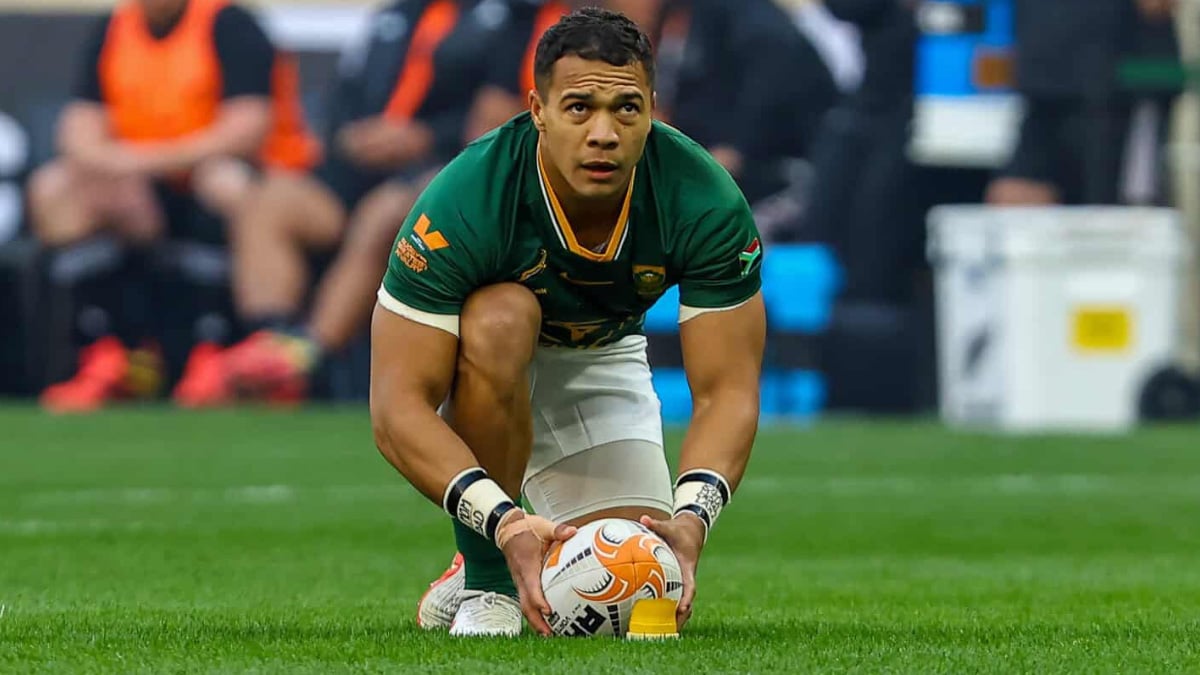
Hansen put the name to it. “Kolbe’s been unbelievably good.” Cheslin Kolbe kicked four from four at Ellis Park, 11 of South Africa’s 16 points on the night they lost, and seven from seven in Cape Town, 18 of the 33 that won it. When he broke his jaw inside ten minutes in Soweto and is out for eight to ten weeks, the tee passed to Feinberg-Mngomezulu, who landed all three kicks he took.
McKenzie on the men who come on: “They’re all coming on and making positive contributions, and they’re taking every point that they can get.” And on the try count that has become the series’ talking point: “They’ll be looking and going, the All Blacks are putting tries on us and we’re not getting tries. Well, yes, we’re getting scoreboard points. That’s probably not going to worry them too much.”
5. A bench that needs no speech
McKenzie’s first point about the replacements was that the famous version has not happened yet.
“You haven’t had the bomb squad come onto the field like we’ve seen many times. To be fair, the games have been attritional. There’s been injuries, Kolbe. There’s been physical damage on both sides in the first half, and therefore the replacements have been trickling onto the field. So it hasn’t had that sort of, where you see six guys run on and virtually replace the forward pack. That’s pretty ominous.”
Three weeks ago the Springboks bench had stopped winning the last quarter. In Soweto all eight were used and the last twenty minutes went ten points to seven to South Africa. McKenzie’s explanation is about the calendar, and it is a compliment to Rassie Erasmus’s rotation that South Africans did not enjoy at the time.
“When the Springboks are bringing on Fourie and Lood de Jager and Libbok, he came on and played a fair bit of the game… He’s just suddenly out there playing. Kolbe’s off, he’s playing… He was just kicking and just playing the game, and he’s played that role plenty of times. So that’s one thing that the Springboks have done by rotating their players all the time. There’s plenty of them are used to coming into the game late and making a difference, not detracting from the performance.”
Hansen’s line was shorter. “It’s well documented, and rightly so, they’ve got a wonderful bench and they’ve got a lot of depth.”
Then McKenzie noticed something that has nothing to do with rotation. “There’s a higher calling going on. You can see the way the reserves interact with the game. When they’ve been taken off the field, they stay engaged in the game. Often players, they’re tired or whatever, they’ll sit down. These guys are on their feet. It means a lot.”
6. The team thing
Which is where Hansen went, and where he stayed.
“Probably the thing that impresses me the most about them is not a rugby thing. It’s a team thing. Just how connected they are as a group, and their sense of belonging to their country. And that comes from, I think, a sense of connection with each other, but also to the country. And you hear them talking about doing things for more than just themselves. And that makes them even tougher to beat when you add in all the other ingredients they’ve got.”
He gave the credit for it to the man New Zealand coaches usually praise for other things. “Rassie gets a lot of pats on the back for some of his innovative stuff on the rugby field, but the biggest one he should get is for how he’s connected the team to South Africa. That takes time.” Hansen built a side like it once, one he called a team of five million, and he knows what it costs. “You’ve got to earn the respect of the people who are your fans, and you earn that by what you do on the park, obviously, but you also earn it by the stuff you do off it and how you conduct yourself.”
The off-the-park part is what Siya Kolisi did when a fan reached him before security, and it is how Rassie Erasmus earns respect from Springboks players before he asks anything of them. Kolisi, laughing into a SuperSport microphone on Saturday night: “We feel privilege, not pressure. We’re grateful.”
Both coaches heard it in the stands. Hansen: “We had 85,000 people rocking in their seats every time there was a scrum, with excitement. No other country would do that. We don’t have it in New Zealand. Doesn’t happen in England. It’s just dead South African thinking. If the people that you’re watching are doing that sort of thing, that’s what you’re going to be good at.” McKenzie: “They get excited by mauls and scrums. If it was an Australian crowd, they’re not interested in that. They want to see the backs attacking.”
The one thing that should worry them
Hansen offered the caveat himself. “There’s nothing in this Test series. It’s small margins. And the thing that gives me a lot of excitement and hope for the All Blacks is, this group’s only been together for about six weeks. The South African team has been together now for quite some time.”
McKenzie read the Baltimore injury list and shrugged. “I see that they said that there’s six players out for this next game for South Africa, but when I read the list, I think only one was in the 23. Only Kolbe. All the rest aren’t in the 23. So it’s going to be more of the same from South Africa.” Kolbe, Carlü Sadie, Ntuthuko Mchunu, Boan Venter and Ben-Jason Dixon stay home; Herschel Jantjies flies in Kolbe’s place; Damian Willemse, Aphelele Fassi and Canan Moodie are fit. A draw at M&T Bank Stadium on Saturday 12 September takes the series.
Six strengths, and the side that has them needs only a draw. The side that has scored 13 tries needs a win.
Frequently asked
What are the Springboks’ biggest strengths?
As Steve Hansen and Ewen McKenzie named them on Rugby Unity on 7 September: a scrum and maul that get them out of trouble, a scramble defence that stays alive after the line is beaten, more skill than they get credit for, goal-kicking that takes every point on offer, a bench that comes on without needing time to settle, and a connection to each other and to South Africa that Hansen says impresses him most.
What did Ewen McKenzie say about the Springboks?
That New Zealand’s attack “was matched by South Africa’s scramble defence”, that “when the scrums mattered, the Springboks dominated”, that the replacements are “taking every point that they can get” because Erasmus has rotated them all year, and that being outscored on tries “is probably not going to worry them too much”.
Is Cheslin Kolbe playing in Baltimore?
No. Kolbe broke his jaw in the first ten minutes at FNB Stadium and stays in South Africa. Herschel Jantjies travels in his place, and Damian Willemse, Aphelele Fassi and Canan Moodie are fit for the fourth Test on Saturday 12 September.

Your turn
Six strengths. Take one away in Baltimore and South Africa lose the Test. Most will say the scrum. Hansen’s answer is the sixth. Name the one you would take, and say what New Zealand would have to do to take it.






Comments
No one has weighed in yet.
Be the first - what did you make of it?