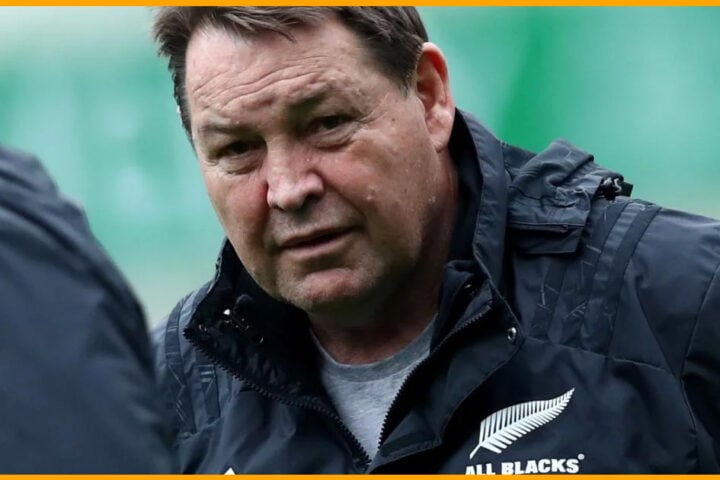
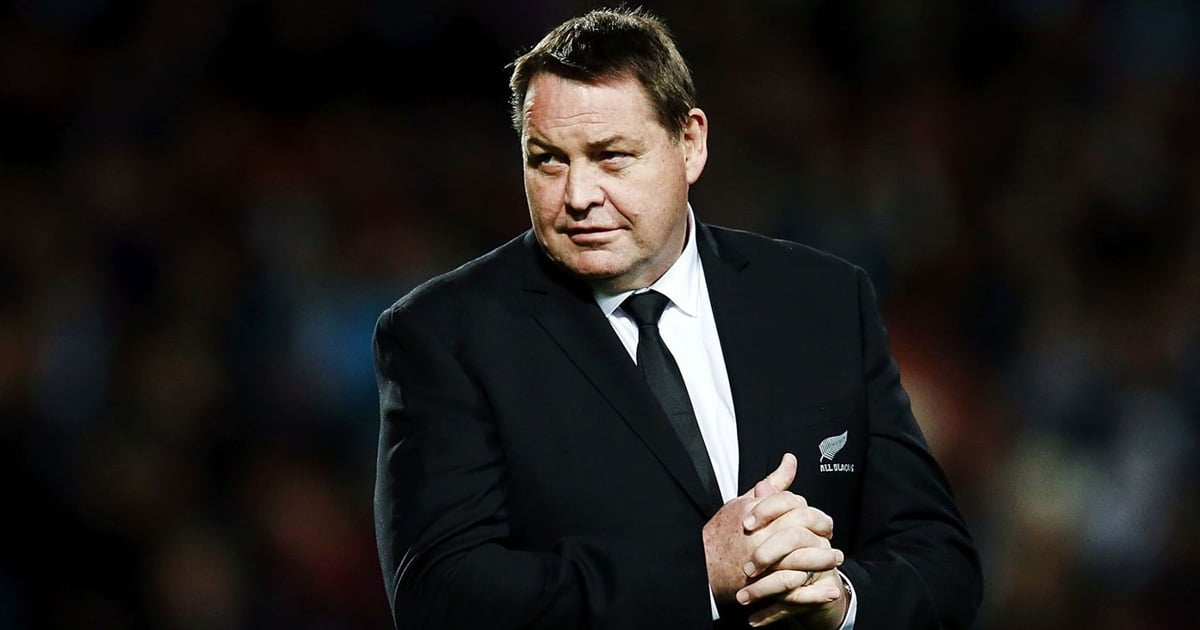
“At the moment they’re not good enough. That’s an inconvenient fact.” Steve Hansen on Rugby Unity, with three things to fix and one Springboks defender’s name.
Jesse Kriel intercepted the pass in the 61st minute in Baltimore because, in Steve Hansen’s reading of it, he did not have to move to do it. Hold that. It is where the All Blacks’ next month of work starts.
“At the moment they’re not good enough,” Hansen said of the All Blacks on Rugby Unity on Monday 14 September. “That’s an inconvenient fact.” The host, David Pembroke, had just said an All Blacks fan should be “pretty pleased” with a side that scored 17 tries in four Tests and lost the series 3-1.
Ewen McKenzie, the former Wallabies coach sitting alongside him, put it another way: “If New Zealand wasn’t playing South Africa, they’re beating everyone else.” Both are true. So which one matters more, 17 tries or 3-1?
The Steve Hansen All Blacks list has three items. Malcolm Marx is on the first
Hansen coached the All Blacks for eight years and won the 2015 World Cup with them, and he does not start with the scrum, or with any of the things New Zealand’s own coaches have been asked about all month. He starts with what a carrier does in the half-second before he is tackled.
“I thought we went to ground too early and… we didn’t give the first arriving player enough time to… cope with their… guys over the ball like [Marx] etc. And South Africa are very good at that. They’re very good at getting over the ball.”
The mechanism is simple and it is on the tape. A carrier who goes to ground before his support arrives has handed the contest to the first defender there. That defender is set over the ball before the cleaner gets to him, and cleaning out a man who is already set is a different job to beating him to the spot.
The ratings that night logged Ruan Nortjé turning Peter Lakai over on 7, Marx stealing the ball on 32 with New Zealand attacking, and Marx pouncing on the loose ball after a big hit on Ethan Blackadder before half-time. The last turnover of the night, Will Jordan swamped on 78, became Cameron Hanekom’s try.
McKenzie measured the same thing from the other end.
“They were basically half a second off at the breakdown in terms of speed to get there to support the players and that… was enough to give South Africa an opportunity to… snuff things out.”
Half a second is a carrier’s decision. The cleaner’s legs have nothing to do with it. Watch for it in October: is the man with the ball still on his feet when the second Springboks defender arrives? In Baltimore, too often, he was already down.
Their scrum on their ball, and the first shove of the maul
Hansen’s second item is not the scrum fight everyone expected New Zealand to pick after Soweto. It is narrower than that.
“I thought our scrum on our… ball was okay, but their ball we didn’t challenge them enough and there’s a lot of penalties in that area that allowed them to get into [driving-maul] situations where they… eventually scored tries. So, we’ve got to… find some more power on their ball, but we’ve also got to find ways to stop them… whether it’s getting up and competing, whether it’s staying on the ground… And it’s the initial first [shove] in that [maul] that… I think we’ve got to get sharper on.”
One sequence covers all of it. Gerhard Steenekamp’s first scrum after coming on, on 48, was South Africa’s put-in. Ethan de Groot lost his footing, the penalty went to the corner, and Marx finished the maul on 49. New Zealand chose not to contest the throw and could not stop the second shove. Seven points, from a scrum they were not feeding, without the ball ever reaching a Springboks back.
Hansen’s point about the first shove is the technical one. A maul is won or lost at the moment the drive starts, when the defending pack either gets under the jumper and his lifters as they land or lets them settle. Settle it, and the second shove comes with the whole pack behind it. On 49 it settled.
Read also: the six things the same two men said were missing in Soweto, and how many of them New Zealand fixed in a week.
The high ball and the lineout race
Item three is two things, and Hansen gives one of them credit.
“We still haven’t mastered the high ball as well as they have… and they’re trying new things there. So that’s just going to take time.”
Damian McKenzie spilled one on 17 under a double hit from Pieter-Steph du Toit and Eben Etzebeth, and Josh Moorby was hit by Kurt-Lee Arendse on 20 as he gathered. Neither is a catching error. Both are what happens when the chase arrives with the ball.
The lineout was the better story. Hansen thought New Zealand’s own ball “was better in the weekend”: they moved the lineout around and “made their big fellas have to move and chase us”, and they stole two Springboks throws, on 59 and 67. What he still wants is speed in the air, because in “a tempo race with them” his side was “too slow off the ground”. A lifting problem rather than a calling one, and in his words “very fixable and… very quickly”.
Which brings him to the item that is not on the list of three, and is the reason the list exists.
Jesse Kriel is just standing there
“[Kriel] forced us a lot. We’ve got to find a way to beat him and… there’s only two ways, either to go around him, and that’s the only way we’re doing it at the moment. But we… we’ve got to be able to come inside him. We’ve got to win the race to… the space that he’s trying to shut off. There was a great example there once he intercepted the ball cuz we tried to pass over him or… before him.”
The example is the 61st minute. Wallace Sititi and Lakai had broken to the Springboks 22, New Zealand were building, and Kriel read the pass and picked it off. The next thing anyone saw was a Springboks attack. Hansen’s explanation of why is the best thing said about this series by anyone who did not coach in it.
“If we could have a player coming inside where he’s stationary, cuz he is… he’s just standing there. He’s not moving. He’s trying to block off… the vision for the ball carrier, to say hey, I can’t throw it there but I’ve got to carry. So we need someone to come in short… If we can get that going… with some real… power and consistency, then I think we then challenge South Africa to say, okay, well now they’re starting to breach us on the inside of [Kriel], and they’re not going on the outside all the time.”
Watch Kriel’s feet. His job in the Springboks’ rush is to hold the 13 channel and take away the picture. He does not chase the ball. He plants, shows the carrier his chest, and the carrier sees that the wide pass has a man sitting on it. The pass goes anyway, over him or in front of him, and on 61 he took it.
The fix is a runner arriving short and inside him while his feet are still, so that the stationary defender has to make a decision instead of a read. Do that three times and the fourth wide pass finds nobody waiting. Do it consistently and, in Hansen’s words, the All Blacks have “a two-prong attack rather than just a one at the moment”. Nick Mallett’s case for the Springboks midfield rested on what Kriel never does. Hansen has found the thing he never has to do, and wants to make him do it.
McKenzie added the other half of the same problem. The man who used to run the inside line was not there.
“The thing that was a feature for me across the series, [Savea’s]… opportunistic pick and drive. You just pick and go forward and get in behind the defensive line. Did it across all three Tests… We didn’t have any of that. There was none of that in the fourth Test really. And that… just meant that all the play was going lateral.”
Ardie Savea’s series ended with a dislocated shoulder in Soweto. McKenzie’s reason the pick-and-go matters: “because of the lateral game the defence slides and leaves some holes, the big… fatties around the edges of the [ruck] get a little bit lazy and start to follow the ball, and then there’s opportunity there.”
The inside line off Kriel and the pick off the edge of the ruck are the same idea in two places. New Zealand did neither in Baltimore.
Not the referee’s job
Pembroke offered Hansen the easy version of the night: had the tackle on Josh Moorby the TMO checked on 72 gone the other way, the All Blacks would have won. Hansen refused it.
“The… problem the All Blacks will have with that is… they’re relying on the ref. And you know, we’re a team that relies on ourselves to do what’s right. So… the thing that I’m sure Dave and his team will be looking at is how we reacted after we… didn’t. You know, like we could have stopped the try if we'[d] reacted better and faster.”
New Zealand’s supporters will like that sentence least. Their coaches should pin it up. The call was ruled simultaneous. The try was still scored from inside South Africa’s own half against a team that had just been attacking.
Hansen’s closing position is not gloomy, and it is not the consolation Pembroke wanted either.
“That’s the exciting thing for me, because I think we’re still behind them. I think… there’s things in our game that aren’t quite as good as they could be, but they’re all fixable.”
The next Test is the Bledisloe Cup at Eden Park on 10 October, then Sydney a week later. A month, then, to teach a runner to arrive short and inside a stationary 13. A drill. Nothing like a rebuild.
It is also a month to decide whether “not good enough” was a description of the first Rugby’s Greatest Rivalry series or of the team. Hansen says the first. The second, on his reading, is a choice.
Read next:
– John Kirwan’s learnings, not losses: the other All Blacks great who watched the same three defeats and reached a softer conclusion.
– Dave Rennie’s own list, given in Baltimore minutes after the series was lost, and what he says is tracking in the right direction.
– Richie Mo’unga’s recall was decided before Soweto. Baltimore was his first start under the new system.
Your turn: which All Black runs the inside line off Kriel?
Hansen has named the space. He has not named the man, and neither has anyone in black. The list of All Blacks who could arrive short and inside a stationary Kriel with “real power and consistency” is not long, and it starts with a fit Savea. Name the one who does it at Eden Park in October, and say why nobody tried it in Baltimore. The argument is above. Take it apart.
Frequently asked
What did Steve Hansen say about the All Blacks after Baltimore?
On Rugby Unity on Monday 14 September, Hansen said the All Blacks “just made up the numbers” in the series, that “at the moment they’re not good enough. That’s an inconvenient fact”, and that they are “still behind” South Africa but everything wrong is fixable. He named three areas: going to ground too early in contact, not challenging the Springboks scrum on its own feed and the first shove of the maul, and the high ball plus lineout speed.
Why did Jesse Kriel intercept the All Blacks in Baltimore?
In the 61st minute, with New Zealand attacking inside the Springboks 22 after a Wallace Sititi break, Kriel read the pass and picked it off. Hansen’s explanation is that Kriel holds his channel without moving, blocking the carrier’s picture, and New Zealand only ever try to pass over or around him. His fix is a runner coming short and inside Kriel while he is stationary.
When do the All Blacks play next?
The Bledisloe Cup against Australia at Eden Park on 10 October, then in Sydney on 17 October, before the Nations Championship.