
Ethan Blackadder made 26 tackles in Baltimore. Sir John Kirwan says he is a six, and should play seven anyway.
“When you think about the [McCaws], those real fetchers, at the moment we don’t have a real specialist seven.”
Sir John Kirwan, 63 Tests on the All Blacks wing and a World Cup winner in 1987, said it on Sunday 13 September. It was the morning after South Africa beat New Zealand 43-28 in the fourth Test of Rugby’s Greatest Rivalry.
Ethan Blackadder had just played his first start of the series, at openside, with Ardie Savea at home nursing a dislocated shoulder. He finished with 26 tackles, the most on the field, and the try on 64.
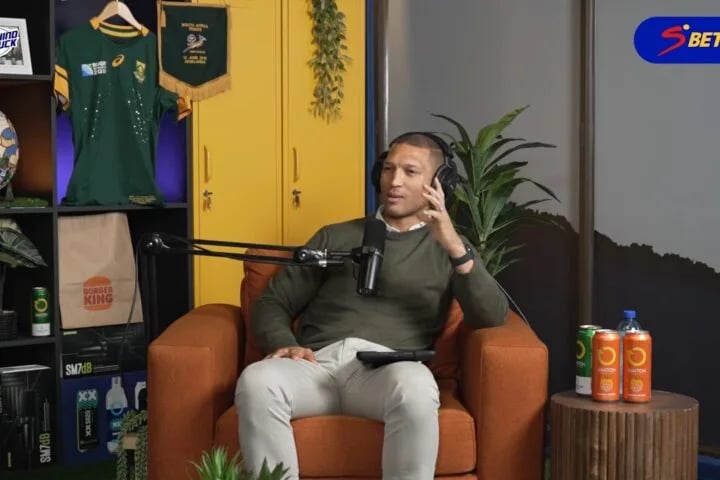
So the question Victor Matfield put to Kirwan on Rugby Rivals was the obvious one. Is he a six or a seven? Kirwan’s answer was more honest than a team sheet, and it is below. First, the question for the comments: is Blackadder a six playing seven, or the best openside New Zealand has?
Victor Matfield asked the question New Zealand’s selectors have been avoiding
Matfield, 127 Tests and a Springboks captain, framed it with a name from Kirwan’s side of the fence.
“JK, do they only see Ethan [Blackadder] as a six?… As a seven, can’t he play that? I mean, almost [Jerome Kaino], he’s big, strong, but he’s also at the ball, he’s got a work rate.”
Kaino was a blindside, a hitter and a carrier who arrived at the ball. Matfield meant it as a compliment. It also works as a diagnosis, and Kirwan treated it as one.
“Yeah. I mean, he’s one of those guys that can probably play all three positions. But I think his real position is six. It’s just that we don’t have anyone sort of like that anymore. So I think that when you think about the [McCaws], those real fetchers, at the moment we don’t have a real specialist seven. So I think he’s good at seven as well. I don’t mind him there.”
Strip the politeness out and it reads as follows. The best openside available to the All Blacks is a blindside. Sam Cane owned the seven jersey until he retired from Test rugby at the end of 2024, and nobody has owned it since. Blackadder is not the problem. A squad picking a seven by default and calling it versatility is.
Read also: the back row the panel wanted for Baltimore, and what Rennie did instead.
Ethan Blackadder at seven works because Tupou Vaa’i is loose
The second half of Kirwan’s answer is the part worth keeping, because it is a selection rule rather than an opinion.
“And I think it’s really about balance now, Victor, who’s going to stay a bit looser. And when you’ve got [Tupou Vaa’i] out there, he’s a little looser. He’s a bit of a ball carrier. So he needs someone at seven that’s going to be a bit tighter. And so that’s why [Blackadder], I think, is perfect in that sort of role. He complements the mix.”
Every back row needs one man whose first job after the carry is the breakdown, not the next carry. Watch who arrives first at the tackle after a forward has taken the ball up. The loose man is already looking for the next pass. The other man is over the ball, or clearing the man who is. In Baltimore, Vaa’i started at six and was the carrier and the linker, and the man over the ball was Blackadder.
The numbers back the reading. Twenty-six tackles is not a blindside’s day. The try on 64 was a pick-and-go from a metre, through Manie Libbok, after Cam Roigard had carried to the line, which is a seven’s try.
Vaa’i’s own turnover on 27, a steal inside his own 22 with South Africa building through the phases, was the best by anyone in black, and he moved to lock on 54 when Wallace Sititi came on. The balance Kirwan describes lasted 54 minutes. Sititi at six and Vaa’i at lock was a different back row, and the game had already gone to 29-14 by then.
Blackadder’s blot was late. He spilled the ball between his own 22 and halfway on 74 with the score 36-21, and South Africa scored from the scrum sequence that followed. Kirwan saw it. “He made a mistake late, but his aggression in the defence, his ball carrying, his scoring of a try. So from the All Blacks’ point of view, I think he really stepped up yesterday.”
What Kirwan is really saying about the World Cup back row
Kirwan’s full line on Blackadder ended with the tell. “I thought he had an incredible game for his first Test match for a while.” Blackadder is 31 and has 15 caps since his debut in 2021. Fifteen caps in five seasons is not a first-choice openside’s record, whoever is picking.
The alternatives are not obviously specialists either. Sititi is an eight. Peter Lakai moved from six to eight for Savea in Baltimore. Luke Jacobson, who captained the side when Savea went off in Soweto, went home with an elbow injury.
Savea himself is the closest thing New Zealand has to a fetcher and has played both seven and eight. Wallace Sititi said the penalty count has to improve after Soweto, and a back row without a tight man is where those penalties come from: side entries, holding on, hands in when the jackal is a step late.
Kirwan’s rule gives the selectors a way through it that does not require a McCaw to appear. Pick the loose six, then pick the seven who makes him work. On this tour that was Vaa’i and Blackadder, for 54 minutes, once.
The next test of it is Eden Park on Saturday 10 October, the first Bledisloe Cup match, and the first time Rennie names a back row with nothing to prove against South Africa and everything to settle before the World Cup year.
Read next:
– The last time the site marked him top of the ratings, against the Lions: two tries, a turnover inside his own 22, and an 8.5 three weeks before Baltimore.
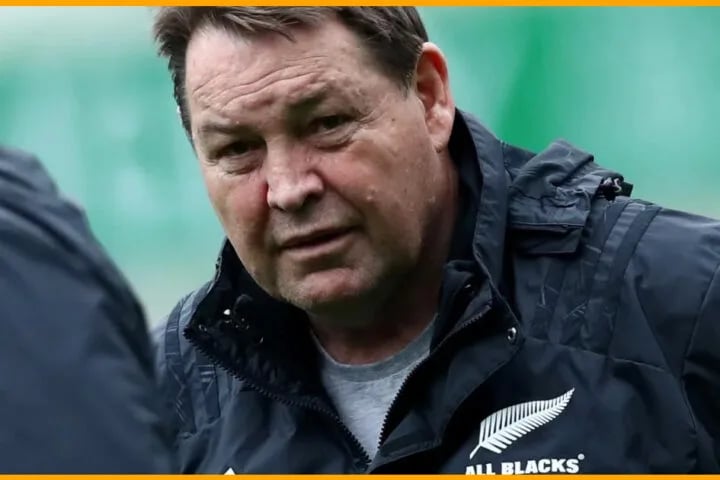
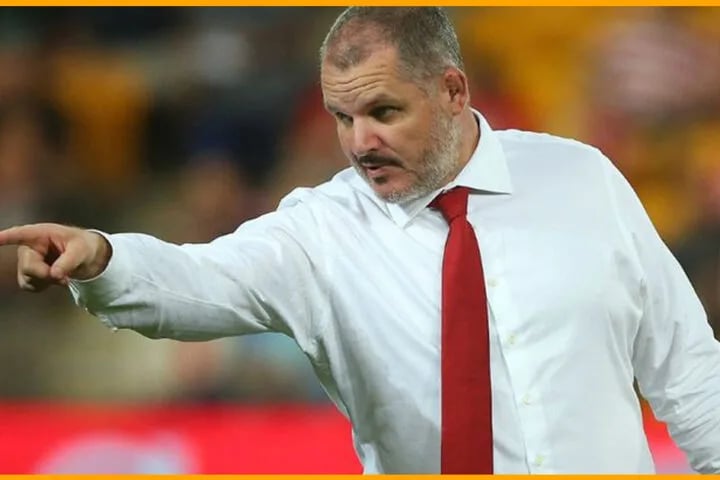
– Steve Hansen and Ewen McKenzie’s list of what New Zealand were missing: the breakdown was on it, and Kirwan has just explained why.
– Why the All Blacks lost at FNB Stadium: the Test where the back row lost its captain after 30 minutes.
Your turn: a seven by default, or the best openside New Zealand has?
Kirwan’s argument is above: there is no McCaw, so pick the loose six and the seven who tightens him, and Blackadder is that man. The counter is that a back row built around a blindside at openside is why the breakdown penalties keep coming. Name the specialist seven in the squad who should have that jersey at Eden Park. Kirwan says the list does not exist.
Frequently asked
Is Ethan Blackadder a six or a seven?
Sir John Kirwan says his real position is six, that New Zealand has no specialist seven of the McCaw type, and that Blackadder works at seven because Tupou Vaa’i at six is the looser, carrying forward who needs a tighter man beside him.
Who played openside for the All Blacks against the Springboks in Baltimore?
Ethan Blackadder, in his first start of the series, with Tupou Vaa’i at six and Peter Lakai at eight. Vaa’i moved to lock on 54 when Wallace Sititi came on.
How many tackles did Ethan Blackadder make in Baltimore?
Twenty-six, the most of any player on the field, plus the try on 64 from a pick-and-go after Cam Roigard’s carry.