


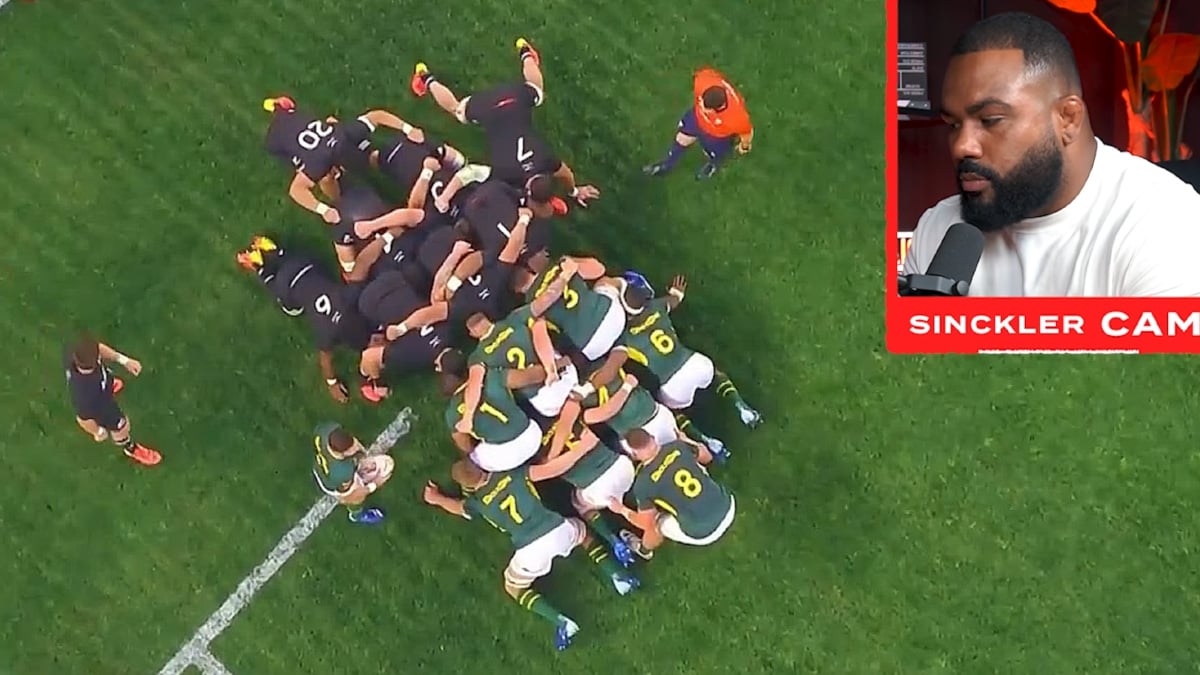
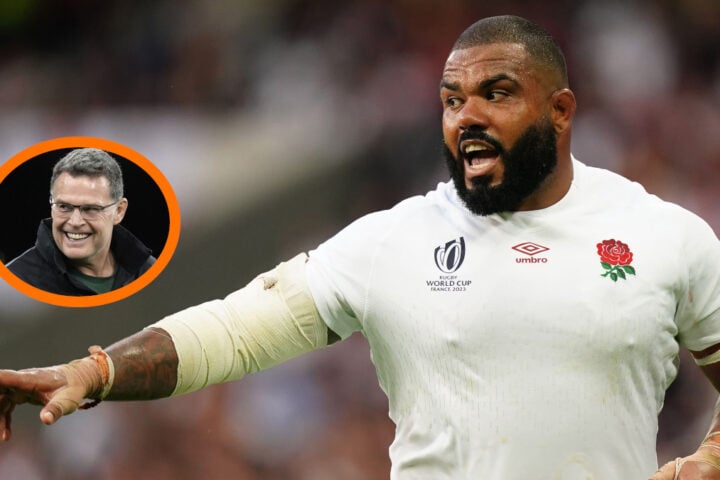
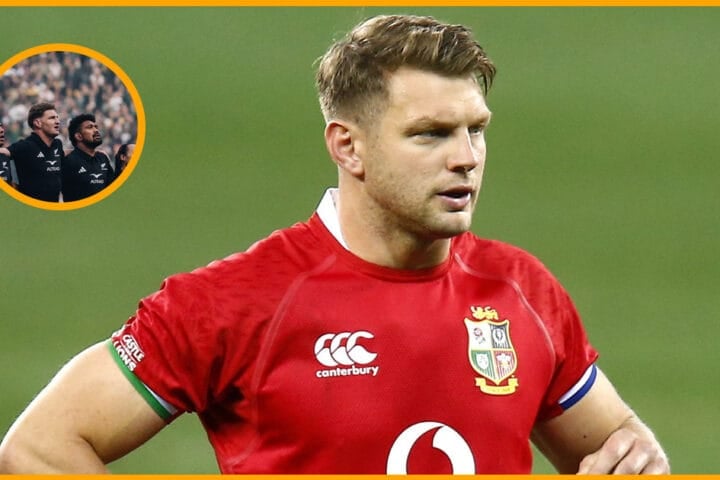
The Kyle Sinckler scrum analysis on this series starts at the setup, before the referee has said a word. He went through it scrum by scrum with Dan Biggar on Monday, 68 England caps and two Lions tours at tighthead talking to 112 Wales caps, and neither camp will like all of it.
Kyle Sinckler froze the picture before the ball was anywhere near the tunnel and pointed at two heads.
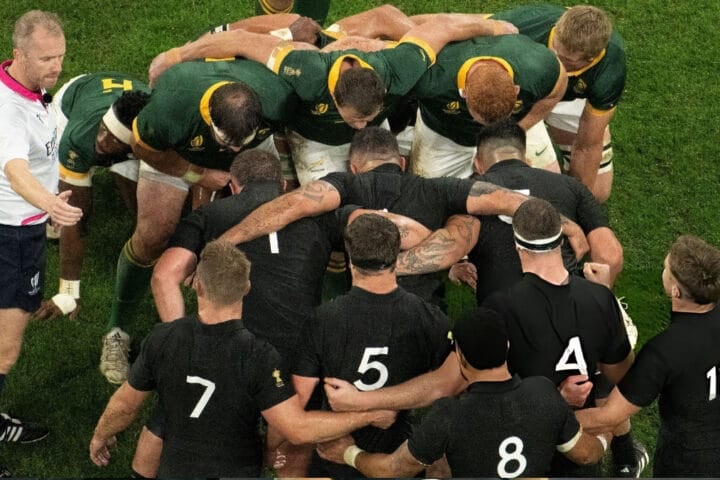
One belongs to Wilco Louw, and it is on Asafo Aumua’s left shoulder. The other belongs to Tyrel Lomax, and it is nowhere near Malcolm Marx’s. A few seconds later Nika Amashukeli was running under the posts to award the penalty try that turned the third Test.
“So immediately that’s kind of where the scrum, before it’s even happened, is kind of won or lost.”
He also found the one scrum in three Tests where a Springboks loosehead walked around. It is not the one New Zealand have been complaining about. Springboks supporters will like it even less, and the comments are open to both.
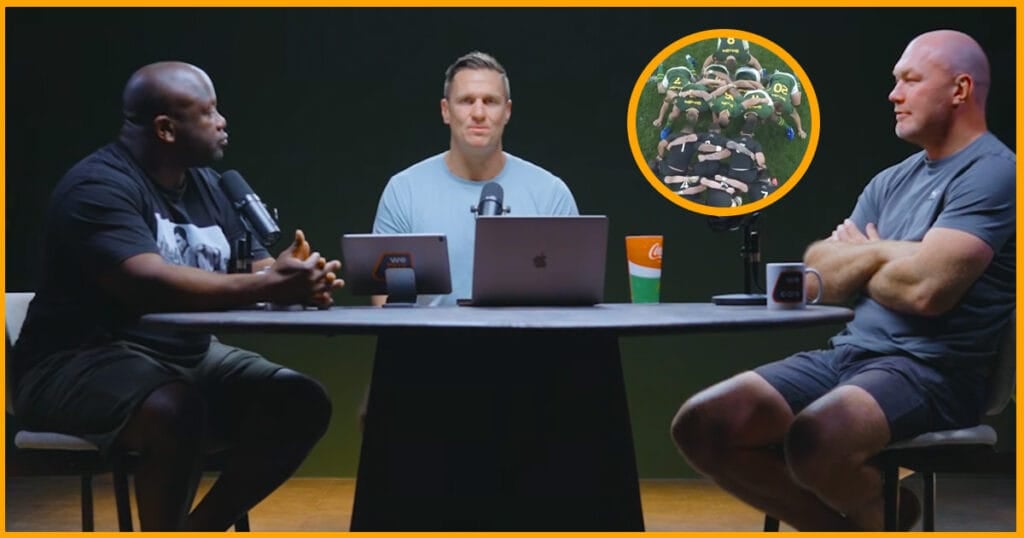
Sinckler was on his old Toulon team-mate’s channel, Biggar Thinking, for 44 minutes on Monday 7 September, two days after South Africa won 29-24 in Soweto to lead Rugby’s Greatest Rivalry 2-1 with Baltimore to come on Saturday. He packed down against New Zealand for the 2017 Lions and against South Africa for the 2021 Lions, is still a Toulon tighthead at 33, and answered over the footage.
Dave Rennie took his clips to World Rugby after Ellis Park. Rassie Erasmus answered in Cape Town that his pack was scrumming through. Then Soweto happened, and six scrum penalties went against the All Blacks front row on Planet Rugby’s count, the penalty try among them.
Sinckler has scrummaged against both packs, and what he sees is not what either camp has been saying.
Every loosehead in the world does what Ox Nché does
The first thing Sinckler did with the penalty-try footage was ignore the drive and look at the setup.
“Every loosehead that you come up against, 95% of looseheads will tuck their right shoulder, as you can see Ox does here, as you can see George Bower does here, underneath their hooker’s left shoulder. Every loosehead, hooker, throughout the world, throughout club rugby, does this. And the reason they do this is to make the tighthead’s life very difficult. In rugby terms it’s called pincer.”
The pincer is simple once it has been named. The tighthead sets with the hooker’s head on his left pec and the loosehead’s head on his right pec, and both of them push against him at once, either to pop him up or to turn him in. Nché and Marx do it. Bower and Aumua do it. Sinckler’s point is that there is nothing South African about it.
Biggar asked the question the whole argument turns on: is this completely legal from Nché?
“Yeah. Yeah. It is. I’m not going to lie and say I know the laws in and out. But every prop I’ve come up against, 99% of the time, as a loosehead prop, they’re going to tuck their shoulder. That is just the way it goes. And your job as a tighthead prop is to deal with that.”
The admission is the point. He is not parsing Law 19. Every front row in the world does this on every put-in, and the Springboks do it better.
Where Wilco Louw put his head, and where Tyrel Lomax did not
Dealing with it, in Sinckler’s account, has one solution. You go through the seam.
“The only way you can deal against a block shoulder when a loosehead and a hooker’s doing this is to target the hooker. So you target the hooker’s left shoulder. So you can see clearly Wilco Louw on his setup, he noticed, okay, there’s a block. George Bower was set a bit further back from the hooker. The only way I can get through this is to target that left shoulder of Asafo Aumua. Whereas if you look at Tyrel Lomax, again, Malcolm Marx, Ox Nché, they have a block. Every team does that. Where’s his head? His head’s not as on Malcolm Marx’s left shoulder as, you would say, Wilco Louw is.”
He calls it breaking the bind, or breaking the seam. The tighthead puts his head on the hooker’s left shoulder, gets in between hooker and loosehead, and gets underneath the hooker. On the Soweto footage Louw has done it before the referee has said a word. Lomax has not.
Then Sinckler went further back in the picture, to the men nobody watches.
“Look at the connection between the South African six, Kolisi, Pieter-Steph du Toit, compared to the New Zealand back five. Their flanker is not even really in a pushing position already. And they’ve already got that buy-in. So before the scrum’s even happened, danger’s imminent.”
There is the tell for Saturday, and it needs no replay. Before the referee says “set”, look at the two tightheads’ heads. The one that is on the opposition hooker’s shoulder belongs to the pack that is about to go forward. Then look at the flankers. If they are bound low on their props before the engage, the shove is coming with eight men in it.
What walking around actually is
Rennie’s word for the fortnight was “walking around”, and almost nobody using it has defined it. Sinckler did, with Biggar as the dummy.
“Imagine you’re a tighthead prop. I’m up against you, Dan. We scrum, your head is on my right pec. My head is basically in between your right shoulder, right pec, and obviously you’ve got the hooker next to you. So we’re nice and square and we’re nice and even. The loosehead basically moves his head to the left and pulls his head around the outside. By doing that, he’s essentially pulling his tighthead through the gap between the opposition loosehead and the opposition hooker.”
So the loosehead runs away from the tighthead he is supposed to be scrummaging against, to drag his own tighthead through the hole he leaves. Biggar put it as deliberately gaining an advantage rather than a fair contest, and Sinckler agreed: “Essentially he’s trying to make something happen.”
Then the line that settles most of the fortnight’s argument.
“It’s very obvious when you don’t win the engage. If you don’t win the engage and it’s a neutral engage, and then as a loosehead you try to walk around, that’s when it’s very clear that someone’s walking around. Once you’ve won the engage, you can essentially do what you want. If you’ve got a really, really good, solid engage, you’re quids in. Your tighthead can turn in on the angle, attack the hooker. The loosehead could walk around, the loosehead could step around and attack the tighthead and be really aggressive. So for me, the key is always going to be the engage.”
So Rennie was describing something real: what a loosehead does when the engage was even and he needs to manufacture a penalty. Sinckler has seen it in this series once.
The one scrum where it happened
Ellis Park, 55 minutes, New Zealand 19-16 up after Fabian Holland’s try. South Africa had waved the posts away to scrum again, Gerhard Steenekamp had been on for Nché since the 46th minute, and Matthew Carley penalised him for walking around. It was the call that turned Ellis Park. Three former Springboks said he got it wrong. Schalk Burger called it “a reset all day” and Hanyani Shimange said Steenekamp was “connected to Malcolm the whole time” in SA Rugby magazine. Victor Matfield said the same on Rugby Rivals.
Biggar asked whether Carley got it absolutely spot on.
“In that example, for me, that was probably one of the only examples in the series where you could clearly see that was walking around.”
A loosehead’s head going round the outside, in other words, on an engage that had not been won. Sinckler’s explanation for why a dominant pack would try it is the most honest passage of the episode.
“Let’s just say for argument’s sake four penalties before, in the exact same spot, you’ve got confidence. You’re feeling good. And it’s like, any 50/50s, you’re going to hedge your bets that the referee’s going to give it to you, because the evidence before suggests that you’ve just had four scrum penalties. From a front-row perspective, the team’s entrusted you with that decision. They’re three points down, five metres out, and we’re going for a scrum. So if the scrum is neutral, you’re kind of thinking, I’ve got to make something happen here.”
He put a fence around it straight away: “That’s not to say South Africa do that. That’s just to say, in this instance, they’re just trying to make something happen.”
South Africa lost by 17, and the argument about their scrum started the following week, aimed at everything except the one scrum where it had actually happened.
And the one where it did not
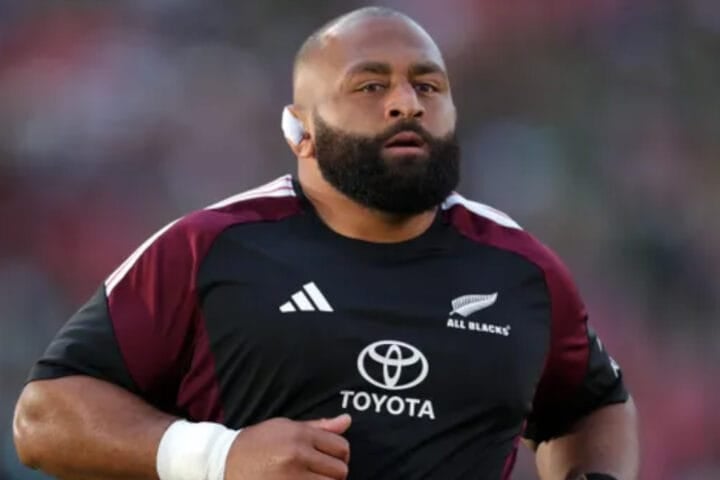
The other walking-around penalty of the series went against Thomas du Toit in Soweto, on his first scrum after coming on, around the 51st minute. Morné van den Berg had dropped a clean lineout ball, New Zealand had the put-in, and Amashukeli gave the All Blacks their only scrum penalty of the night. Ruben Love missed the kick.
“I’ve reviewed this scrum, and if I’m being totally honest, I think it’s a really, really harsh call. In this clip, Thomas du Toit has won the engage, and he has to essentially target the hooker, because the New Zealand loosehead, his head’s on the outside. So he can’t really scrum against him. So he targets the hooker, and he is going in at the angle. We don’t even get to a point where a walking-round kind of occurs.”
Du Toit had won the engage, which by Sinckler’s own rule means the angle was his to take. What happened next, in his reading, was a fresh prop chasing his feet for purchase and the scrum going down, “probably more of a reset than a stone-cold penalty”.
So the tighthead’s scorecard reads: Carley right, Amashukeli harsh, and the Springboks pack legal on every other scrum in the series.
The Kyle Sinckler scrum rule, and why they scrum when they could kick
The fortnight’s argument was about the wrong thing. Whether the Springboks scrum is legal was never the question, because the engage decides what is legal, and the engage is decided at the setup by where two heads go. What New Zealand have been describing as a trick is a pack that wins the setup so often that it is entitled to do what it likes after it.
Sinckler explained why Erasmus’s pack keeps choosing the scrum over the tee when the two are level on the scoreboard.
“They back themselves. They’ve got that cohesion. They believe in their training. They believe in their pack. They’ve been in that situation where their scrum has won them World Cups, won them World Cup semi-finals, won them big tournaments. So for them, that is as guaranteed as taking the three points.”
Ellis Park is the case against that, and even there the scrum only failed when the engage was neutral and a loosehead tried to help it along. Sinckler’s own standard for a tighthead is the one that makes the argument disappear: “How can you be so dominant that there is no 50/50s? How can you be so technically sound where there are no grey areas?” That scrum in Soweto, he said, could have been refereed by a five-year-old.

Frequently asked
Is the Springboks scrum legal, according to Kyle Sinckler?
Yes. Sinckler says the pincer Ox Nché and Malcolm Marx form on the opposition tighthead is what “95% of looseheads” do at every level of the game, and that a tighthead’s job is to deal with it by targeting the hooker’s left shoulder, which is what Wilco Louw did for the Soweto penalty try.
What is walking around in a scrum?
In Sinckler’s definition, it is a loosehead moving his head to the left and around the outside of the opposition tighthead, so that his own tighthead is pulled through the gap between the opposition loosehead and hooker. It is obvious when the engage was neutral, because the loosehead is trying to make something happen rather than scrummaging his man.
Which scrum did Sinckler say was walking around?
The 55th-minute scrum at Ellis Park, where Matthew Carley penalised Gerhard Steenekamp with New Zealand 19-16 up. Sinckler called it “one of the only examples in the series” and said Carley was right. He called the walking-around penalty against Thomas du Toit in Soweto “a really, really harsh call”.
Your turn
Sinckler’s scorecard hands one call to each side and takes one away. Springboks supporters have to accept that Steenekamp walked at Ellis Park. All Blacks supporters have to accept that the du Toit penalty was soft and every other Springboks scrum was clean. Which half of that is harder to swallow, and why? One side, below.

Comments
No one has weighed in yet.
Be the first - what did you make of it?