

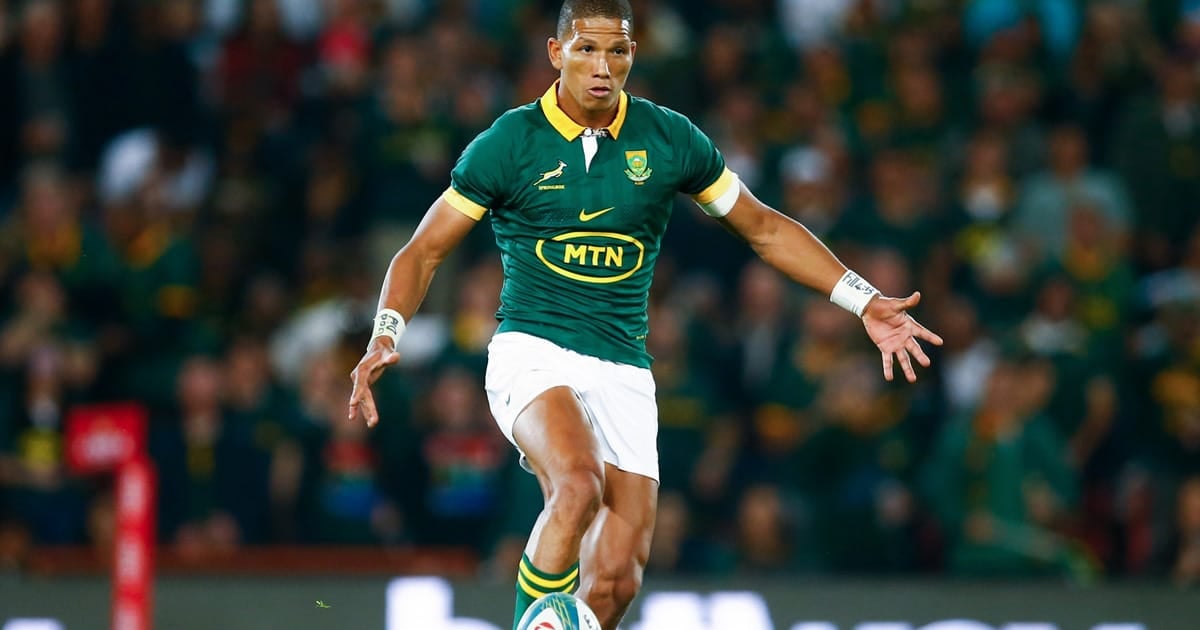
Handré Pollard has not played a minute of this series. Sacha Feinberg-Mngomezulu has started every Test. Nick Mallett ranked them second and third and put Manie Libbok first, and the Soweto tape says he was describing what he had just watched.
Sacha Feinberg-Mngomezulu kicked the points that put South Africa 2-1 up on Saturday. Nick Mallett watched the same Test and said, on New Zealand television the next morning, that the Springboks attack looks better with Manie Libbok in the jersey.
Both things are true. The reason is the ninth minute, and it is the part South Africa will argue about all week. The comments at the bottom are open for exactly that.
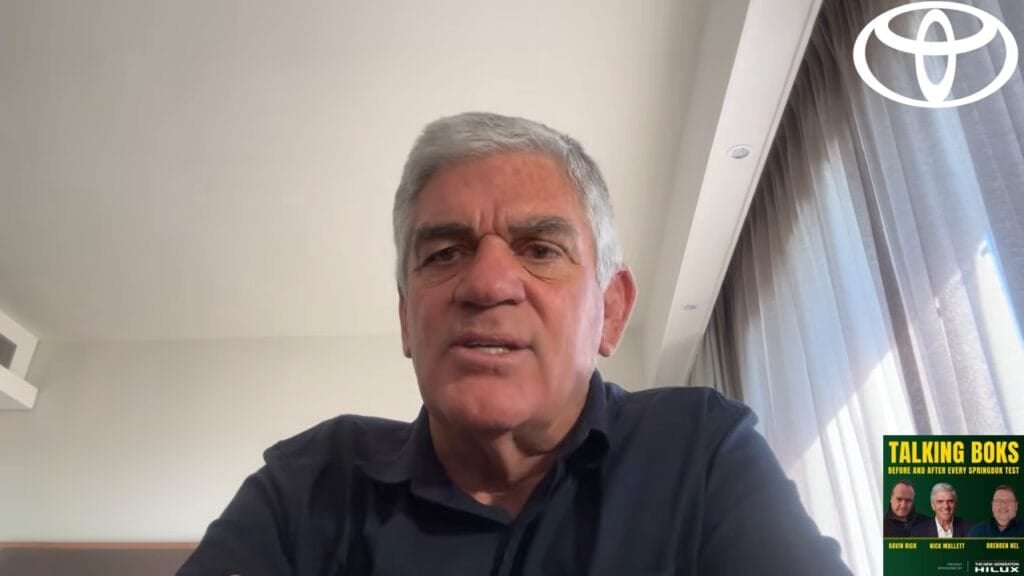
The question came from Angus Ta’avao, 23 Tests as an All Blacks prop, on Sky Sport NZ’s The Breakdown on Sunday 6 September, the morning after South Africa won 29-24 in Soweto.
He had watched Ox Nché rip a ball from an attacker’s shins and Wilco Louw throw a 15-metre pass, and wanted to know whether this was the best rugby a Springboks side had played. Mallett, Springboks coach from 1997 to 2000, answered with Tony Brown first and the fly-halves second.
“If you get Manie Libbok there, our attack looks better”
“But we are definitely trying to improve our attack. And again, it’s personnel. If you get Manie Libbok there, our attack looks better than if we play with Pollard. And even Sacha, who’s individually very good, but collectively perhaps doesn’t get the best out of his backline. So we’re still a work in progress on attack.”
Three names, in a fixed order, and the man who has started every Test of the series is third.
Take the sentence apart before taking sides. “Individually very good” is Mallett putting on the record that Feinberg-Mngomezulu is a better rugby player than the ranking suggests, before ranking him anyway.
“Collectively” is the word doing the work. A fly-half can be the best athlete in the backline and still not be the reason the backline plays well, and Mallett is saying that in September, with the World Cup thirteen months away, the man who makes the Springboks backline play is Libbok.
He had watched him do it the night before.
Soweto was a Libbok Test. Nobody planned it
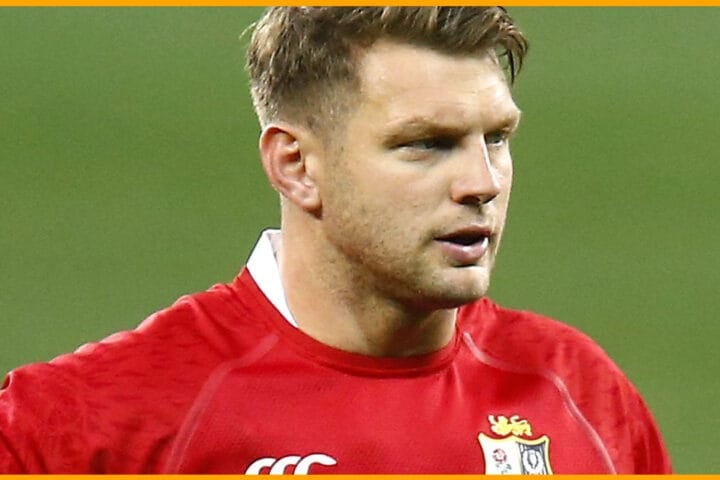
Feinberg-Mngomezulu was binned in the ninth minute for a deliberate knock-on ten metres from his own line, with Peter Lakai unmarked outside him. New Zealand scored while he sat.
Cheslin Kolbe left the field in the same passage with the broken jaw that will keep him out for eight to ten weeks, and Rassie Erasmus made the only decision available: Libbok on at 10, Feinberg-Mngomezulu to fullback when his ten minutes were up, and stay there.
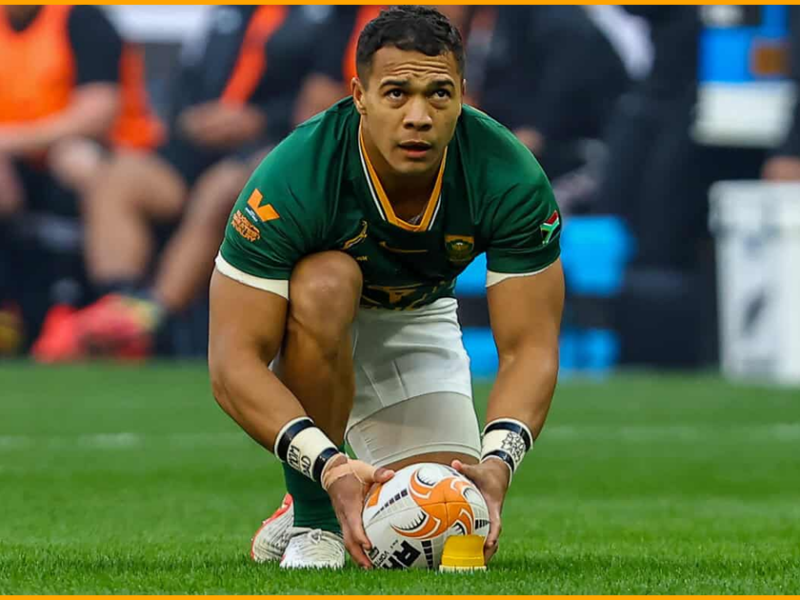
So for seventy minutes the Springboks attack was Libbok’s, and the ledger is honest in both directions.
The clearance that missed touch on 26 minutes handed the All Blacks the position for Ardie Savea’s second try. The break on 29 followed. The stepping run on 36 took him to a metre from the line, the phase before the five-metre scrum and the penalty try.
Then, on 58, the long pass that put Jesse Kriel into a channel where he beat Leroy Carter one-on-one and ran it in from 40 metres for the first South African lead of the night. And, into a stiffening second-half wind, the touch-finders that turned penalties into position.
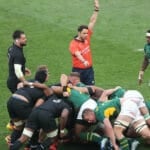
Feinberg-Mngomezulu’s night from fullback was a different shape. Two conversions, the penalty on 71 that made it 29-17, a missed touchline kick on 22, and the hit on Jordie Barrett on 73 that the stadium heard. This site scored Libbok a 7 and Feinberg-Mngomezulu a 6.5, and the half-point is the ninth minute.
Which is the awkward part for anyone who wants to dismiss Mallett’s ranking as an old coach’s preference. On Saturday the Springboks scored four tries against New Zealand, and the man wearing 10 for all four of them was the one Mallett put first.
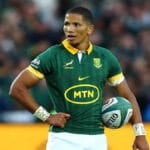
Pollard has not played a minute. Mallett still ranked him second
Handré Pollard’s series so far is a list of absences. He was not in the 23 at Ellis Park. He was withdrawn on the Friday morning before Cape Town, which is the only reason Feinberg-Mngomezulu had the jersey there. He was not in the 23 in Soweto. Three Tests, no minutes, and a former Springboks coach still puts him above the man who started all three.
The reason is in the answer Mallett gave a few minutes earlier, when Kirstie Stanway asked whether South Africa are on track for a third straight World Cup.
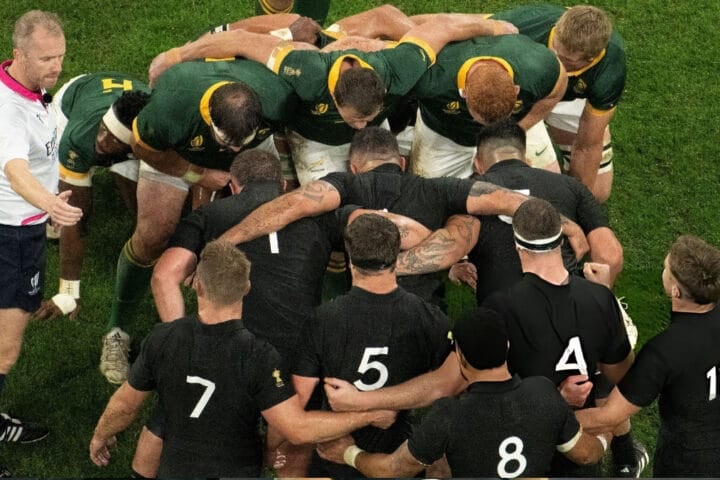
“Always remember that South Africa fall back on our main pillars, which are the set piece, our defence, and our contestable kicking, territorial kicking. And we do it well. We don’t miss too many tackles. If we do, it’s because you’ve come up with a really clever play. We generally win penalties from set pieces, generally mauls. We get it going forward and we put you under pressure. So when you think about the areas that you need to win a World Cup, we’re pretty strong at those.”
Pollard is the fly-half of the pillars. Territory, the contestable, the maul, the kick at goal in the 78th minute. Mallett’s ranking has Libbok as the 10 who makes the attack look good and Pollard as the 10 who makes the pillars hold, and Feinberg-Mngomezulu, for now, as neither.
Erasmus’s own line in the press room on Saturday was that the Springboks “like high balls and we like the kicking game and we like mauling”, which is Pollard’s game described by his coach. The way to beat them, this site argued in August, is that you make them kick. Pollard is the one 10 who does not mind.
Mallett gave Brown the credit for the rest. “Getting Tony Brown in has been a massive, has done us a tremendous amount of good,” he said of the former All Blacks fly-half Erasmus brought onto his staff in February 2024. The timing of the attack, he said, “hasn’t ever been as good as the All Blacks” until Brown arrived.
What “collectively” means at 10
Here is the technical version of Mallett’s word, because it is checkable on the tape.
A fly-half who plays well individually takes the ball flat, beats a man, kicks well and tackles. A fly-half who gets the best out of a backline does something less visible: he receives a yard deeper than looks comfortable, so that the 12 outside him is at full pace when the ball arrives, and he throws the pass a beat before the defence expects it.
Kriel’s try on 58 is the example. Libbok’s pass travelled past de Allende to a 13 running onto it at speed, into a channel where the All Blacks had one defender, and the defender was the one Dave Rennie has spent a week explaining.
Feinberg-Mngomezulu’s Ellis Park, a 5 in this site’s ratings, was the opposite: three overrun passes and a backline arriving before the ball. Cape Town was better, and the site gave him a 7. Soweto he barely got to play at 10. Three Tests is a small sample for a large conclusion. This week the tape supports it.
Ethan Hooker is the beneficiary either way. The Sharks wing was player of the match and this site’s 9, and Mallett singled him out: “I thought Ethan Hooker was fantastic. Put pressure on, handled Will Jordan wonderfully well for a young guy.”
On 48 minutes he was underneath Jordan as the high ball came down. On 25 he had got over Sam Darry inside the Springboks 22 and won the ball. A wing who chases like that makes any 10’s kicking game look organised.
Mallett’s order is right for Baltimore and wrong for 2027
So this is where the site lands.
For Baltimore on Saturday, Mallett’s order is the right one. Kolbe is out. Feinberg-Mngomezulu has already played an hour at fullback in this series and played it well. Libbok has just run the attack against New Zealand and produced the pass that turned the Test. Start Libbok at 10, keep Feinberg-Mngomezulu at 15, and the backline that finished Soweto starts Baltimore. That is continuity, which is the thing Erasmus says his squad has and New Zealand’s does not.
For Australia next year, the order is wrong, and Mallett half-said so himself with “individually very good”. The 2027 jersey is still Feinberg-Mngomezulu’s to lose, for the reason Matfield gave and Dan Carter’s line that nobody becomes world class overnight. A fly-half two years into Test rugby who can play 10 and 15, kick everything and hit like he hit Barrett does not get dropped for a ranking made in September. He gets a year to learn the pass Libbok threw on 58.
Mallett said the Springboks are “still a work in progress on attack”. The tape says the work is at 10.
Frequently asked
What did Nick Mallett say about Manie Libbok?
On Sky Sport NZ’s The Breakdown on Sunday 6 September, Mallett said “if you get Manie Libbok there, our attack looks better than if we play with Pollard. And even Sacha, who’s individually very good, but collectively perhaps doesn’t get the best out of his backline.” He credited attack coach Tony Brown for the improvement in the Springboks attack and called it “still a work in progress”.
Who played fly-half for the Springboks against the All Blacks at FNB Stadium?
Sacha Feinberg-Mngomezulu started at 10 but was sin-binned in the ninth minute for a deliberate knock-on. Manie Libbok came on and played fly-half for the remaining seventy minutes, with Feinberg-Mngomezulu moving to fullback after his ten minutes and kicking two conversions and a penalty from there.
Has Handré Pollard played in Rugby’s Greatest Rivalry?
No. He was not in the match-day 23 at Ellis Park, was withdrawn on the Friday before the second Test in Cape Town, and was not in the 23 for the third Test in Soweto.
Your turn
Two ways to read the same seventy minutes. Either Libbok proved Mallett right and starts in Baltimore with Feinberg-Mngomezulu at 15, or a man who kicked seven points from fullback after a sin-bin does not lose his jersey to a former coach’s ranking. This site says Libbok. Which 10 starts in Baltimore? Settle it below.




Comments
No one has weighed in yet.
Be the first - what did you make of it?