


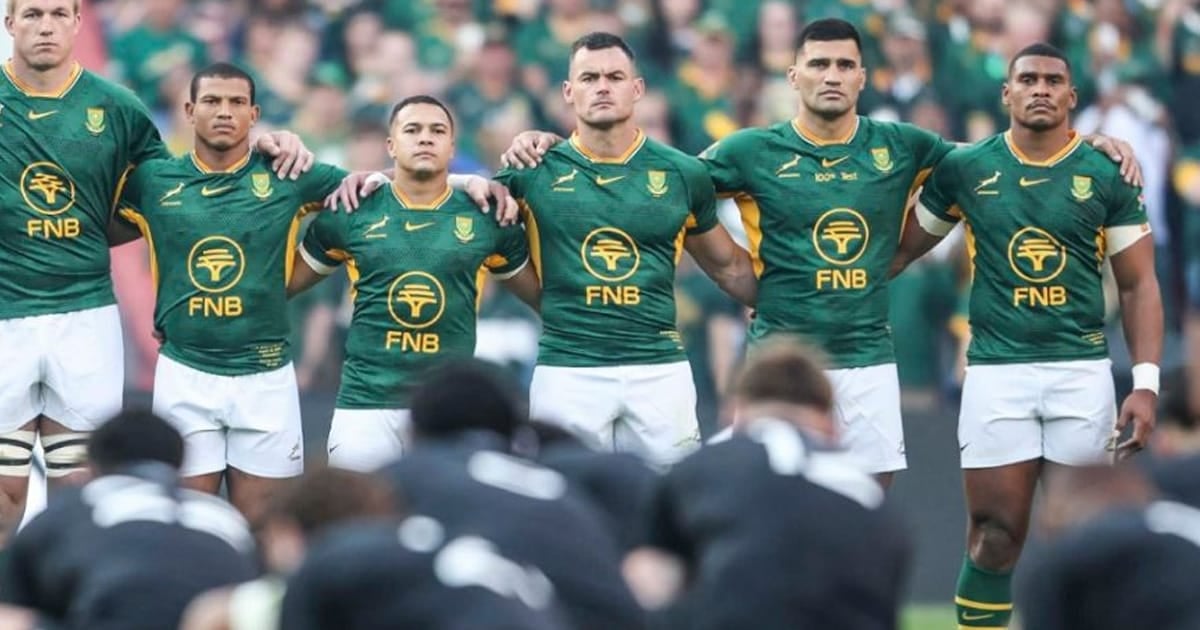
A Sky Sport graphic put 958 caps of Springboks experience beside the All Blacks’ 606 on Sunday night. Brad Weber, Mils Muliaina and Angus Ta’avao were asked how New Zealand competes with that, and the honest answer took a while to arrive.
958 to 606. Kirstie Stanway read the two numbers off a graphic on Sky Sport NZ’s The Breakdown on Sunday night and asked Brad Weber how the All Blacks compete with that.
“Well, you can’t really, can you? Is the unfortunate answer.”
There was a second half to the answer, and a number in it, twelve months, that the host would not let anyone round up. That comes later. If you think a cap count is a lazy way to explain a defeat, the comments are open at the bottom.
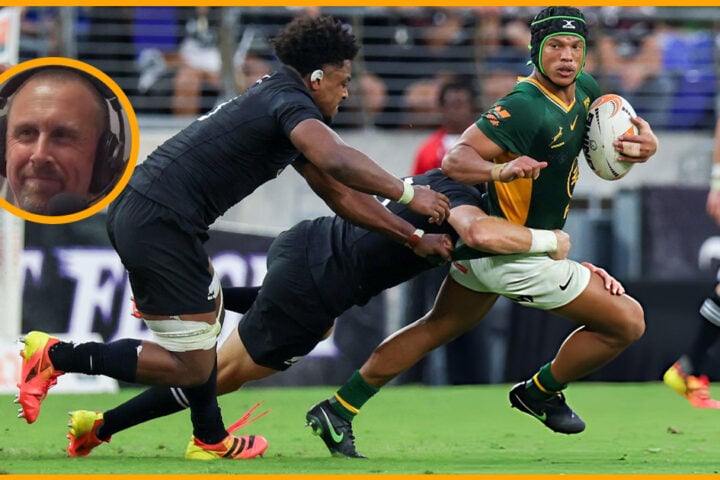
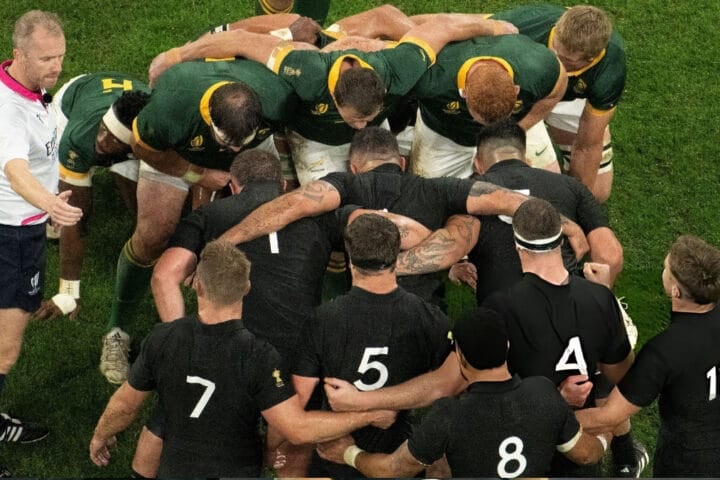
The numbers are real. The XV Rassie Erasmus named for Soweto carried 958 Test caps between them on the team sheet, 592 of those in the forwards. The All Blacks side that lost 29-24 at FNB Stadium added up to 606 on the team sheet this site published on Thursday, and 111 of those belonged to Ardie Savea, who lasted half an hour.
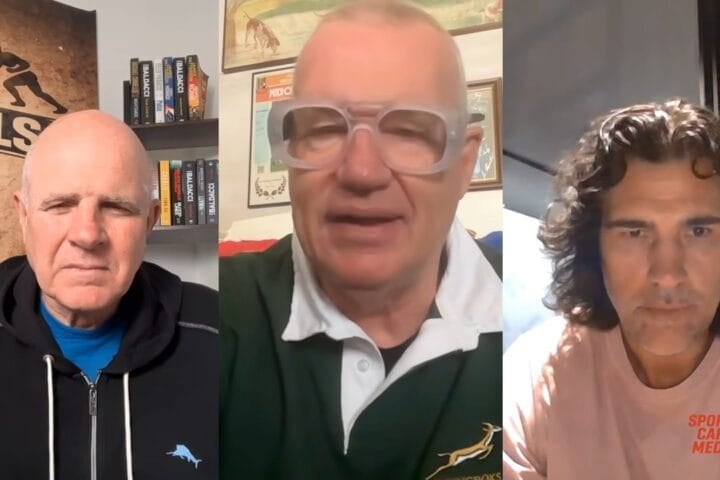
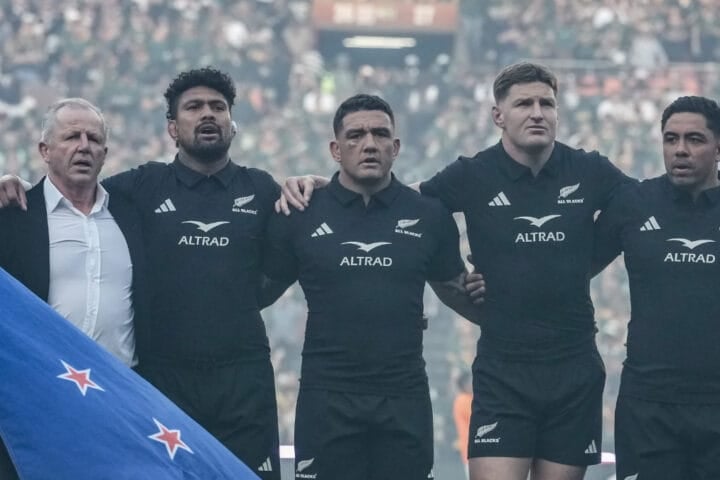
Ruben Love had 10. Leroy Carter 9. Sam Darry 10. The panel that had to explain the gap was Weber (18 Tests), Muliaina (100) and Ta’avao (23).
“You can’t really, can you?”
Weber’s full answer was more useful than its first sentence.
“Well, you can’t really, can you? Is the unfortunate answer. But what we can do is start now, is to build these combinations over this tour, through the Bledisloe Test and through the Nations Championship at the end of the year. That’s where we start building these combinations, because it takes time. If anything, the South Africans have done what we did back in your day, Mills.”
The runway he is describing is short. Baltimore on Saturday, then Australia twice in October, then Scotland, Wales and England in November with a finals weekend after that. Seven Tests before Christmas if they reach the finals weekend, and that is the entire remaining lab time before a World Cup year.
And the graphic was, if anything, kind to New Zealand. The Springboks side for Cape Town a week earlier had 1,012 caps and no sign of panic. Anton Lienert-Brown, 92 caps, was on the All Blacks bench in Soweto. The 606 is what Rennie chose to start. He had more on the bench.
Springboks experience is nine years old. Muliaina said it before Erasmus did
Muliaina had been running the second-half clips and came out of them with a number rather than a moment.
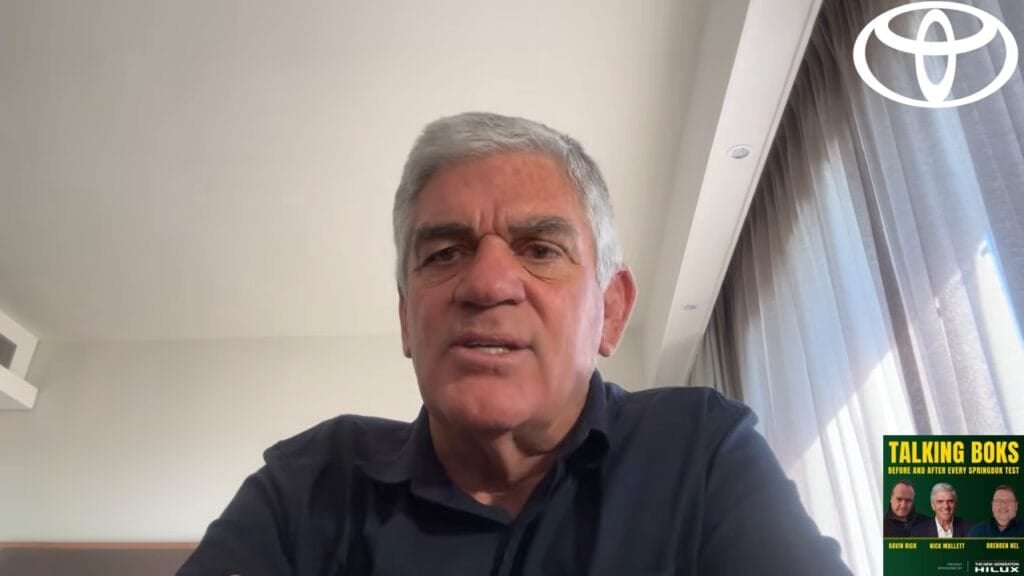
“Sometimes I think, as the general public, we sometimes don’t give the South Africans credit. Nine years that made this team. Nine years. And if you think about what we’ve sort of done with our team, we’ve had chops and changes of coaches. Finally we’ve got a team together that believe in the jersey, but we just haven’t quite clicked.”
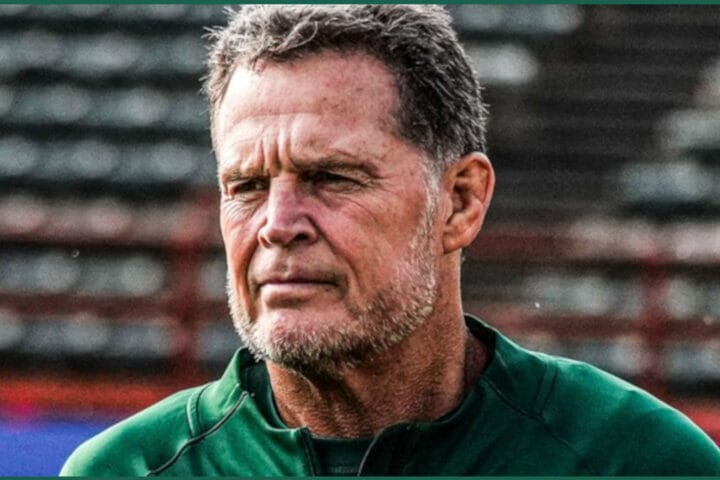
Stanway pointed out that he had stolen Rassie Erasmus’s line. In the press room under FNB Stadium on Saturday 5 September, an hour after the win, Erasmus had said the Springboks have “been together since 2018”, that Dave Rennie “don’t have the luxury yet, because he’s building a team”, and that he knew what that felt like: “In 2018, when I got the team 18 months before the World Cup, you just at the right moment must get some momentum.”
The chops and changes are a matter of record. New Zealand have changed head coach twice since the last World Cup. South Africa have had one man in charge of the project, in two job titles, since 2018, and the same captain since the same year. The players on the graphic are the consequence. A starting XV reaches 958 caps by not being changed, and somebody has to keep deciding not to change it.
The golden era Weber reached for, and what it cost
Weber’s comparison was the one every New Zealander of his generation reaches for.
“You think about the golden era that we had from 2008 to 2015. We built combinations and we kept the team pretty similar. Obviously guys broke in, some guys retired, but by the end, in that 2015 World Cup, that team was super, super experienced, and they just dominated world rugby for a couple of years. And that’s what the South Africans have built. It took a long time, and it’s going to take us time to get back to that level.”
The detail behind it is the whole argument. Graham Henry was kept on after the 2007 quarter-final defeat, which was not a popular decision, and the core that started the 2015 final, Richie McCaw, Dan Carter, Ma’a Nonu and Conrad Smith, was the core he had kept together through it. Two World Cups came out of a decision not to change.
Muliaina played 100 of his Tests in that period and was less romantic about it than Weber.
“What stats don’t illustrate is the pressure, and how to handle pressure. And that’s what South Africa know and do well, because they’ve known each other. When you’re looking at the guy’s eyes, you know that he’s on the same page. That’s got to be built over time, and you’ve got to go through this pain. From 2008, man, we went through a lot of hurt. Those guys would be hurting right now. You’ve got to go through that pain. We’ve now lost our leader. But who steps up?”
The hurt is the part nobody puts on a graphic. Muliaina’s 2008 team lost to South Africa in Dunedin and to Australia in Sydney inside a fortnight before it became the 2011 team, and the men who won at Eden Park had spent three years being told they could not.
“This tour has been so much more beneficial to us.” Has it?
Here is where the panel stopped agreeing.
“Don’t you think that this tour has been so beneficial? It’s been so much more beneficial to us than it has been to the Springboks. We’ve got to blood so many new players against the URC teams, and then a few guys through this test match period as well.”
That was Weber, and his evidence was the squad. “We took over 44 players, and I couldn’t really tell you anyone that has let the jersey down.” He put the average ages at “30.6 or something like that” for South Africa and 27 for New Zealand, by his own reckoning, and concluded that “over the next few years, we’re only going to get better”.
Stanway did not let “few years” go past. “We don’t have a few years, though. We have 12 months.”
Muliaina’s answer to Weber was the one above: the thing that wins Tests is the thing a tour cannot teach in a month.
Weber’s evidence is real. After three Tests, seventeen members of the touring party had still not played one in South Africa, and Richie Mo’unga and Beauden Barrett, who started the last World Cup final together at 10 and 15, are still in the squad although neither has been in a Test 23 on this tour. But depth is what you have when the first XV is not good enough yet, and the graphic measured the first XV. Muliaina wins the argument.
We don’t have a few years. We have 12 months
So take Stanway’s number seriously, because the panel did not quite.
The All Blacks cannot close 958 to 606 by the time the World Cup starts in Australia. Nobody can. Even if Rennie starts the same fifteen men in every remaining Test this year, South Africa’s fifteen add caps at the same rate, and Ardie Savea’s dislocated shoulder has just taken the most experienced man on the sheet out of the equation for the rest of it.
What they can close is the number that actually decides Tests, which is how many times the same nine, ten, twelve and thirteen have stood next to each other. De Allende and Kriel have started more Tests together than any Springboks midfield in history.
Jordie Barrett and Quinn Tupaea, who Ta’avao called “some of the best midfield pairings” on the same show, have been broken up by a knee ligament tear in the week the series was decided. The gap that matters is a spine. Spines are counted in starts together.
Which points to a position Weber’s own panel spent ten minutes arguing against. If Baltimore is a chance to “give quite a few of these guys a run”, as Weber said later in the programme, it is a Test spent on depth in a year that has run out of time for it.
Pick the spine that will start the first World Cup match. Start it in Baltimore, against Australia in October, and in Edinburgh, Cardiff and London, and accept that the eighth combination Test is worth more than the eighth new cap.
Erasmus said it best, without meaning to help. “You just at the right moment must get some momentum.” The right moment for New Zealand is Saturday, and every fixture and kick-off time in the series after that is one fewer.
Frequently asked
How many caps did the Springboks and All Blacks starting XVs have in Soweto?
SA Rugby’s team announcement gave the Springboks XV 958 caps, with 592 in the forwards and 366 in the backs. WeTalkRugby’s team sheet for the All Blacks totalled 606, with Ardie Savea (111), Jordie Barrett (83) and Damian McKenzie (79) the most experienced starters and Ruben Love, Leroy Carter and Sam Darry all on ten caps or fewer.
What did Brad Weber say about the All Blacks and Springboks experience gap?
Asked on Sky Sport NZ’s The Breakdown on Sunday 6 September how New Zealand compete with 958 caps, Weber said “you can’t really, can you”, that the answer is to build combinations through the Bledisloe Tests and the Nations Championship, and that the tour had been more beneficial to New Zealand than to South Africa because of the players it had blooded.
How many Tests do the All Blacks play before the 2027 World Cup year?
After Baltimore on Saturday 12 September, New Zealand play Australia twice in October for the Bledisloe Cup and then Scotland, Wales and England in the Nations Championship in November, with a finals weekend in London at the end of the month.
Your turn
Two readings of the same tour. Weber says it has done more for New Zealand than for South Africa, because 44 players went and none of them let the jersey down. Muliaina says the only thing that closes a 958-cap gap is pain, shared by the same fifteen men, over years the All Blacks do not have. This site is with Muliaina. Which of them is right about what Baltimore is for? Settle it below.

Comments
No one has weighed in yet.
Be the first - what did you make of it?