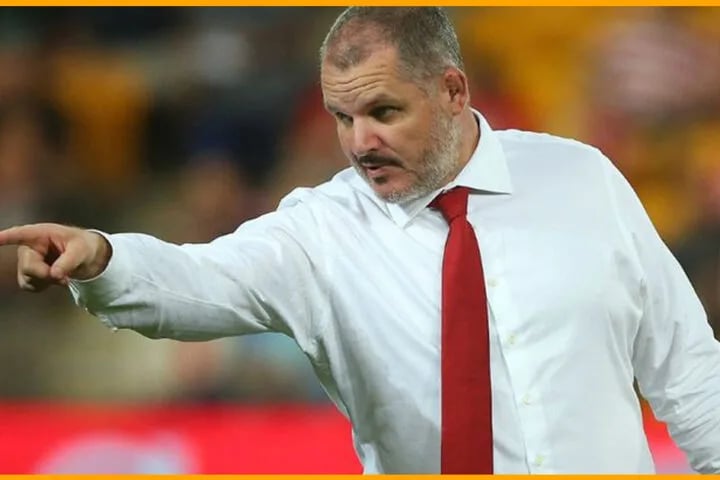
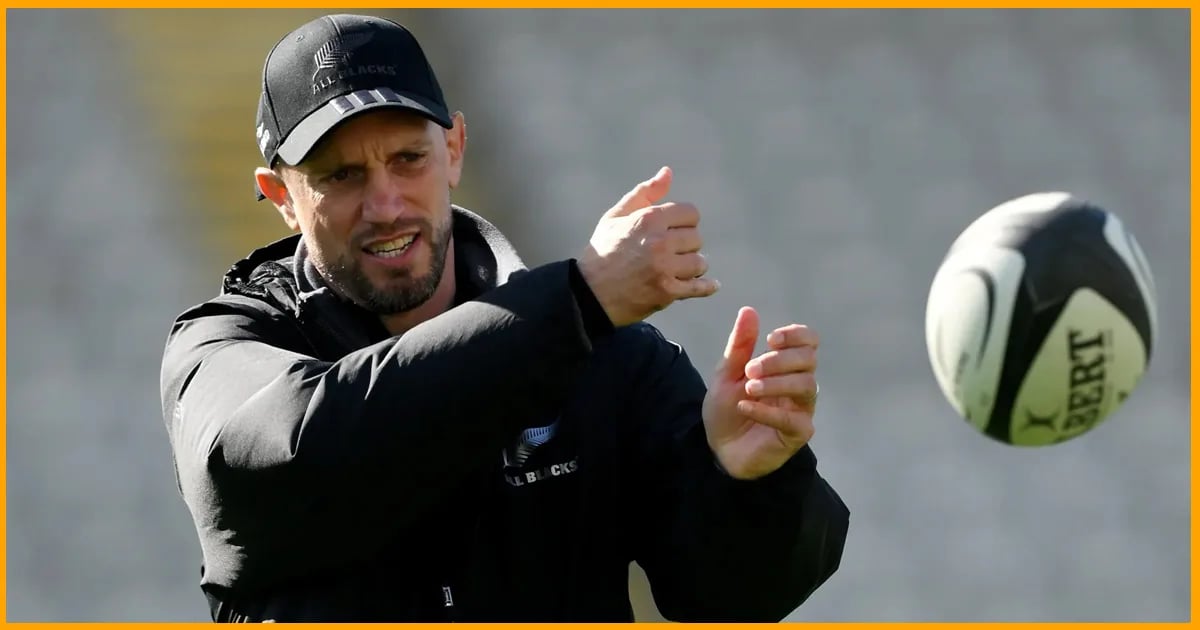
“It feeds their strength.” The All Blacks attack coach Mike Blair on the worst way an attack can end, eight minutes in Washington DC, four days before a Test his side has to win. The rule he is coaching to has nothing to do with scoring tries.
Ask most attack coaches what the worst outcome of a passage of play is and they will say a missed opportunity. Ask Mike Blair and the answer sits one rung lower.
“We’re aware that you’re not going to finish every opportunity, but we don’t want them to finish in a turnover, because if it finishes in a turnover, what’s happening is it goes to a set piece. It slows the game down a bit. It feeds their strength.”
Feeds their strength. The All Blacks attack coach, four days before a Test his side must win to square a series, saying out loud that the thing his attack is most careful about is not wasting a chance. It is handing over a scrum.
In most weeks that is a shrug of a sentence. In this one it is close to a confession, because New Zealand fed 11 scrums to South Africa’s five at FNB Stadium and a penalty try came out of them.
So is that clever, or is it frightened? Answer below before Saturday.
The All Blacks attack coach has a rule about how a movement is allowed to end
Every attacking sequence ends one of five ways. A try, a kick, a penalty, a knock-on or a turnover. Coaches rank those, and the ranking is usually about points. Blair’s is about what the opposition gets next.
A knock-on inside the opposition 22 costs a scrum on the 22, a long way from anybody’s line and a long way from three points. A turnover in your own half, or a jackal on halfway, hands the same pack the same platform much closer to home. Against most sides that is a change of possession and a reset. Against this one it is a scoring set piece, which is why Kieran Read says the Springboks scrum is legal, and that is the bad news for New Zealand landed as hard as it did on this site last week.
So the rule Blair is coaching to is not score more of them. It is do not end this one badly.
“So our balance between finishing our opportunities and keeping the pressure on through a multi-phase is really important.”
Eleven scrums in Soweto, and what came out of them
The number that makes his caution look sensible sits in the third Test match sheet. New Zealand put the ball into 11 scrums at FNB Stadium. South Africa put it into five.
Out of those set pieces came a penalty try, four more penalties, and the one that became the lineout, the twenty-metre maul and Malcolm Marx’s try.
Fourteen points, generated by a South African pack from platforms New Zealand handed over. Nobody had to beat a defender for any of it, and there is nothing a defence can do once the front rows are down and the referee’s arm is moving.
Read also: Kyle Sinckler says no tighthead alive holds out that scrum, which is the other half of why Blair sounds like this.
An attack coach cannot fix a scrum. He can reduce how often his side has to pack one down on its own feed in a bad place, and that decision gets made sixty metres away, two seconds before a pass leaves a hand. South Africa know the value of the platform better than anyone: Ox Nché spent the third Test telling the referee he wanted the scrum rather than the easy option.
Winning the collision and losing the ruck
The other half of Blair’s week is a distinction most viewers never make. He named it unprompted.
“There’s a balance with gain line and ruck speed. You don’t want one without the other… We’ve improved our gain line through the three tests, which has been excellent, because as you know South Africa [have a] very strong defence and [are] very collision based. So we’ve got our gain line up there, but LQB — lightning quick ball, sorry — was a little bit slower from the weekend. So they were able to slow a little bit of our ball down.”
Gain line simply means the line of the last tackle. Cross it and the attack is going forward. LQB is coaching shorthand for the fastest band of ruck ball a side can produce, and Blair scores it every week.
His side won more collisions in Soweto than they had in the first two Tests, and got slower ball out of them.
Those two things sound like they should move together. They do not.
A carrier who wins the contact still has to hit the floor in a usable position, present the ball, and be cleaned before a defender can get hands on it. A defence going backwards can still buy a second by putting the tackler’s body across the ball, and by arriving second man high on the carrier’s arms so he cannot fall the way he wants to. None of it shows up as a turnover in the match stats.
Watch the second defender in Baltimore, not the tackler. If he is going high and staying up while the tackler works the ball at ground level, South Africa are doing it again.
The difference between quick ball and slow ball is about one extra defender arriving in the line every phase. Roughly the whole margin New Zealand’s attack lives on.
What Blair wants instead of the low-percentage pass
Blair has a side that has scored 13 tries in this series to South Africa’s eight and is losing it anyway, and that made twelve line breaks to five in the third Test alone. He still spent his eight minutes talking about holding on to the ball.
“12 line breaks is a great start for us. Four tries against South Africa isn’t a bad start. 13 tries in three games… it’s not nitpicking as such, but we are scoring tries, we are creating line breaks. We want to convert certainly another couple of them, but we’re also aware that you can’t convert everyone.”
You can’t convert everyone. Coaches say it to protect players from a stat sheet, and Blair means it that way. He also means the other thing: keep the ball, build another five phases, make them make a decision. Accept a poor entry rather than throw the pass that ends up in a green pair of hands on your own 40.
Justin Marshall’s answer is to stop trying to out-scrum the Springboks altogether. Blair’s is quieter and comes from the other end of the field: stop giving them the scrum in the first place.
He is not apologising for the attack, and he should not
There is a version of this press conference where a coach whose team has lost two in a row concedes his attack is part of the problem. Blair did not go near it.
“Key messages from an attack point of view is we’re creating a hell of a lot and we’re scoring tries, but we’re missing a lot of opportunities as well. So the message has been really positive in what we’re creating.”
He is entitled to it. His side have outscored South Africa across three Tests and are one match from losing the series anyway, which is not an attacking failure. It is a scoreboard built by a pack and a goal kicker.
Blair, a former Scotland scrum-half who learned his trade as an attack coach under Dave Rennie at Glasgow and then at Kobelco Kobe Steelers in Japan, is in his first season inside a set-up that almost never hires from overseas. The attack he has built creates more than anything South Africa have produced on this tour. It has also been quietly redesigned around a scrum it cannot beat, and Saturday at M&T Bank Stadium is the last chance it gets to be right about that.
Read next: six reasons South Africa lead this series, and the two nobody can coach their way out of.
Frequently asked
Who is the All Blacks attack coach?
Mike Blair, a former Scotland scrum-half who worked under Dave Rennie at Glasgow and at Kobelco Kobe Steelers before joining the All Blacks for the 2026 season. He was previously head coach at Edinburgh.
What did Mike Blair say about turnovers?
That a movement ending in a turnover is worse than one ending in a missed chance, because a turnover leads to a set piece, slows the game down and “feeds their strength”, meaning the Springboks scrum and maul.
What is LQB in rugby?
Lightning quick ball, the fastest band of ruck ball a side produces. Blair used the term in Washington and said New Zealand’s was slower in the third Test even though their gain-line success improved.
Where can the press conference be watched?
It was published on the All Blacks YouTube channel on Tuesday 8 September 2026 and runs 12 minutes, with Blair followed by Wallace Sititi. See the full media session.
Your turn
Blair is either right or he is frightened, and there is no third option. Right means a side that cannot win its own scrum has to stop conceding them, and everything else follows from that. Frightened means an attack holding the ball for five extra phases to dodge a set piece, which is exactly the attack a rush defence wants to face.
Somewhere between those is the reason every fixture and result in Rugby’s Greatest Rivalry shows New Zealand scoring more and winning less. Pick a side and make the case below.